
Now Reading: Country diary: Mayday, mayday … the heatwave is killing the swallow chicks | Environment
- 01
Country diary: Mayday, mayday … the heatwave is killing the swallow chicks | Environment

Country diary: Mayday, mayday … the heatwave is killing the swallow chicks | Environment
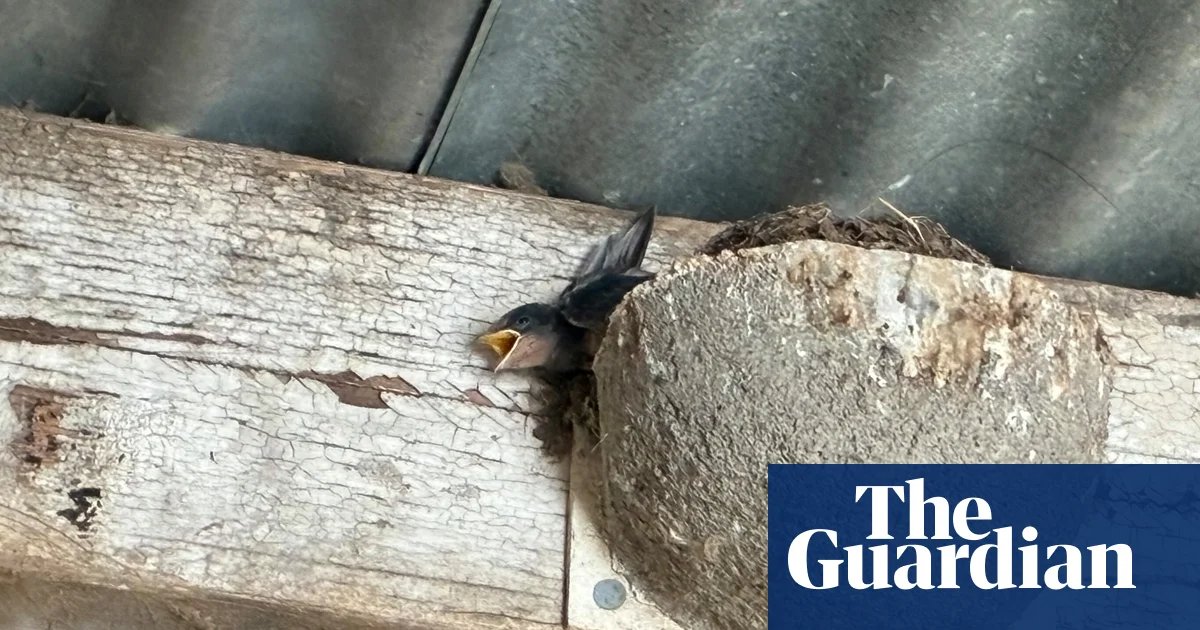
Mouth gaping, the swallow chick leans perilously over the edge of the nest cup. It is young, just a scrap of body, and at least a week away from being ready to fledge. But under the tin roof the heat is rising, becoming unbearable.
The chick perches on the edge of the nest, opening and closing its mouth, trying to stay cool in the absence of sweat glands. Then, it’s hard to tell if it overbalances, seeking cooler air, or makes a decision. Either way, it plunges down, dropping with no hope of flight. Somehow it misses the hard breezeblock ledge, and fortunately lands on the horse bedding.
The last to bail from the nest, it shuffles along to join its two scrabbly siblings, huddled against the wall. The chicks are utterly vulnerable to horse hooves, the yard cat, and of course the ongoing risk of overheating and dehydration. The parent swallows are still doing their best, swooping in with insects that bring both nutrition and moisture.
It is only 10am in a record-breaking week of May heat. This weather can be fun for us, but it’s not all ice lollies and barbecues. For nature, it is brutal, dehydrating animals, drying up soil and ponds, disrupting food chains, stressing trees and scorching plants. These swallows left the heat of South Africa for our plentiful insect supply and supposedly temperate spring and summer. This level of heat is not what they have evolved for.
At another swallow nest, in the feed barn, three more chicks have bailed from their nest. The distance from roof to ground here is much higher, about four metres, and the landing is concrete. When I check later, there’s a small body on the hard floor, flies already gathering. An adult bird flits back and forth over the corpse, threatening to dive-bomb me if I get too close.
This brood will be a disaster. I can only hope that their second clutch will be more successful. Some might even manage a third. I know nature is harsh and caring doesn’t change a thing, but I am more than a little heartbroken.