
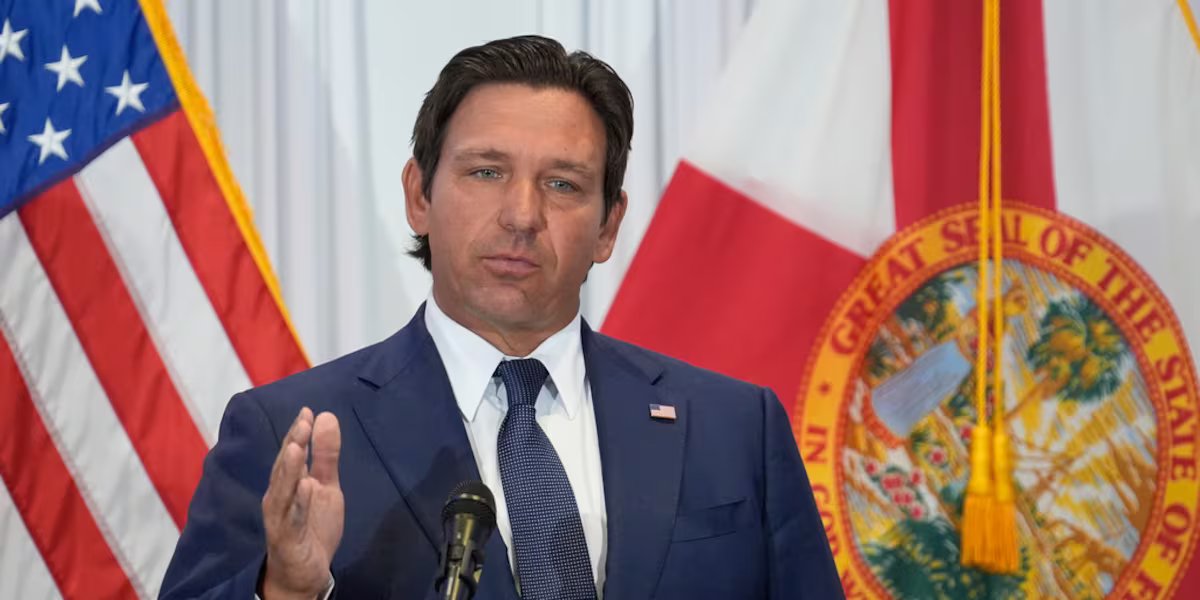
TALLAHASSEE, Fla. (WCTV/Gray Florida Capital Bureau) – After months of rumors, Florida Governor Ron DeSantis unveiled his proposed property tax plan in Tampa on Wednesday.
Under his plan, which needs to be approved by the legislature and voters, 60% of homeowners would no longer pay property taxes immediately.
That’s because those with homestead exemptions on their homes wouldn’t have to pay any property tax if their home is worth less than $250,000.
Over a schedule set by the legislature, 92% of homeowners eventually wouldn’t pay property tax at all, as that homestead exemption rises to an unlimited amount.
To prevent local governments from raising taxes on what the governor called “small businesses,” cities and counties would be prevented from raising their property taxes more than 5%.
“If some billionaire from Brazil is buying something, tax them; I’m looking out for Floridians,” DeSantis said.
The plan received support from the Democratic Chairman of Leon County, though he said the legislature will need to fund more of the local services, and relax rules on tourism sales tax uses.
“It might be a hit on our budget for property taxes and our general revenue. However, that’s money going right back into taxpayers’ hands and we’re not even going to take it in the first place,” said Leon County Chairman Christian Caban.
But, not everyone is on board, especially Florida House Democrats and at least one lobbyist who supports seniors.
“What happens the day when you show up at the public library or a mom takes her kid to play at the playground and they tell you you can’t come in because you have to pay a fee?,” said Florida House Democratic Leader Fentrice Driskell.
“There’s a lot of people, seniors included, that don’t own homes. This isn’t going to help them. There’s a lot of renters that happen to be seniors,” said Felicia Bruce, the president of the Florida Alliance for Retired Americans.
Bruce said the plan from the governor sounds like a good sound bite, but will hurt in the long run.
“There’s a lot of style to this and not a lot of substance,” Bruce said.
Still, the governor said his plan is the way to deliver real relief for families.
”I’m going to be momentarily issuing a proclamation for a special legislative session beginning on Monday of next week for the purpose of putting on the ballot an initiative that Florida voters will be able to vote on this November. And the primary purpose of that is to make your homestead property tax free,” the governor said.
According to the governor and legislative memos, lawmakers will convene in Tallahassee on Monday to consider the proposed constitutional amendment.
They will begin debate on Monday, and possibly vote that day, or Tuesday or Wednesday. If passed, the proposed amendment goes to the voters in November.
At the ballot box, 60% of voters must agree to the property tax elimination for it to take effect.
While the proposal could be amended, the first version calls for an increase to the homestead exemption of $125,000 in 2027, and up to the $250,000 the governor mentioned Wednesday by 2028.
Legislators will need to map out the path to an unlimited homestead exemption through the lawmaking process.
“This is the one thing that we can do that’s going to make a really big difference in the lives of people in the state of Florida,” DeSantis said.
The Florida Mosquito Control Association (FMCA) issued a statement Wednesday, expressing appreciation for DeSantis and the Florida Legislature’s commitment to exploring property tax relief, so long as they’re still considered core services:
“As these discussions move forward, FMCA respectfully urges state leaders to recognize that of Florida’s 132 independent special districts that levy an ad valorem tax, only 15 are mosquito control districts created specifically to protect essential public health and infrastructure services.
“This issue is especially critical for independent mosquito control districts, which receive nearly all operational funding through ad valorem taxes. Current estimates indicate that 37–45% of mosquito control district revenues are derived from homesteaded properties and have no alternative funding authority under their enabling legislation.
“Unlike many other local entities, independent mosquito control districts were established solely for this purpose and rely heavily on ad valorem funding to carry out critical services including mosquito surveillance, disease prevention, larviciding, aerial treatments, storm response, and protection against mosquito-borne illnesses such as malaria, Zika, West Nile, Chikungunya, dengue, and Eastern equine encephalitis viruses. These districts are essential to protecting the health and well‑being of Florida’s residents and visitors, as well as the state’s economy, tourism, agriculture, and overall quality of life.
“FMCA respectfully believes Mosquito control is not merely a nuisance reduction program, it is a core public health service and a critical component of Florida’s public health, emergency management, tourism economy, and community infrastructure. In a subtropical state where mosquito control has long been integral to public health, economic growth, and everyday life, stable funding for these districts remains critically important to the continued well-being of Florida’s communities.
“While some local governments may have the ability to ‘backfill’ revenue reductions through alternative funding sources, independent mosquito control districts simply do not have that flexibility. We do not possess alternative statutory revenue mechanisms that would allow us to replace substantial losses to our ad valorem tax base.
“For more than 100 years, mosquito control professionals have helped make modern Florida possible. It has often been said that without air conditioning and mosquito control, Florida would not have experienced the extraordinary growth and quality of life residents and visitors enjoy today.
“As policymakers continue evaluating proposals during the special session, FMCA looks forward to working collaboratively with the Governor and Legislature to ensure Florida’s mosquito control districts can continue fulfilling their important mission for generations to come.”
This is a developing story. Please check back later for updates.
Copyright 2026 WCTV. All rights reserved.
Leave a Reply