
Now Reading: Analyst: Q1 2026 revenue figures show there is still demand for compelling single-player video games
- 01
Analyst: Q1 2026 revenue figures show there is still demand for compelling single-player video games

Analyst: Q1 2026 revenue figures show there is still demand for compelling single-player video games
Global game content revenue increased 3.6% to $54.14 billion in Q1 2026, marking the seventh consecutive quarter of year-over-year growth, according to estimates reported by S&P Global Market Intelligence.
The content revenue figures cover software, in-game purchases, and game-based subscription services, but do not include hardware.
Tencent remains by far the world’s largest gaming company, with S&P estimating the firm brought in $9.60 billion in gaming content revenue in Q1 2026, up 8.4% year-over-year.
Tencent’s Chinese rival NetEase saw its gaming content revenue leap up by an even bigger margin, increasing 12.3% to $3.62 billion, supported by Where Winds Meet, Marvel Rivals, and other domestic franchises.

But Capcom and Pearl Abyss saw some of the biggest year-on-year revenue increases.
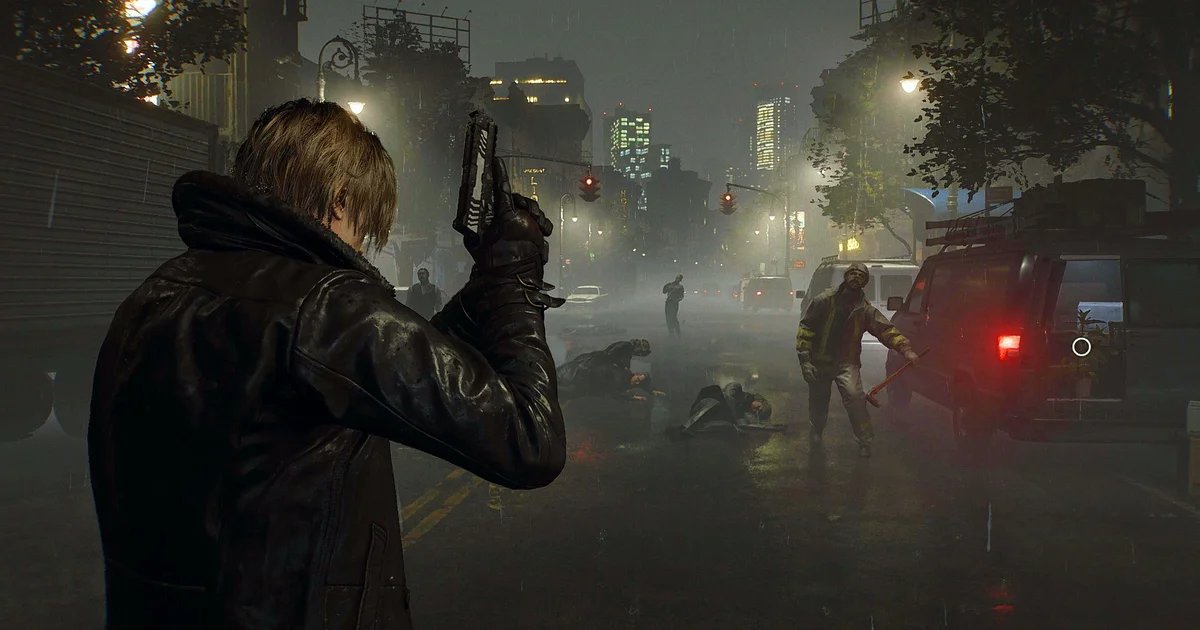
Capcom’s gaming content revenue jumped 89.8% to $451.8 million, thanks to Resident Evil Requiem, the fastest-selling game in the franchise so far, while Pearl Abyss’s revenue soared by an astonishing 468.6% to $328.1 million, with Crimson Desert selling over five million copies.
S&P noted that despite the dominance of live-service games, Q1 showed continued consumer demand for single-player titles like Requiem and Crimson Desert.
“The largest dollar gains remained concentrated among a relatively small group of scaled publishers and platform holders with durable live-service portfolios, strong positions in China, or both,” said S&P.
“But the quarter offered at least some evidence that consumers are still willing to give traditional, stand-alone titles a look should publishers deliver a compelling package.”
Roblox was a big hitter, with revenue rising 39.3% to $1.44 billion, while Nexon showed a 29.8% YoY increase, Bandai Namco was up 28.7%, and Electronic Arts rose 11.9%.
In terms of the major platform holders, Nintendo recovered significantly in the first quarter, with content revenue rising 37.7% to $1.31 billion. This was driven by Switch 2 sales and the successful launch of Pokémon Pokopia.
Sony’s gaming content revenue increased 6.3% year-over-year to $2.87 billion, supported by PlayStation’s ecosystem for third-party and live-service games. S&P analysts described Sony’s Q1 as “steadier and, in some ways, more representative of the broader console business.”
However, Sony recorded a $765 million impairment on Bungie in its full-year results, as operating income fell 41.6% in Q4.

Meanwhile, Microsoft’s gaming revenue fell 0.2% to $4.12 billion in the first quarter, which S&P attributed to lower Xbox hardware sales.
Ubisoft experienced a substantial 48.7% reduction in gaming content revenue, which S&P suggests was tied to the release timing of Assassin’s Creed. The company has since announced the closure of its Winnipeg and Belgrade studios in addition to cutting publishing roles worldwide, putting 380 jobs at risk.
Embracer Group saw a 35% decline in gaming content revenue, while Sega was down 16.7%, which was attributed to the underperformance of Sonic Rumble Party. Sega also reported a $200 million impairment for Rovio earlier this year, which it acquired in 2023 for $776 million.
In terms of sector performance, PC was the fastest-growing platform, rising 7.8% year-over-year to $12.11 billion. Its market share grew to 22.4%, up from 21.5% last year.
Mobile remained the largest segment, reaching $30.53 billion, but at 2.5%, the sector’s growth was far slower than for PC. Console was the slowest growing sector, with revenue up 1.3% year-over-year to $9.81 billion.
S&P’s estimates are based on publicly reported revenue from publishers and platform holders, as well as discussions with industry figures, proprietary survey data, and other market research.