This strategy finds its roots in the legal and sociological maneuvers of the mid-20th century, specifically the Smith Act of 1940. Originally designed to combat subversion by criminalizing membership in organizations deemed a threat to the state, the act established a precedent where proximity to a group served as sufficient evidence for prosecution.
While the judicial application of the Smith Act was eventually narrowed by the Supreme Court, its rhetorical ghost remains a potent weapon in the hands of leaders who seek to bypass the complexities of individual evidence. By framing political rivals as part of a vague, interconnected “cartel” or “crime family,” orators like Donald Trump utilize a logic that mirrors the anti-sedition era.
This creates a state of moral contagion where the target is required to prove a negative accusation is not real, while the speaker avoids the burden of providing a single verifiable fact of personal wrongdoing.
This reliance on collective guilt is particularly striking when contrasted with the verified judicial records of Trump’s own administrative circle. The 2017 Mueller investigation served as a foundational data point, resulting in 34 indictments and eight guilty pleas or convictions of high-level advisors.
These were not mere rhetorical flourishes but determinations by courts of law regarding tax fraud, bank fraud, and illegal foreign lobbying. From a sociological perspective, this concentration of illegality suggests the presence of a criminogenic environment.
In such an atmosphere, the internal culture of an organization, prioritizing loyalty and immediate results over legal compliance, systemically encourages or ignores deviant behavior. When a leader presides over an environment where the Chief Financial Officer, the Campaign Chairman, and the Personal Attorney all face criminal sentencing, the subsequent attempt to label opponents as “guilty by association” becomes a significant structural irony.
The rhetoric seeks to preemptively neutralize Trump’s own associations by claiming that the entire political landscape is equally compromised.
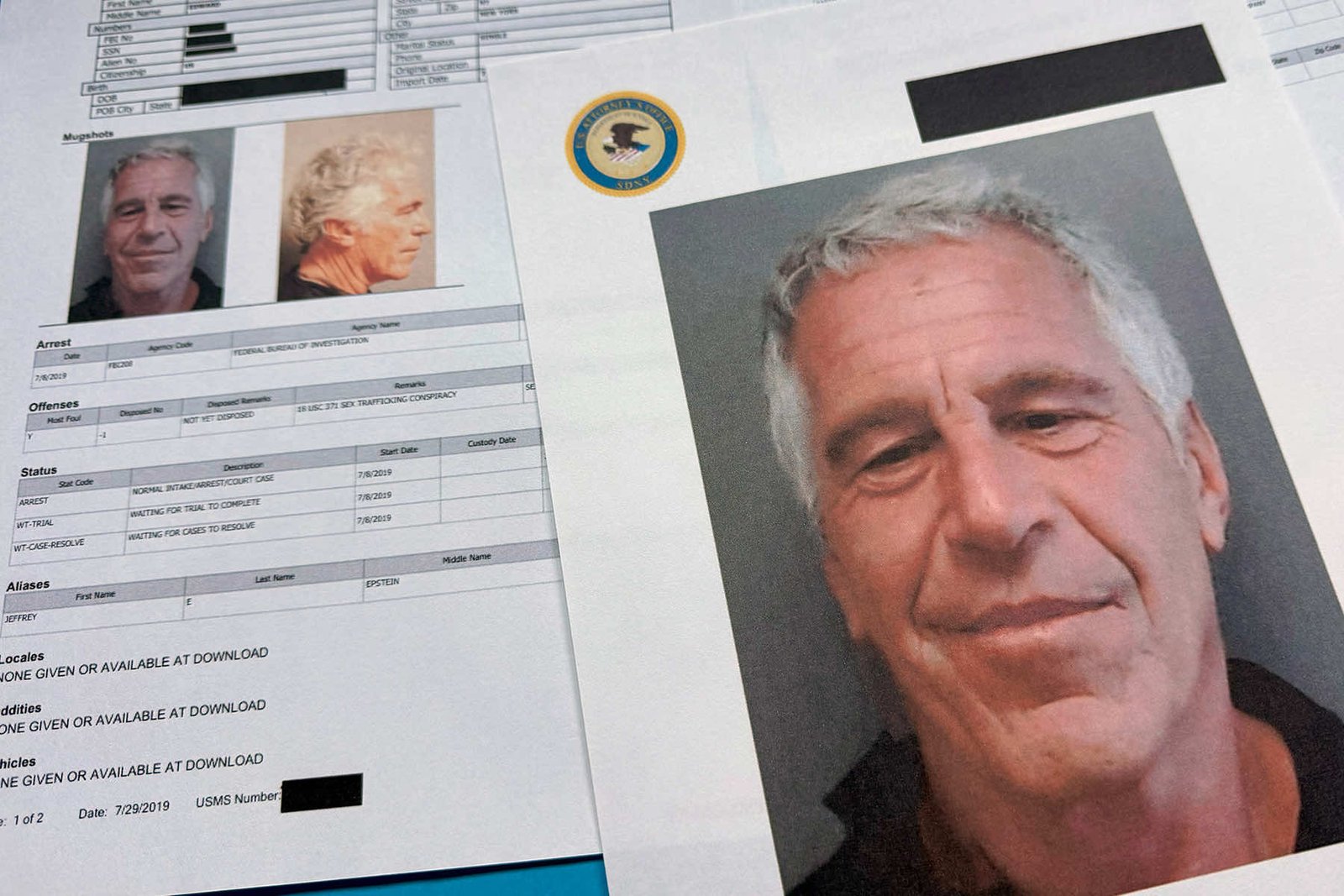
The strategy of moral contagion is most viscerally personified by the specter of Jeffrey Epstein, whose presence serves as the ultimate “whataboutist” anchor. While Epstein was never an administrative official, his proximity to the global power structure provides the essential fuel for Trump’s narrative of a ubiquitous, clandestine cartel.
By weaponizing his past social association with Epstein, Trump created a binary choice for the public. Either his own circle’s documented felonies were a unique stain, or they were merely minor infractions within a world where everyone of influence was adjacent to a monster.
In this light, Epstein is not a footnote, but a necessary component of the “glass house” architecture — a figure used to suggest that if the entire neighborhood is built on rot, no individual stone thrown at the Trump circle can be considered valid.
The historical echo of this tactic is most clearly heard in the rise of McCarthyism during the 1950s. Senator Joseph McCarthy’s 1950 Wheeling speech became the definitive blueprint for this style of attack, as he claimed to hold a list of names of subversives within the U.S. government without ever producing the evidence for public or judicial scrutiny.
This era also saw the publication of “Red Channels,” a sociological tool for blacklisting that relied entirely on the perceived associations of media professionals with “subversive” causes. Modern political communication has effectively digitized “Red Channels,” using social media algorithms to amplify associations until they are perceived as facts.
By invoking the ghosts of McCarthyism, modern rhetoric relies on the psychological power of the “unseen list.” The goal is not to convince a jury but to saturate the public consciousness with the idea that the opponent is part of a clandestine, untrustworthy network. This prevents the public from focusing on the verifiable, documented criminal records that have already been adjudicated in a court of law.
The underlying mechanism for this strategy is psychological projection, a defensive maneuver identified by Sigmund Freud, where an individual attributes their own unacceptable behaviors or qualities to others.
In the political arena, this projection acts as a high-stakes shield. When Trump aggressively accuses his enemies of the very crimes for which his own circle has been convicted, such as corruption, fraud, and foreign influence, he forces a state of moral equivalence.
This is further supported by the “third-person effect” in media psychology, which suggests that people believe others are more susceptible to propaganda and corruption than they are themselves. By claiming that the “other side” is being uniquely fooled by a corrupt leader, Trump reinforces the tribal identity of his own MAGA base.
This psychological maneuvering allows Trump to acknowledge the criminal activity within his own ranks while simultaneously framing it as a standard, or even necessary, response to the supposed crimes of the opposition.
The specific application of this transitive guilt was visible in the narrative Trump used about the Biden family. His logic suggested that if a son was involved in a controversial business deal, then the President himself was the leader of a “syndicate.”
Such a manufactured claim ignored the fundamental legal principle that guilt is personal, not hereditary or by association. However, sociological drivers like negative partisanship have made Trump’s narrative highly effective.
Negative partisanship ensures that voters are motivated more by a visceral loathing of the opposition than by any objective assessment of their own candidate’s flaws. Consequently, the “Biden Crime Family” label functioned as a masterclass in transitive guilt, using the documented struggles of a family member to define the entire administration.
Trump’s tactic succeeded because it bypassed the need for a “smoking gun” by suggesting that the smoke itself was the gun, regardless of where it originated.
When compared to the most notable administrative scandals in American history, Trump’s level of internal criminality is virtually unprecedented.
President Ulysses S. Grant’s “Whiskey Ring” scandal and Warren G. Harding’s “Teapot Dome” scandal both featured high-level corruption, yet they were largely treated as failures of oversight or personal greed by subordinates.
In the case of Teapot Dome, the conviction of Albert Fall marked the first time a cabinet member was imprisoned, a milestone that stood for nearly a century as a singular mark of administrative shame.
Today, however, the rhetoric has shifted from the “failure of oversight” model to one of total delegitimation. Rather than accepting the judicial outcomes of his associates as evidence of organizational rot, Trump frames his accusations as evidence of a “deep state” conspiracy.
Like most of Trump’s toxic behavior, this represents a radical departure from historical norms, where a president would distance himself from convicted associates to preserve the integrity of the office.
This shift has profound implications for the erosion of objective judicial truth. The primary goal of relentless political disinformation is not to make people believe a specific lie, but to destroy the concept of truth itself.
When every criminal lawsuit or Congressional investigation against Trump was labeled a “witch hunt,” and every opponent was labeled a “criminal” through association, the distinction between a court of law and a political attack campaign rally began to vanish.
The process has continued to accelerate by the illusory truth effect, where the constant repetition of the “criminal” narrative eventually causes it to be accepted as truth by sheer exposure.
Then, by the time a legal verdict is actually reached, the public is so saturated with conflicting claims of guilt and innocence that the verdict is dismissed as just another partisan opinion.
Trump actively promoted such an environment to provide the perfect cover for himself and his associates, who were actually guilty. The conditions make the very concept of “guilt” seem like a matter of political perspective rather than forensic fact.
Ultimately, the survival of this “glass house” defense depends on the cognitive dissonance of the electorate. Leon Festinger’s theory explains that when people are presented with information that contradicts their deeply held beliefs — such as the fact that the convicted felon they voted for is surrounded by other convicted felons — they experience psychological discomfort.
To resolve the dissonance, they do not abandon the leader. Instead, they find ways to discredit the evidence or the institutions that provided it. Polling data from previous election cycles showed that Trump’s voter base increased their support following the indictment of his associates, viewing the legal actions as a direct attack on their own identity.
“Guilt by association” is not a tactic meant to enlighten the public, but to blind them. It is the ultimate political mirror, reflecting Trump’s own legal vulnerabilities onto his enemies to ensure that in a world where everyone is “guilty,” no one can be held truly accountable.