
According to the financial report, the company’s revenue reached $28.24 billion, a 26% increase compared to the same period last year and exceeding analysts’ forecasts of $26.32 billion. Tesla also delivered 480,126 vehicles globally, higher than expected thanks to improved demand in Europe and increased Model Y production capacity.
However, adjusted earnings per share (EPS) – an indicator reflecting the profit per share – was only $0.33, significantly lower than the forecast of $0.50. Net profit fell to $1.1 billion from $1.2 billion in the same period last year. Immediately after the report was released, Tesla shares dropped more than 3% in after-hours trading.

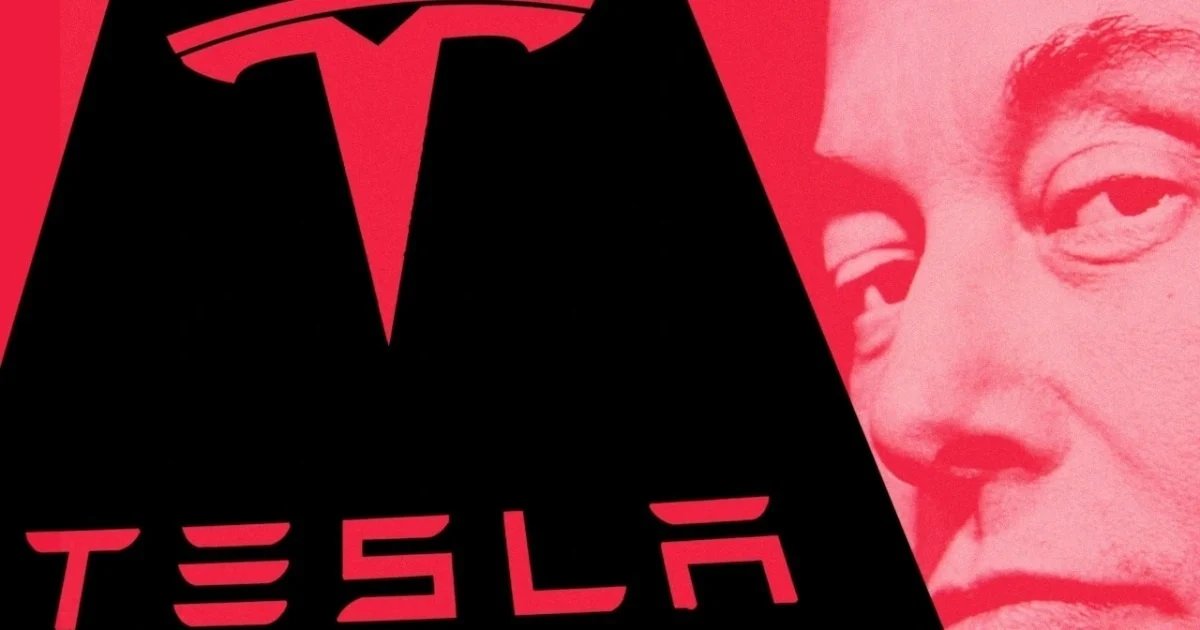
Revenue surged, but profits remained under pressure as Tesla continued to spend heavily on AI and Robotaxi (Photo: MW).
They sold more cars but made less money.
The increase in revenue while profits are declining reflects the growing competitive pressure in the electric vehicle market. Tesla continues to lower prices on the Model 3 and Model Y in many markets, while also implementing financing programs to stimulate demand. This strategy has helped improve sales but has also narrowed profit margins per vehicle.
Tesla isn’t the only automaker facing a similar situation: slow demand coupled with increasingly fierce price competition. General Motors (GM) recently reported a 30% drop in second-quarter profits, while Chinese electric vehicle manufacturers like BYD and Geely Auto continue to exert pressure on the global market.
Beyond the competitive pressure in the electric vehicle market, Tesla is also entering a phase of heavy investment in AI and self-driving technology, putting continued pressure on short-term profits. In the second quarter, Tesla recorded a negative free cash flow of $1.09 billion, primarily due to heavy spending on investments. Management stated that total capital expenditure in 2026 is expected to exceed $25 billion, allocated to AI data centers, the Optimus humanoid robot, the Semi truck, and the Cybercab self-driving vehicle.
In other words, Tesla is accepting lower short-term returns to invest in areas that are expected to become drivers of future growth.
Robotaxi remains the biggest test.
Although cars still contribute the majority of revenue, investor interest is now focused on Robotaxi and its FSD (Full Self-Driving) driver assistance system. This is also the AI platform that the company expects to generate new revenue streams in the future.
Tesla says its Robotaxi service has expanded to more areas in the U.S. and mileage is expected to increase by more than 10% each week. However, CEO Elon Musk acknowledged that safety requirements remain the biggest hurdle to scaling up. “If we hurt even one person, it would be headline news worldwide,” Musk said during a meeting with investors.
Meanwhile, the number of FSD subscribers has increased to 1.48 million, 56% higher than the same period last year. Tesla also stated that the Optimus humanoid robot is still under development as planned.
However, technological advancements are only half the story. What ultimately determines market confidence is the ability to commercialize these projects in the coming years.
The Q2 report shows that Tesla maintained revenue growth thanks to recovering vehicle sales, but the market is more interested in when the tens of billions of dollars invested in AI, Robotaxi, and humanoid robots will generate commensurate revenue and profits.
That’s also why, despite exceeding revenue expectations, Tesla’s stock still fell after the report. With a valuation among the highest in the world , Tesla is increasingly seen by investors as an AI company, not just a simple electric car manufacturer. Therefore, the massive investments currently underway will soon have to prove their effectiveness to maintain market confidence.
Source: https://dantri.com.vn/kinh-doanh/bao-cao-quy-ii-cua-tesla-ban-nhieu-xe-hon-loi-nhuan-van-giam-20260723064439784.htm