
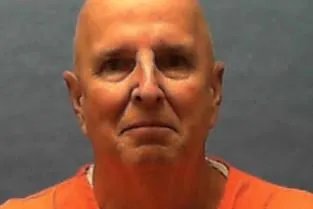
There are really only two problems with the 39-year-old conviction of James Duckett, the former Mascotte police officer who was found guilty of killing an 11-year-old girl while he was supposed to be on duty.
The first is that prosecutors put on the shakiest possible case, based mostly on evidence that has since crumbled. Duckett was convicted anyway because, as it turned out, the expensive private attorney he hired did an even worse job of mounting a defense.
The second problem: After decades of controversy, there is still a chance to know for sure whether Duckett was the man who raped and murdered Teresa McAbee. But the state seems determined to botch that as well — if “botch” is the right word to describe a seemingly deliberate orchestration to send a fragile sample of DNA to a lab that everyone knew was not equipped to run the kind of test needed to establish an identity match — that, in fact, was not even capable of reading the results of the test it did perform.
Now the state wants to be rewarded for its actions by making Duckett the opening act in a macabre double date with the executioner. Under a warrant signed by Gov. Ron DeSantis, Duckett is set to be executed at noon Tuesday, followed by 80-year-old Dominick Occhicone’s death at 6 p.m.
Prosecutors are wrong to think they can wash away the deeply troubling questions surrounding this case with a three-drug cocktail intended to knock Duckett out, paralyze him and finally stop his heart. If courts allow this execution to be rushed through after the baffling sequence of events that played out over the last six months, they are likely to solidify the impression that Florida is so hell-bent on breaking death-row records that it doesn’t really care whether the men being herded to the slaughter are guilty or innocent — or that prosecutors were, right up until the end, playing games when they should have been seeking justice.
But the real story starts almost 40 years ago.
A troubled trial
There’s a reason the Duckett case sticks in people’s memories after so many years, in a state that leads the nation in death-row exonerations.
The events of that night all took place in a very small area — the small house where Teresa lived with her family, a nearby convenience store where Duckett first spotted her on the night of May 11, 1987 and a lake about a quarter-mile away where her body was discovered the next day. Teresa had walked to the store to buy a pencil, and Duckett spotted her talking with a teenage boy after the town’s official curfew. He talked to both Teresa and the boy, and told her to go home. About an hour later, Teresa’s mother called to say she’d never returned. Duckett drove to the McAbee house, talked to her mother and collected pictures of her to use in a flyer.
Teresa’s body was discovered the next morning. Duckett, the last known adult to speak with her, quickly became a suspect. At trial, jurors heard a melange of evidence that must have sounded convincing to them — but over the subsequent years, much of that evidence dissolved.
Several people saw Duckett talking to Teresa, but only one person — a teenager named Gwen Gurley — testified about seeing Teresa get into Duckett’s car. Friends who were with her contradicted her account and Gurley later recanted in a sworn statement, saying detectives mingled incentives and threats to get her to testify.
Three other teenagers testified that Duckett had solicited them for sexual favors while on duty, allegations he denied and that were unsupported by any external proof.
An FBI forensic scientist testified compellingly that a single hair found in Teresa’s underwear had “exactly the same characteristics” as Duckett’s hair. But Duckett’s attorney never offered testimony from another forensic hair examiner who disagreed. Years later, the scientist who testified for the prosecution was widely discredited.
Tire tracks found near Teresa’s body were said to be a match to the unique tires on Duckett’s patrol car. But those casts were taken after another Mascotte police car with the same brand of tires had been at the scene. Meanwhile, Duckett’s car was clean of the mud that would have stuck to it had he driven it near the lake.
After the trial, a notebook taken from Duckett the day after the murder pointed to several people who might have provided Duckett with an alibi ar the time that the murder was taking place. But Duckett’s defense attorney never mentioned it.
That leaves just one bit of evidence — Teresa’s fingerprints on the hood of Duckett’s patrol car, which prosecutors portrayed as being left while she was being assaulted. But there were other times she could have left those prints.
Jurors heard almost none of the evidence contradicting the official account. Some of it was discovered in case files and evidence storage long after a jury found Duckett guilty and recommended a death sentence.
Why didn’t Duckett’s attorney do a better job of making sure this potential evidence of innocence was heard at trial? That’s a great question, but one that may never be answered; the man who represented him at trial died in 2002 in a car crash. Duckett was not relying on a public defender. Instead, his mom mortgaged her house to hire Jack Edmund, one of the best-known criminal defense attorneys in Lake County at the time. Yet the official trial transcript showed that Edmund rarely challenged evidence or witnesses, and offered almost no evidence of his client’s innocence.
On June 30, 2008, jurors deliberated for just 90 minutes before finding Duckett guilty. But Edmund’s lack of action means they only heard half the story. That should have put his conviction on shaky ground from the start. The fact that it didn’t is something the Florida Supreme Court (and potentially, the U.S. Supreme Court) should keep in mind as they evaluate Duckett’s last-ditch appeals.
But that’s not the end of the problems with this case. In the days ahead, we’ll look at the way the appellate process played out — and how a search for justice was foiled, again and again.
The Orlando Sentinel Editorial Board consists of Opinion Editor Krys Fluker, Executive Editor Roger Simmons and Viewpoints Editor Jay Reddick. Use insight@orlandosentinel.com to contact us.