
Now Reading: DVIDS – News – Dominating the Information Environment is Key to Indo-Pacific Deterrence
- 01
DVIDS – News – Dominating the Information Environment is Key to Indo-Pacific Deterrence

DVIDS – News – Dominating the Information Environment is Key to Indo-Pacific Deterrence
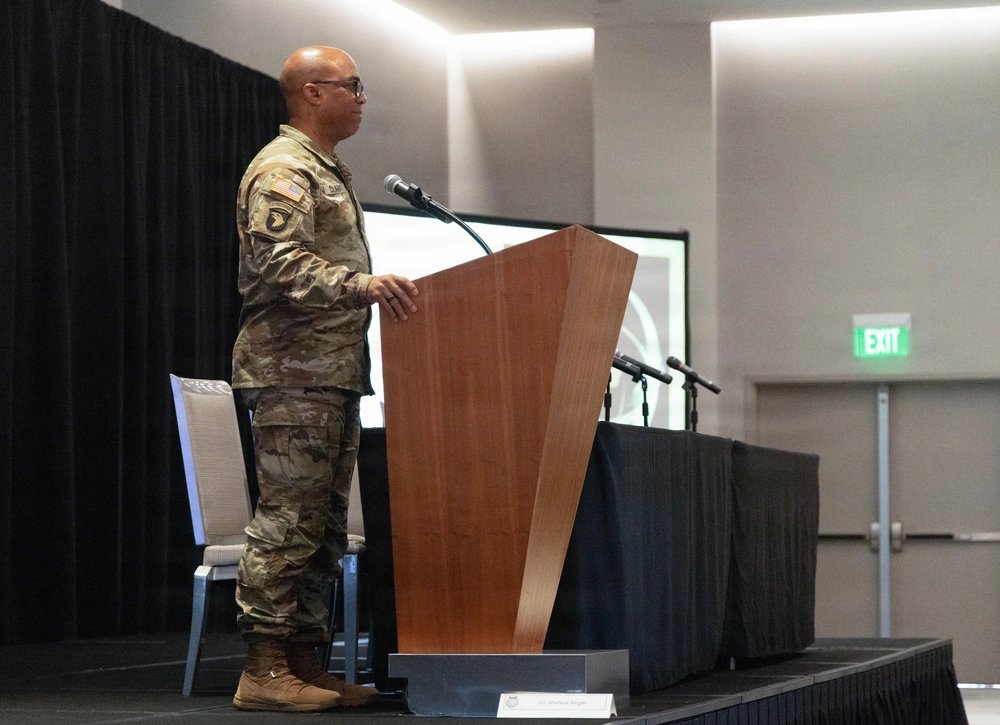
HONOLULU— Maintaining deterrence in the Indo-Pacific increasingly depends on the
ability to compete and prevail in the information environment, Gen. Ronald P. Clark,
commander of U.S. Army Pacific, told attendees during his keynote address at
Information Forces Pacific Symposium 2026 (INFOPAC2026), Sept. 1, 2026.
INFOPAC 2026, a Department of War Global Information Conference, brought military,
industry and academic leaders together to examine challenges and opportunities within
the information environment.
This year’s symposium is centered on the theme “Maintaining Deterrence,” with
discussions focused on strengthening information capabilities, partnerships and
integration across the Indo-Pacific.
Clark described the Indo-Pacific as the world’s strategic center of gravity, home to more
than half the global population and nearly half the global economy. With no NATO-style
alliance structure in the region, he emphasized that security depends on strong bilateral
partnerships, trust and the ability of allies and partners to operate together.
“Our greatest strength is our people. Our enduring advantage is our partnerships.
Together, we prevail,” Clark said.
At the center of Clark’s message was the information environment, which he called the
decisive terrain of the 21st century.
“The decisive terrain in the 21st century isn’t simply visible ground, maritime choke
points, airspace, or even space itself,” Clark said. “For us, the information environment
is decisive terrain.”
Clark warned that adversaries are increasingly using cyber, electronic and information
capabilities to coerce allies and partners and test U.S. resolve without firing a physical
shot.
“Our efforts to dominate the information space denies our adversaries this space to
coerce our allies and partners as we expose their malign activities in real time,” he said.
Setting the Theater
Clark connected information advantage directly to USARPAC’s role in setting the theater
across the Indo-Pacific.
While much of the region’s security discussion focuses on maritime and air power, Clark
noted that sovereignty, capitals, infrastructure and the networks supporting joint
operations are ultimately anchored to land.
“Before the first ship sails or aircraft launches, the Army establishes foundational
architecture across thousands of miles of diverse theater geography,” Clark said.
That architecture includes logistical nodes, airfields, seaports and resilient command
and control networks. In a contested environment, Clark said, the ability to move data
securely is just as critical as moving forces and supplies.
“We cannot apply force decisively or execute a single joint function without first
dominating the information environment,” he said.
He described command and control as a “secure data transport fight” and stressed that
electromagnetic signature management, deception and network resilience are
increasingly essential to force protection.
Information as Maneuver
Clark called for electronic warfare, cyber operations and influence to be synchronized
with the same rigor as other elements of combined arm’s maneuver.
“In the information space, we must apply the same synchronized planning, preparation,
and execution to win,” he said.
He highlighted USARPAC’s first Theater Information Advantage Detachment as an
example of this approach, using real-time information to expose adversarial behavior,
challenge deniability and create strategic effects.
“The first TIAD is literally what an information maneuver looks like in the Pacific in
2026,” Clark said. “It is proactive, it is offensive, and it drives real, measurable, strategic
outcomes.”
Clark emphasized that military capability and information operations are increasingly
intertwined. Demonstrating U.S. readiness and capability, then deliberately
communicating that capability, can influence an adversary’s decision-making before
conflict begins.
“When we reveal real capability in the information domain, we give our adversaries
pause, and that, my friends, is how we maintain deterrence,” Clark said.
He closed by challenging military practitioners, industry and academia to continue
developing the capabilities and partnerships needed to maintain an advantage in the
information environment.
“Maintaining deterrence is not passive. It requires constant, relentless pressure in the
information environment,” Clark said.
For Clark, that effort cannot wait for a future conflict or a perfect solution.
“We cannot afford to wait for a perfect solution tomorrow when our efforts to deter are
being tested as we sit in this room,” he said.
For Clark, the path to maintaining deterrence in the Indo-Pacific is clear: strengthen
partnerships, integrate capabilities and maintain persistent pressure in the information
environment before an adversary has the opportunity to turn competition into conflict.
U.S. Army Pacific, headquartered at Fort Shafter, Hawaii, provides Army forces to the
U.S. Indo-Pacific Command and strengthens relationships with allies and partners to
promote a free and open Indo-Pacific.