

Now Reading: Environmental activists angry over controversial AI data centre near Paris
- 01
Environmental activists angry over controversial AI data centre near Paris

Environmental activists angry over controversial AI data centre near Paris
France is preparing to build Europe’s largest artificial intelligence data centre in a village outside of Paris. The government hopes to boost its computing infrastructure and give France an edge in the global race to develop AI, but activists are concerned about the impacts on health and the environment.
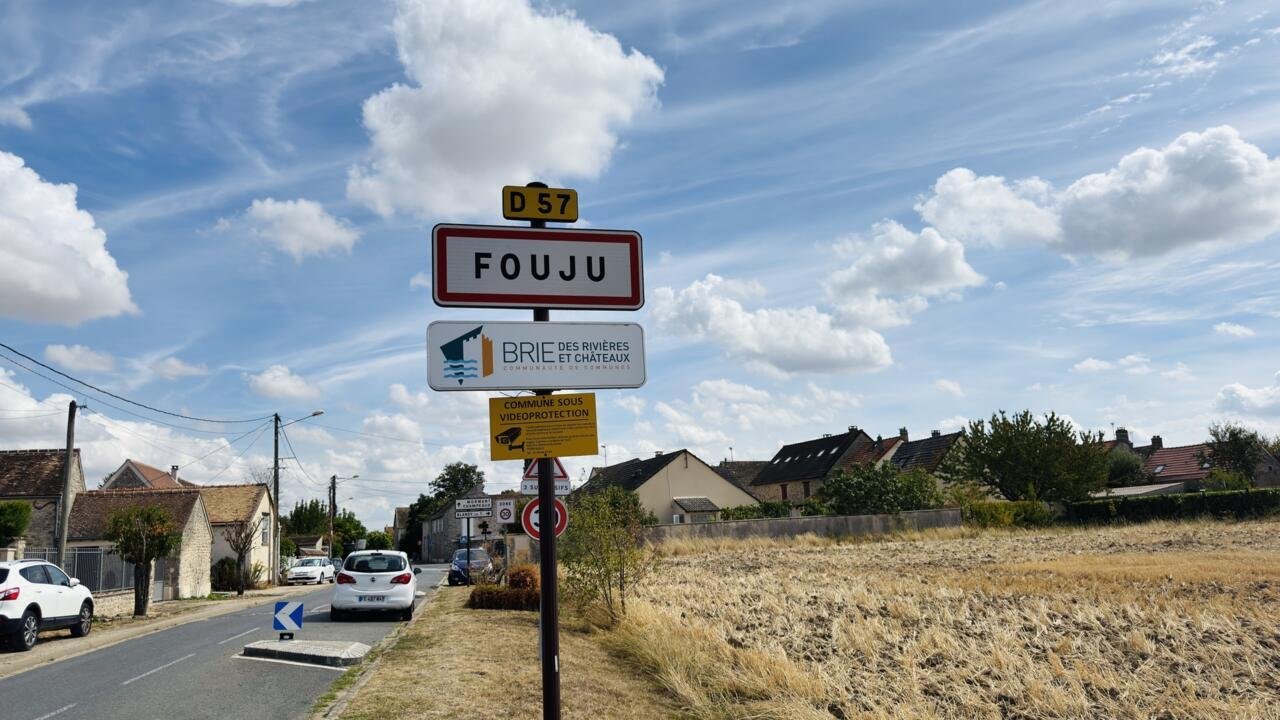
Fouju, a village of 650 inhabitants, an hour’s drive from Paris, with 14th-century church and quiet streets, is preparing for a radical change. Amidst the grain fields surrounding the village, work is about to begin on a giant AI data centre.
The project, known as Campus IA, is set to cover 70 hectares – the equivalent of 100 football pitches.
By 2038, some 12 supercomputers, powered by nuclear energy, will be built. They are expected to consume up to 1.4 gigawatts of electricity, which represent roughly the entire output of a typical nuclear reactor.
The project is part of France’s plan to develop its own AI infrastructure.
In February 2025, French President Emmanuel Macron announced at the Summit on Artificial Intelligence in Paris his intention to make France a hub for data centres, unveiling €109 billion in private investment.
Paris hosts AI summit, with spotlight on innovation, regulation, creativity
The aim is to reduce its dependence on US giants such as Amazon and Google but this argument is refuted by the project’s critics.
The €50 billion of investment to finance the data centre comes mainly from the United Arab Emirates’ sovereign wealth fund. And although the Campus IA’s computer servers will be operated by Mistral AI, the French company has signed an agreement to transfer part of its computing capacity to US-based Microsoft.
Environmental impacts
International experts have shared their concerns over the environmental impact of data centres, and this one in particular.
In 2025, Golestan Sally Radwan, Chief Digital Officer at the United Nations Environment Programme (UNEP), said she was “extremely concerned about the environmental footprint of artificial intelligence.”
“Its direct impacts range from the extraction of raw materials, rare earth elements and minerals for the equipment required for AI, to the construction and operation of data centres, including energy consumption, greenhouse gas emissions, water used for cooling, as well as waste, including electronic waste,” she said.
Regarding Campus IA, land development, heat emissions, CO2 emissions and emissions of PFAS particles – so-called forever chemicals – are the main reasons for the protests.
“The servers will be cooled by air rather than water,” Jean-François Dupont, a local resident and activist with NGO France Nature Environnement, told RFI.
Japan’s SoftBank to spend €75bn on AI centres in France
“Cooling fluids will therefore circulate throughout the building and heat will be extracted by large fans. However, these fluids will contain PFAS compounds, and the authorities themselves have acknowledged that there is a risk of PFAS leaking into the atmosphere.”
The data centre will have 700 electricity generators, including 60 for backup, all running on diesel or biodiesel.
“For the first three buildings, 30,000 tonnes of diesel will be stored. This should be considered a high-risk facility,” Dupont said.
Local politicians, who did not respond to requests for interviews, support the project, expecting a thousand jobs and €1 million in tax revenue for Fouju.
But Dupont describes these figures as “questionable”.
“This is a fairy tale. We know that data centres generate very few jobs. I don’t think we’ll reach a thousand jobs. Here in these data centres there will be a few staff members, maintenance and security personnel, but these are low-skilled jobs,” he says.
Campus IA’s directors insist that the risk of PFAS leaks is “very low”. They also say excess heat will be recovered and used for heating.
Meet Jean-Zay, the supercomputer powering France’s AI ambitions
Concerns over the use of AI
The announcement that work is set to begin on the mega-data centre has mobilised various civil society groups – particularly environmentalists and left-wing activists in the Seine-et-Marne department.
“I’m involved in this campaign because artificial intelligence does not represent the future. It is not a sustainable activity,” says Servane Silva, who lives in Melun.
“We are investing in AI that consumes a huge amount of energy and will damage the environment,” she adds.
“What impact will these data centres have on biodiversity and our environment? Over the last 50 years, this region has been overrun by pesticide-heavy farming. Then, lots of logistics warehouses sprang up here, and now the data centres… We don’t want to be the capital region’s dumping ground!”
Like in the United States, Latin America or Europe, activists are concerned about the environmental costs of these projects and question the usefulness of AI.
In many cases, it is not very clear what these computing capacities – which large companies are promoting for speculative purposes, banking on a future AI boom – will actually be used for.
EU steps up AI regulation as new transparency rules come into effect
Marina Otero, a Spanish architect and lecturer at Harvard who has studied the environmental footprint of data centres, suggests reserving the use of AI for genuinely useful purposes.
“In many cases, AI is simply about training state-of-the-art language models, but it also involves the arms industry and the security sector. Does a data centre really need to be available 24 hours a day?” she asks.
“They could pause at times when there isn’t enough energy or adopt a different pace – one that isn’t so driven by the race to win the artificial intelligence race,” suggests Otero.
In the United States, where the construction of data centres has expanded without any control, a wave of public protests has led to the cancellation or delay of some projects.
“The Governor of New York has imposed a moratorium on the construction of data centres. In Chile, a Google project was halted because it was found to be using too much water in Cerrillos, near Santiago. In the Netherlands, too, a Meta project was cancelled a few years ago because it used as much energy as nearby towns, and so on,” explains Otero.
“Now that we have a better understanding of the impact, we have a few years to analyse what has happened in certain places, as people are beginning to mobilise against this infrastructure because, moreover, it does not create jobs.”
This article was adapted from the original version in Spanish by RFI’s Raphaël Moran.