
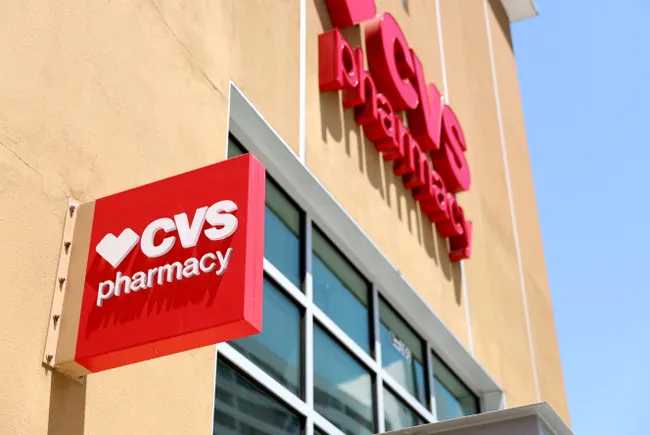
CVS Health plans to split into two companies — one housing its insurance arm Aetna and pharmacy benefit manager Caremark, and one with its 9,000 retail pharmacies — in one of the largest corporate breakups in history.
The split, rumored in media reports Tuesday and confirmed by executives Wednesday, comes a decade after the $78 billion merger that combined CVS with Aetna and is an indictment of the vertical integration strategy that’s defined the healthcare industry for years.
Separating the businesses will make the respective teams more agile and competitive, CVS CEO David Joyner said on a call with investors Wednesday morning. CVS expects the split to be completed in the first half of 2028.
It’s a stunning reversal of strategy for CVS, which has spent the last two decades integrating — acquiring Caremark in 2007, Aetna in 2018 and a handful of medical groups, including Oak Street Health and Signify Health, since.
The split “unwinds a central piece of the premise” behind CVS’ acquisitions: “that a pharmacy, PBM, insurer, and care-delivery organization could coordinate more of the healthcare journey and create economies of scale,” Arielle Trzcinski, principal analyst at Forrester, said in an email. “Now, CVS Health is effectively acknowledging that bigger isn’t always better.”
America is souring on the behemoth conglomerates that control how they access healthcare and how much they pay. Pressure is also mounting from regulators and lawmakers, with CVS challenging state laws in Arkansas and Tennessee that would forbid pharmacies and PBMs from being owned by the same parent. A bipartisan group of lawmakers has introduced similar legislation at the federal level.
Scrutiny is expected to continue in 2027, especially after Democrats trounced Republicans in the midterm elections on Tuesday, reclaiming leadership of the House and Senate.
But regulatory pressure isn’t the reason for the split, according to Joyner. Instead, the CEO characterized the breakup as the logical next step in CVS’ “evolution” — one that will create two stronger and more streamlined organizations that can tailor strategies and investments to their specific needs.
And the timing was right, Joyner argued, with the split building on momentum from CVS’ aggressive turnaround strategy.
The Rhode Island-based company has made progress digging itself out of a financial hole, after Aetna was slammed with higher medical spending than expected over the last few years. In response, CVS cut $2 billion in costs, closed stores, overhauled its executive bench and shuttered plans, actions that are bearing fruit this year.
“We take this action from a position of strength,” Joyner said.
The company with Aetna and Caremark will also include senior care provider Oak Street Health, home health firm Signify Health and CVS’ specialty drug business — leaving it looking like UnitedHealth or Cigna, integrated peers that operate health plans, PBMs and specialty pharmacies.
That company will be called CVS Health, and be led by Joyner.
The other will be called CVS Pharmacy, and include pharmacy assets like its retail stores, mail order pharmacy, walk-in clinics and Health100 technology services. It’s to be led by Prem Shah, currently CVS’ group president, and will have to stand alone against challenges facing pharmacy operators that have driven some to go private or to bankruptcy.
Still, CVS has improved its pharmacy performance in recent years, downsizing its footprint while growing prescriptions and shifting to a new reimbursement model tied more directly to drug acquisition costs. And CVS’ retail pharmacy has always operated behind a firewall, so carving it out won’t eliminate valuable overlaps between the businesses, Joyner said. Any joint products and services that CVS wants to keep will be retained through commercial agreements.
“The unique products that we’ve built over the last, you know, 20 years are things that are going to be preserved in commercial agreements between the two organizations. So we don’t need the integration of in an operating structure,” the CEO said.
Meanwhile, CVS will preserve the connection that it really cares about: between Aetna and Caremark, and Aetna and its care delivery arm, according to the CEO.
“This enables us to maintain and expand integration where it matters, combining the tools necessary to improve affordability within medical and pharmacy benefits and deliver care to high acuity populations, including in Medicare and specialty pharmacy,” Joyner said.
Both CVS Health and CVS Pharmacy will be publicly traded, and current shareholders will own shares in both, according to a press release.
It’s not the first time CVS has mulled dividing the business. The company weighed the option during a strategic review in 2024.
Still, the breakup “feels like a complete shock,” Leerink analyst Michael Cherny wrote in a note Tuesday.
Cherny noted that CVS’ pharmacies have been stabilized for the first time in years, so the decision to carve them out now is surprising.
But “in this context, perhaps the outlook for a standalone retail pharmacy (still with meaningful scale and leverage on its own) is stronger now than before,” Cherny added. “The rationale could also be to avoid what has been relentless state legislative scrutiny over the company’s level of vertical integration.”
Other analysts agreed. “We see some logic to the split,” J.P. Morgan analyst Lisa Gill wrote in a note on Tuesday.
The bombshell news overshadowed a strong third quarter. On Wednesday, CVS reported profit of $2.2 billion on revenue of $108.4 billion, compared to a loss of $4 billion and revenue of $102.9 billion the same time last year.
Aetna outperformed expectations, thanks to continued progress in its Medicare Advantage margin turnaround, while CVS’ pharmacy division was buoyed by consumer demand for drugs and contributions from CVS’ acquisition of Rite Aid assets. CVS raised its 2026 outlook on the results.
