
The start of the month brings another set of new car registration figures from the Society of Motor Manufacturers & Traders (SMMT), results that provide a generally (but by no means wholly) reliable snapshot of the health of the UK motor industry.
July 2025 saw a dip in sales, something that could well be repeated next month, as August is traditionally quiet with buyers waiting for pristine new registration plates in September. And just as fleet sales have been driving the market upwards for a very long time, this time it was a 6% decline in fleet registrations that accounted for much of the dip.
Mind you, electric vehicles (EVs) played their part too – registrations are up 31% so far in 2025 but grew just 9% in July, a stall which can be blamed firmly on the Government. When you announce a grant for new EV sales worth anything from £1,500 to more than £3,000, but add that only certain vehicles will be eligible and you haven’t quite come up with the list of qualifiers yet – well, no buyer is going to make that purchase if they can save four figures by waiting just a few weeks…
Elsewhere there were few major headlines in the July figures – Tesla sales appear to have plummeted, just 987 cars registered in July compared to 2462 in the same month a year ago, and a trend that commentators are gleefully blaming on the brand’s public face, Elon Musk and his on-off involvement in US President Donald Trump’s various controversial policies.
There may be an element of this in Tesla’s results, but the brand’s figures are one element of the monthly SMMT report that one does not take on face value. Tesla doesn’t sell its cars like ‘normal’ manufacturers and its results tend to be pretty volatile as a result – year-to-date the brand is down only 6%, and only the end of 2025 will present a truly believable picture of its performance.
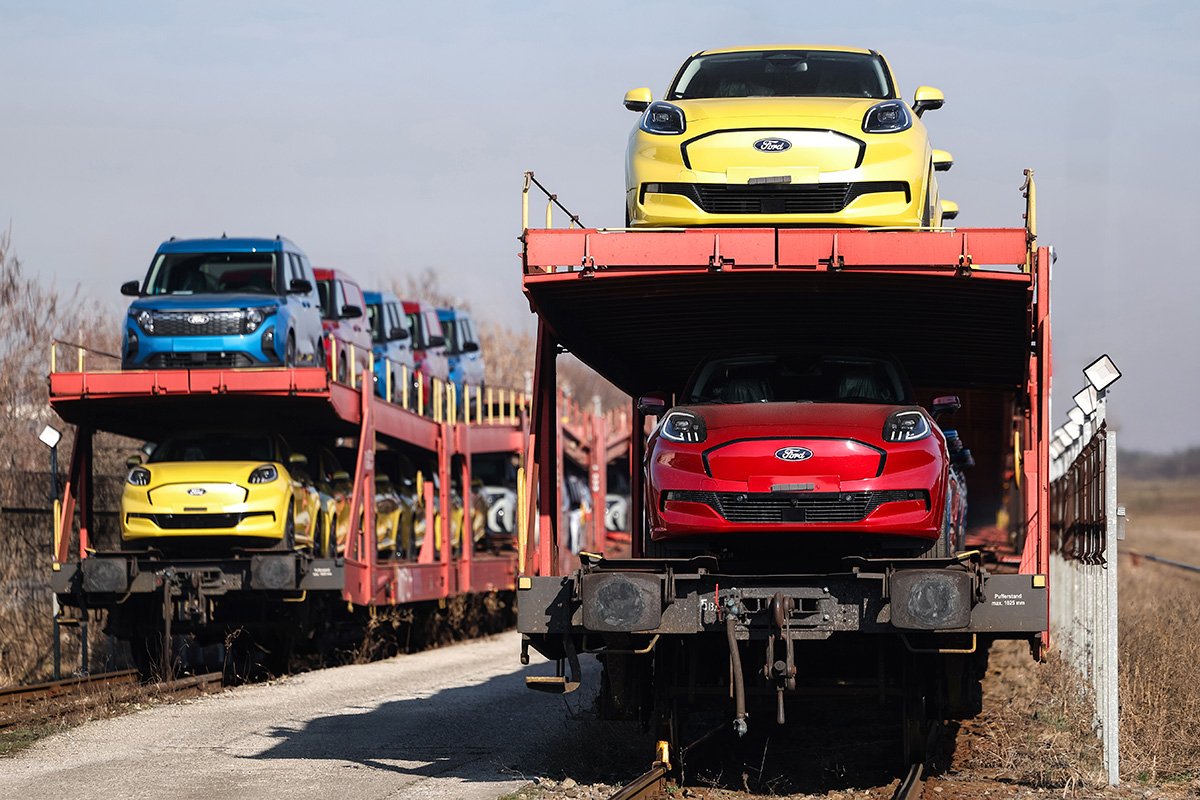
Meanwhile, one brand quietly moving back into a very different place is Ford – the brand registered some 1,300 more cars in July 2025 compared to the same month a year ago, its figure of 9106 beaten only by Volkswagen with 13,452. This was a third consecutive month of rising sales for Ford after a long period of decline.
It doesn’t seem that long ago when cars wearing the blue oval badge dominated the sales charts. The Fiesta sat rooted to the top the new car top 10, with its bigger sister the Focus also a top five resident.
Then the market changed, however, and Ford was slow to react. The Fiesta was consigned to history, and its replacement small SUV the Puma took a while to establish itself. It has now done this, replacing its famed predecessor as the consistently most popular new car among UK buyers – though in July it was just beaten (a mere 73 registrations) by Kia’s Sportage.
Ford also stumbled over the switch to electric. For a long time the only EV one could buy with a blue oval badge was the Mustang Mach-E. This is a car that has its fans but also many detractors, not least those horrified at the use on an electric SUV of such a famed badge as Mustang – one that immediately sparks visions of Steve McQueen wrestling a tyre-shredding muscle-car in one of the most famous movie chases of all time.
The Mustang Mach-E also has a £50,000-plus starting price – hardly the mainstream model one expects from a brand such as Ford.
Now, however, there are four EVs in the Ford line-up, a fact that aids the brand’s UK sales as a whole, because the bigger the slice of its vehicle parc is taken by electric models, the more petrol-powered cars it can sell as well without falling foul of the Government’s Zero-Emissions Vehicle mandate.
That quartet includes the Explorer, a VW-sourced family SUV that starts at £10K less than the Mach-E, and crucially an electric Puma, costing from £27,000 and possibly less when the Government makes its mind up over the EV grant.

The fourth one? Well there is the controversy again, because it’s a coupe SUV based on the underpinnings of the Explorer, but which Ford has decided to call a Capri – again raiding the more glorious bits of its history rather than coming up with a new name.
Yes, as I’ve previously discussed, Renault did exactly the same recently, naming its new small EV a Renault 5 – but anyone who remembers the old 5 can immediately recognise its lineage on viewing the new one. The new Capri offers absolutely nothing to relate it to the classic 1970s Ford, apart from that nameplate.
I’ve just spent 10 days living with a new Capri (look our for a review coming soon on our sister site Business Motoring), and yes, that name coloured my judgement when I first got into it. But once you ignore the name what we have here is a pretty practical, well-built EV with a usable range and which is easy to drive.
The problem is, just about everyone I’ve talked to during my time with the car has not been able to ignore the name – “That’s not a Capri…” is a phrase that has become very familiar in recent days.
And if rumours are to be believed it might not be the last dip into history – a new affordable Ford EV line is due in 2026 and some sources suggest they will be called Fiestas. Now my first proper car was a Fiesta, I courted my wife while driving my Fiesta, and memories of that old Mk1 Ghia are very special to me. I bet many who had a Fiesta as a first car will have similar happy memories, so Ford could again be playing with fire…
The Capri, and the models that are coming, have the means to add to the increasingly positive picture of Ford’s UK sales, and that’s a good thing, because in the past when Ford has been doing well the market has generally been doing well too. But you can’t help think the Blue Oval would do even better if it replaced the staff in its new model naming department…
Andrew Charman is industry and road test correspondent at Motor Trade News