

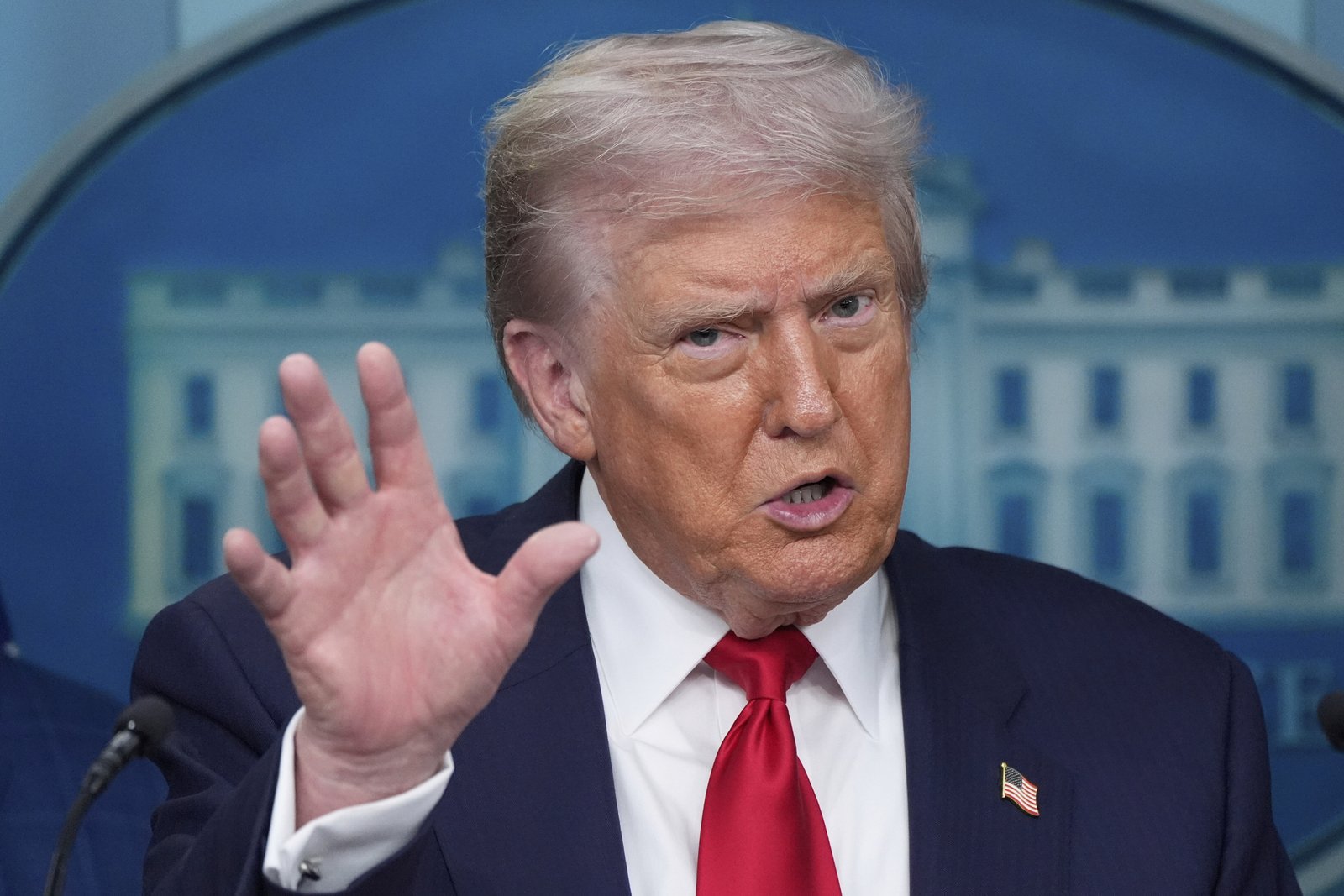
President Donald Trump‘s approval rating among Republican-leaning Americans has declined over the past several months.
A January 26–28, 2025, poll from YouGov and The Economist found that 92 percent of GOP supporters and Independents who lean Republican approved of Trump, while 5 percent disapproved, giving him a net approval of +87.
By mid-May, approval among the same group had fallen to 88 percent, with 9 percent disapproving, a net approval of +79. But in the latest poll this week, 83 percent of Republican-leaning Americans approved of Trump, while 13 percent disapproved, resulting in a net approval of +70.
The poll was taken among 1,577 adults from across the nation.
Why It Matters
The downward trend, though gradual, suggests that even within his strong base, Trump is facing modest erosion in support, signaling potential vulnerability within his core base.
What To Know
Trump’s approval rating among Republican-leaning Americans, while still strong, has fallen on issues such as the economy and personal trust.
Inflation rose to 2.7 percent in June, and job growth slowed sharply in July, with just 73,000 new jobs added—down from 147,000 the previous month, according to the U.S. Bureau of Labor Statistics. The unemployment rate edged up to 4.2 percent, though it remains near historic lows.

Alex Brandon/AP
That is despite Trump’s previous promise to end inflation on day one of his second term. “Starting on day one, we will end inflation and make America affordable again, to bring down the prices of all goods,” he said during a rally in Bozeman, Montana, in August 2024.
There are also concerns about Trump’s tariff program. Commerce Secretary Howard Lutnick predicted $50 billion in monthly revenue from the new import taxes, which came into effect this month. But JPMorgan warned that 60 percent of the increased costs are expected to be passed on to American consumers through higher prices.
Amid those concerns, approval of his handling of the economy among Republicans has declined from 90 percent approval in January to 79 percent in August, with disapproval jumping from 2 percent to 14 percent.
Inflation, often cited as a central concern for voters, shows an even sharper drop, with approval falling from 84 percent to 72 percent and disapproval rising from 4 percent to 22 percent. These trends suggest that economic anxieties are beginning to chip away at the enthusiasm of his core supporters, even as overall approval remains high.
However, perceptions of the economy’s trajectory show a more nuanced picture. Early in the year, only 35 percent of Republicans said the economy was getting better, with 40 percent saying it was the same and 16 percent saying worse. By May, optimism surged, with 56 percent reporting improvement, but by August that confidence had softened to 47 percent, while those seeing the economy as unchanged rose to 36 percent and those viewing it as worse remained at 13 percent.
Personal financial trends tell a similar story. In January, just 15 percent of Republicans said their finances had improved over the past year, 45 percent said they were the same, and 35 percent said they had worsened. By May, those seeing improvement rose to 23 percent, with 55 percent unchanged and 19 percent worse, and by August, 27 percent reported better finances, 49 percent the same, but the share of Republicans who reported worse finances rose to 22 percent.
It comes as Trump’s overall approval rating has dropped nationwide in recent weeks, with Newsweek’s tracker currently putting his net approval rating at -8 points, down from -5 last week.
Trust and Direction Among Republicans Show Decline
At the same time, the share of Americans who view Trump as honest and trustworthy (31 percent) is at a new low since the start of his second term in January, according to the YouGov/Economist poll. And that trend is also present among Republicans.
In January, 77 percent of Republicans said the president was trustworthy. By August, that had dropped to 71 percent, while those finding him untrustworthy doubled from 7 percent to 14 percent.
Republicans’ outlook on the direction of the country has also become less positive over the summer, with 68 percent saying things are going in the right direction in August compared with 74 percent in May, while those saying things are going in the wrong direction rose by 5 points to 22 percent.
But there is still some positive news for the president. In contrast to his record on the economy, Trump’s approval on immigration, which has consistently been one of the biggest areas of support among Republicans, has remained relatively strong and more stable. In May, 90 percent of Republican respondents approved of his policies on immigration, with 8 percent disapproving, and by August, approval had only slightly decreased to 86 percent and 10 percent, respectively.
However, new Gallup polling shows the tide could be turning for the president. About two-thirds of Republicans now say immigrants are “a good thing” for the country, up from 39 percent last year.
What Happens Next
Trump’s approval rating will continue to fluctuate throughout his term in office as he implements his policy agenda. Whether it falls enough to impact the Republican Party in the November 2026 midterms remains to be seen.