

Now Reading: 2026-02 – New hydrogen plant at Wits University to power research
- 01
2026-02 – New hydrogen plant at Wits University to power research

2026-02 – New hydrogen plant at Wits University to power research
– Wits University
Wits University will soon host a working hydrogen plant on placing students and researchers at the centre of South Africa’s move towards cleaner energy.
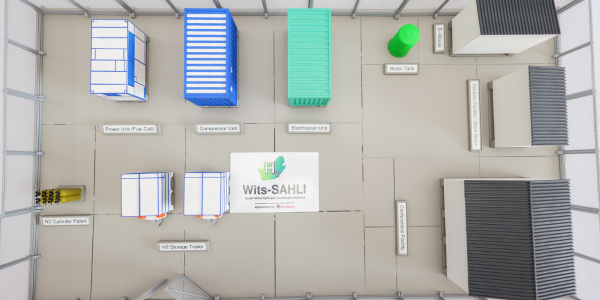
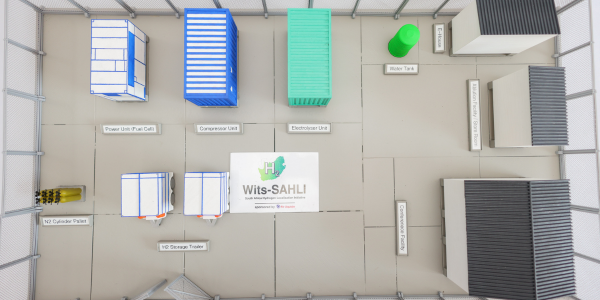
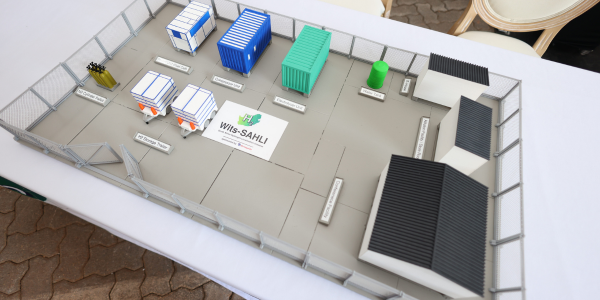
Funded by Air Liquide, and in partnership with Wits University and the Localisation Support Fund, the Wits-South Africa Hydrogen Localisation Initiative (Wits-SAHLI) will build a modular R100 million pilot hydrogen plant that will serve as hydrogen production, teaching, research and testing facility.
The Localisation Support Fund (LSF) was established in 2021 as a non-profit company and public benefit organisation to accelerate industrialisation in South Africa by driving strategic localisation. By strengthening local manufacturing capabilities and removing barriers to competitiveness, LSF ensures that South African firms can scale, innovate, and integrate into global markets.
The Wits-SAHLI plant will use water and solar energy to produce hydrogen through the process of electrolysis. At full operation, it will produce about 2.2 kilogrammes of hydrogen per hour and will be able to store up to 200 kilogrammes of hydrogen on site. The hydrogen can be used for campus energy needs, campus transport projects such as hydrogen-powered vehicles, and for testing by industry partners. The plant is expected to be fully operational in 2028.
Professor Rodney Genga, Wits-SAHLI design team lead, says the facility will change how students learn and how research is done.
“This is not a laboratory experiment. It is a working plant on a university campus,” he says. “Our students will learn in a real operating environment. They will see how hydrogen is produced, stored and used at scale. That kind of exposure builds confidence and skills that South Africa urgently needs.”
The plant will support applied research across engineering, science and commerce. It will also give postgraduate students opportunities to work on practical solutions linked to energy storage, clean transport and industrial use of hydrogen.
Wits Vice-Chancellor and Principal, Professor Zeblon Vilakazi, says the initiative strengthens the university’s role in shaping the country’s energy future.
“We are proud to be at the forefront of driving innovation that addresses the critical challenges of our time. Wits-SAHLI aligns perfectly with our mission to advance the frontiers of knowledge, produce world-class research and nurture talent that will build new industries and lead in the global green economy, for good.”
South Africa’s Hydrogen Society Roadmap aims to position the country as a major producer of green hydrogen by 2030, with a target of up to 500 000 tonnes to help cut emissions in transport and industry. Projects such as Wits-SAHLI are expected to build the skills and local supply chains needed to meet that goal.
Nicolas Poirot, CEO of Air Liquide for Africa, Middle East and India, says investing in research and training is critical.
“We are excited to be investing in this project, which is truly part of a knowledge transfer approach. By bringing Air Liquide’s 60 years of global hydrogen expertise to Wits-SAHLI, we are providing South Africa with the technical expertise needed to lead the continent’s energy transition.”
For students, the plant will open new learning routes. Courses can integrate practical hydrogen training, while research projects can move from theory to real-world testing on campus. Industry partners will also be able to test hydrogen applications without the cost of building their own production facilities.
Nkululeko Magadla, CEO of Air Liquide Southern Africa, says the focus is on building local capability.
“Our goal is to ensure that as the hydrogen economy grows, South Africa is equipped with a home-grown workforce and a competitive network of local suppliers. Wits-SAHLI is yet another tangible demonstration of our commitment to the decarbonisation of South Africa while empowering a local ecosystem,” he said.
Irshaad Kathrada, CEO of LSF, says the partnership ensures that the benefits of new energy industries are shared widely.
“Wits-SAHLI is a model public-private partnership that will build a competitive local supply chain for the green hydrogen sector from the ground up. By focusing on empowering South African companies, we are ensuring that the benefits of the energy transition are shared broadly, fostering inclusive growth and industrial capacity.”