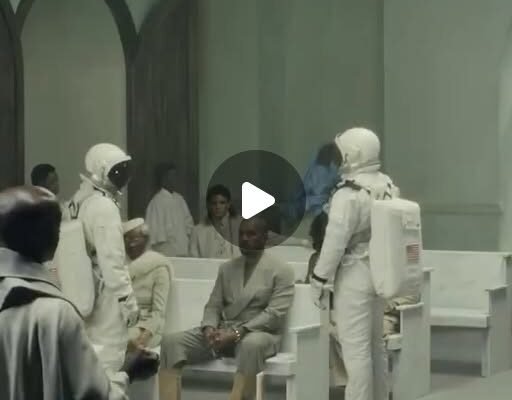


Ryan Cooglar’s horror film “Sinners,” a box office sensation in 2025, has received 16 Academy Award nominations, the most for any movie in cinema history. Cooglar’s complex yet crowd-pleasing original creation has been celebrated not just for its suspense, but for its showcasing of 1930s-era Mississippi Delta blues.
“‘Sinners’ provides an exceptional illustration of the beauty of musical traditions and the ills of its commodification and the racism surrounding it,” said Patrick Salmons, an instructor in Virginia Tech’s Appalachian Studies program whose research focuses on the intersections of music, history, race, and class relations. He answered questions about the way the movie uses music and metaphors to comment on issues of racism in America.
What are the musical traditions highlighted in “Sinners”?
“The opening sequence of the film highlights the many traditions found around the world including the griot traditions found in Africa that would make their way over to North and South America. Interestingly, that sequence ends with an ominous, Stephen King-esque note of an evil that preys on these traditions. Sammie, the protagonist of ‘Sinners,’ honors these traditions while grappling with religious beliefs and the potential destruction of his community because of his musical gifts,” Salmons said.
How do vampires fit into a story about the history of Black music?
“The movie’s director, Ryan Coogler, has made it clear in interviews his intention to play with the horror genre, using vampires as metaphors for the racist, money-hungry music industry outsiders looking to profit from their gifts. He wanted to tell a very particular, compelling, story about Black musicians, racism, and the ability to overcome these institutions and change the world with music,” Salmons said.
“The ending of ‘Sinners’ indicates resilience despite the violence Sammie experienced on his way to becoming a blues legend. However, Coogler’s tightly spun narrative does elicit the complexities of this, as while Sammie survives and thrives as a blues legend, those at the show the night of the horror, and many great musicians before him, did not. It’s a stark reminder to the viewer of progress made, with more progress left to go,” he said.
Does “Sinners” make a statement about the power of music to unite?
“Beautifully, Sammie is a catalyst for all past and future sounds that connect at the main show — blues, rock ‘n’ roll, banjo and fiddle ballads, African tribal music, hip-hop, and more — demonstrating the long intertwined musical traditions that speak to issues of their time across race and class, but also the ways in which this sound attracts those with intent to exploit that musical talent for their own gain. This scene, the most powerful in the film, demonstrates the healing power of music to connect people of all backgrounds to one another, but it also highlights the dangers Black artists experience via exploitation,” Salmons said.
How does “Sinners” treat the banjo, one of the most important instruments in Black musical traditions?
“In ‘Sinners,’ the banjo is not played by a Black character, but rather a white one, the vampire. The banjo is an African instrument, yet in the time when this story takes place, most Black players had put down the banjo in favor of a guitar. The blues were always a part of this history of banjo griots, but they have separated largely due to the white supremacist beliefs cemented in American institutions by minstrelsy that were embedded in the early music industry,” Salmons said.
“If I were to critique this film at all, I would point out that though banjo and fiddle tunes portrayed in this film are performed by the villains, in truth Black and white people played this music together. While there was violence and racism that was ongoing, there was also quite a bit of unity. For example, in West Virginia, white, Black, Indigenous, and immigrant populations all came together to fight against the coal operators, singing similar songs, picking together, regardless of race,” he said.
About Salmons
Salmons is the graduate programs coordinator and a communication specialist with the Department of Political Science in Virginia Tech’s College of Liberal Arts and Human Sciences as well as an instructor for the Appalachian Studies program. His research focuses on the intersection of music, history, race and class relations. In 2021, he wrote a dissertation titled “Hip Hop, Bluegrass, Banjos, and Solidarity: Race and Class Histories in Appalachia U.S.A.” He recently joined the Curious Conversations podcast to discuss the history of the banjo.
Schedule an interview
To schedule an interview, contact Mike Allen in the media relations office at mike.allen@vt.edu or 540-400-1700.