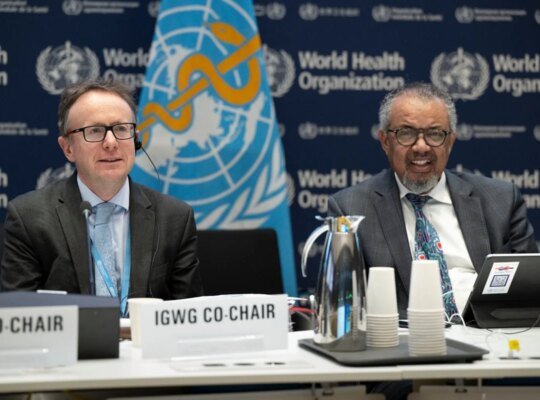


A relatively new form of H3N2 identified this year called Clade K has resulted in increased cases, says Andy Pekosz of the Johns Hopkins Bloomberg School of Public Health.
Flu hospitalizations in New York soared 75% in one week statewide, according to Northwell Health, citing New York State Department of Health numbers.
Hospitalizations have increased to 1,400 patients from the nearly 800 hospitalizations reported last week, according to ABC7 News.
Northwell Health, a 28-hospital system based in New Hyde Park, New York, said during a briefing Thursday that a statewide surge in viral infections is affecting its emergency departments, urgent cares and primary care practices.
The children’s hospital is already at capacity.
Cases of seasonal flu, RSV and COVID-19 — also known as the tripledemic — have jumped in the weeks after Thanksgiving and are expected to worsen as the peak holiday season approaches, the health system said.
RSV cases are up 35%, flu cases are up 30%, and COVID-19 cases are up 15% across the state, the health system said, citing Department of Health data.
Northwell typically cares for 2,800 hospitalized patients on any given day. On Thursday, the health system had a hospital census of about 3,500.
“Our numbers vastly underestimate how many cases are out there. Very few people get tested for the flu. Same with COVID,” said Dr. Bruce Farber, chief public health and epidemiology officer at Northwell.
“After decades of working in our emergency departments — I don’t want to downplay this — but this is something we are very familiar with,” said Dr. John D’Angelo, Northwell’s president and CEO. “This is the start of the flu season. The start of this viral season varies year to year, but the surge is something that we’re used to and we’ve managed over and over again. What you never know is when flu is on the upswing and when the peak is going to be. How long will that plateau last? We don’t know — but we’re fully prepared.”
Northwell Labs data showed more than 37% of all PCR nasal swabs tested (more than 11,000) came back positive for the H3 subtype of Influenza A for the week ending Dec. 14, compared to just a 10% flu positivity rate over the same period in 2024.
There are three influenza viruses that cause disease in people — H1N1, H3N2 and IBV — and there is a relatively new form of H3N2 identified this year called Clade K, which has resulted in increased cases, according to Andy Pekosz of the Johns Hopkins Bloomberg School of Public Health.
Some are calling the mutated strain “super flu.”
The influenza season started earlier in the United Kingdom, Japan and Canada, said Pekosz, a professor and vice chair of the W. Harry Feinstone Department of Molecular Microbiology and Immunology. Pekosz was speaking with other experts during a Johns Hopkins media briefing on Tuesday.
“It is currently driving influenza cases in the U.S. as well,” Pekosz said. “It has mutations that may allow it to evade some, but not all, of the influenza vaccine-induced protection. The H1N1 and IBV viruses circulating look to be good matches to the vaccine.”
Meanwhile, RSV cases are at low numbers in the U.S. this fall. It’s not clear exactly why, but two strong RSV seasons combined with new RSV vaccines and treatments may all be contributing to that reduced case number, according to Pekosz.
“Things are relatively quiet on the COVID-19 front,” he said. “We had a small spike of cases in late summer, early fall, but nowhere near what we have seen in prior years. COVID-19 sometimes increases midwinter, so we are looking carefully to see how a COVID-19 spike might fit in with the expected increases in influenza cases.”
Email the writer: [email protected]