

Influenza activity in the United States has spiked across the country, with 17 jurisdictions (14 states and Puerto Rico; Washington, DC; and New York City) reporting high or very high influenza-like illness (ILI) and other key indicators rising markedly, signaling the start of the flu season in earnest, the Centers for Disease Control and Prevention (CDC) said today in its weekly FluView update.
The CDC also noted two new flu-related deaths in children and provided data on the rise of subclade K among H3N2 flu viruses as Americans approach the peak season of gathering with family and friends.
The number of jurisdictions with high or very high ILI cases for the week ending December 13 is up from five the previous week, the CDC said. In addition, the percentage of respiratory viruses that tested positive for flu rose from 8.1% to 14.8%, and the rate of visits to clinics (outpatient visits) for respiratory illness rose from 3.2% to 4.1%, well above the national baseline of 3.1% (see CDC epidemiologic curve below).
Subclade K now prevalent
“Sustained elevated activity is observed across multiple key activity indicators in many areas of the country, signaling the start of the 2025-2026 influenza season,” the CDC noted. “Severity indicators remain low at this time, but influenza activity is expected to continue for weeks.”
The agency noted that 911 of 927 influenza viruses reported by public health labs were influenza A, with 16 being influenza B. Of 706 influenza A viruses subtyped, 10.1% were the H1N1 strain, and 89.9% were H3N2. Notably, among 216 H3N2 viruses collected since September 28 that underwent additional genetic characterization by CDC scientists, 89.8% belonged to subclade K, the subclade that is predominating in multiple countries and raising concerns about a possible mismatch with the seasonal flu vaccine.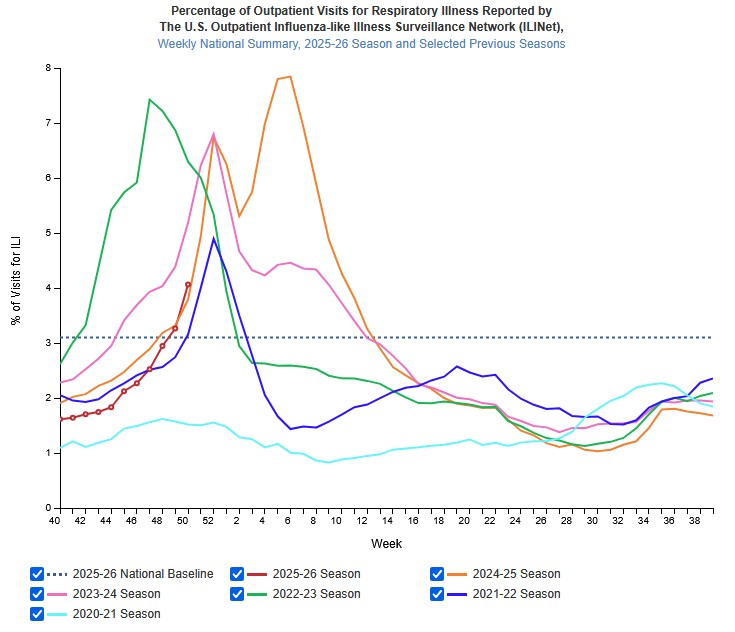
The weekly hospitalization rate for respiratory illness reached 14.3 per 100,000 residents, up from 6.6 the week before. Almost 10,000 patients were admitted to hospitals for influenza last week. Deaths attributed to flu rose slightly, from 0.2% to 0.3%.
Both flu-related pediatric deaths were tied to H3 strains. One occurred in November and one last week. The CDC has now confirmed three deaths in children this year, after 2024-25 saw 288 over the entire season.
The CDC estimates that there have been at least 4.6 million illnesses, 49,000 hospitalizations, and 1,900 deaths from flu so far this season. “CDC recommends that everyone 6 months and older who has not yet been vaccinated this season get an annual influenza (flu) vaccine,” the agency noted. It added, “There are prescription flu antiviral drugs that can treat flu illness; those should be started as early as possible and are especially important for patients at higher risk for flu-related complications.”
The agency said the next FluView update will be posted on December 30 because of the Christmas holiday.
RSV, COVID still at low levels but pertussis elevated
In other updates today, the CDC said, “RSV [respiratory syncytial virus] activity is increasing in the Southeastern, Southern, and Mid-Atlantic areas of the country with emergency department visits and hospitalizations increasing among children 0-4 years old.” Overall, though, RSV activity is low.
It added that COVID-19 cases are low nationally but increasing. Wastewater testing, however, shows very high SARS-CoV-2 levels in Indiana and high levels in Connecticut, Nebraska, and Vermont.
The CDC also said, “Preliminary case reports for whooping cough (pertussis) are lower than their peak in November 2024, although they remain elevated in 2025 compared to immediately before the COVID-19 pandemic. Whooping cough is very contagious and can spread easily from person to person.”