
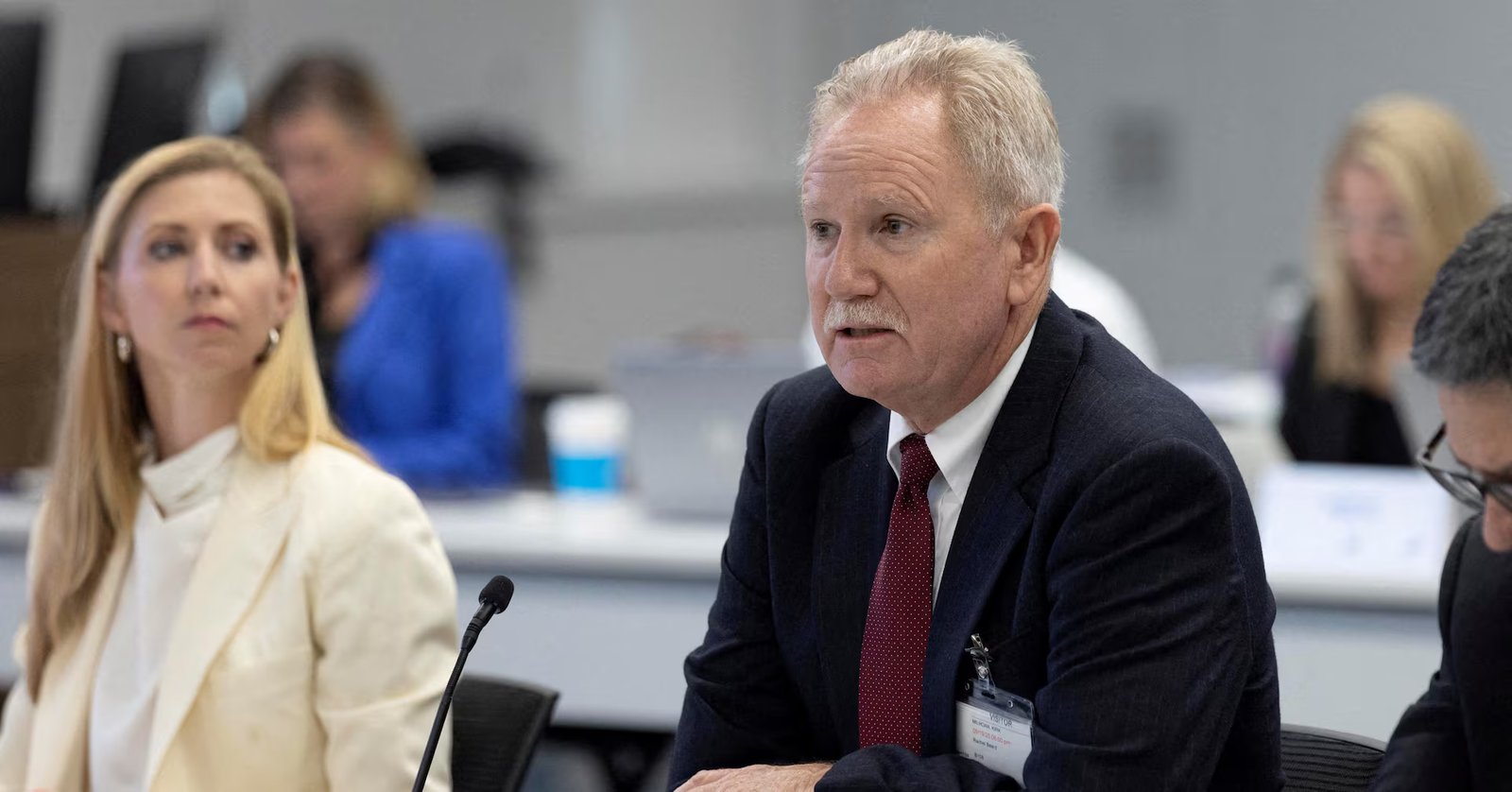
WASHINGTON, Jan 23 (Reuters) – The chair of a U.S. government vaccine advisory panel questioned broad vaccine recommendations for polio and other childhood diseases and said promoting individual choice, not public health, is the key aim of the panel, drawing a rebuke on Friday from the nation’s top doctors group.
Sign up here.
Vaccination against some diseases, like polio, could be reconsidered given advances in medical care, said Milhoan, who joined the committee after Health Secretary Robert F. Kennedy Jr., a longtime anti-vaccine activist, fired all previous members in June.
“Our sanitation is different, our risk of disease is different. And so those all play into the evaluation of whether this is worthwhile, of taking a risk for a vaccine or not,” he said.
Milhoan did not respond to a request for comment.
Polio, a disabling and life-threatening disease, has been eradicated in many parts of the world but still circulates. The CDC currently recommends that all children receive the vaccine.
The American Medical Association said in a statement that it was “deeply alarmed” by Milhoan’s comments.
“This is not a theoretical debate – it is a dangerous step backward,” the group said.
INDIVIDUAL AUTONOMY
Milhoan said the committee aims to prioritize “not public health, but individual autonomy” and that vaccine decisions should be made by patients and doctors, not by mandate.
U.S. schools require vaccination against certain illnesses, including polio and measles, based on state requirements. Most states have typically aligned those with the CDC’s broad recommendations.
Dr. Peter Hotez, dean of the National School of Tropical Medicine at Baylor College of Medicine and co-director of the Texas Children’s Hospital Center for Vaccine Development, said most medical experts now disregard the committee’s opinions.
“It’s a discredited committee,” he said.
Reporting by Leah Douglas in Washington; editing by Caroline Humer and Rosalba O’Brien
Our Standards: The Thomson Reuters Trust Principles.