


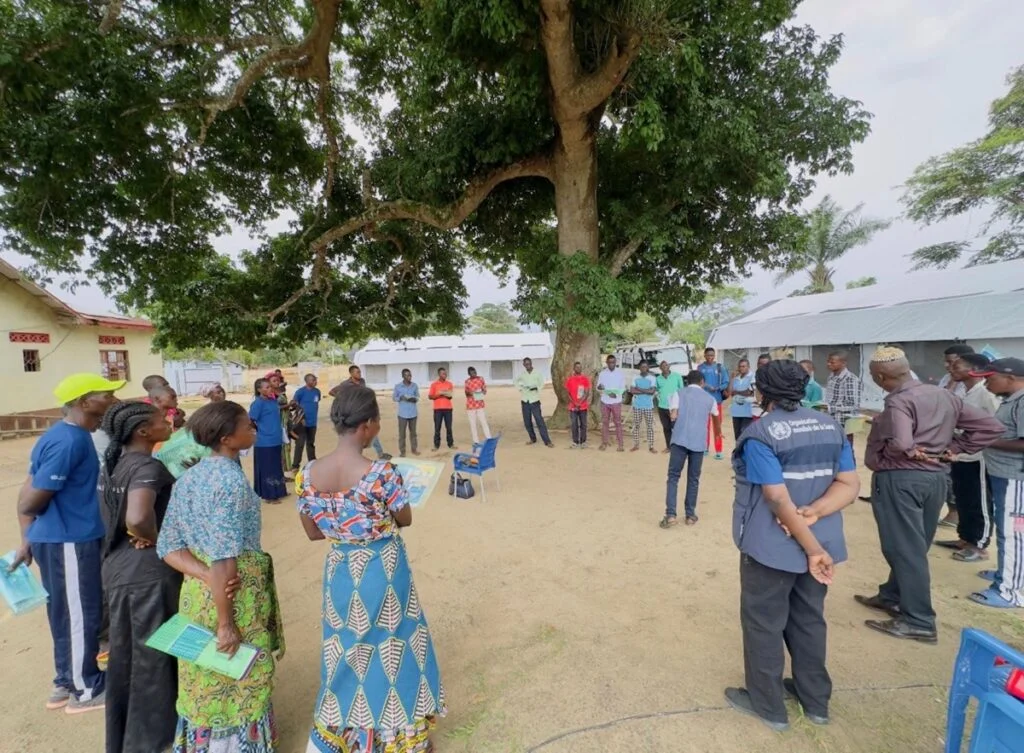
Brazzaville— When an outbreak of Ebola was declared in the Democratic Republic of the Congo’s Kasai Province on 4 September 2025, health authorities faced more than the virus itself. Fear, uncertainty and mistrust threatened to undermine outbreak control efforts in communities experiencing their first Ebola outbreak since 2007.
From the outset, the Ministry of Health Public Health Emergency Operations Center (PHEOC), with support from the World Health Organization (WHO) and partners, recognized that halting transmission would depend not only on disease surveillance, treatment, vaccination and contact tracing, but also on the trust, participation and leadership of communities. Guided by WHO’s Health Emergency Preparedness and Response (HEPR) framework, the response adopted a comprehensive Community Protection approach that addressed both epidemiological risks and the social conditions that influence whether public health measures succeed.
Rather than serving as a standalone activity, community protection was integrated across the response and became a critical enabler of outbreak control. The following initiatives illustrate key lessons for future health emergency responses. This approach was subsequently validated by a recent study that identified community protection as one of seven key strategies contributing to the rapid containment of the outbreak.
For the African Region original full text click on the link.


