

Stay up to speed with stories written by drivers, for drivers.
Get automotive news, DIY tips, market trends, in-depth car profiles, and more right in your email inbox.
As has happened to me many times, classic cars seem to find me rather than the other way around. In the case of today’s subject, it was way back in April of 2015. It was just starting to get nice after a typical crummy Midwest winter, and I decided to point my Lincoln Town Car Cartier towards a favorite Chinese restaurant in East Moline, Illinois, for some Mongolian beef.

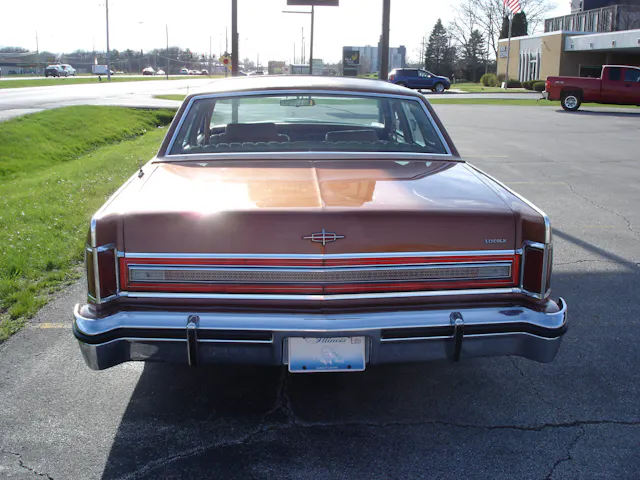
And what suddenly made me momentarily forget about dinner? It was this copper-toned ’77 Town Car sitting right off the frontage road. I immediately screeched to a halt and leapt out of my car. Fortunately, I had put it in park, so it didn’t roll across the florist parking lot and into the drainage ditch!
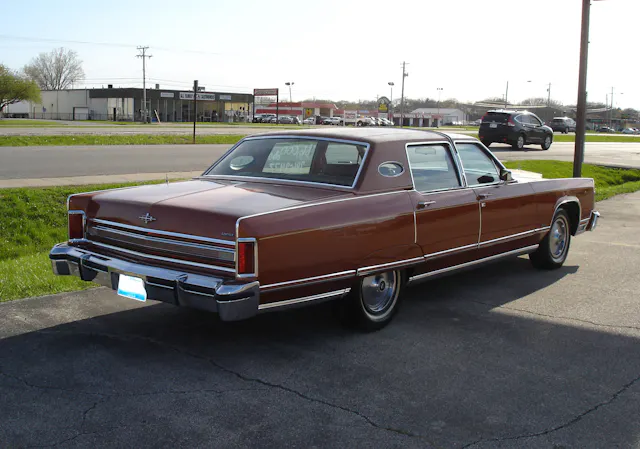
The color, according to the 1977 Lincoln Continental brochure, is Ember Moondust, an extra-cost option. As I was putting together my notes for this column, I thought it may have been Cinnamon Gold Moondust, but that color was a little lighter. By the way, Moondust was similar to cross-town rival Cadillac’s Firemist optional paint shades; extra cost, and usually especially brilliant, with lots of metal flake.

As far as I could tell, it was in near showroom shape, right down to the luxury wheel covers, whitewall tires, and all the exterior chrome and badging. This car was the top of the line, above the “basic” Continental, which of course was still an extremely nice car.

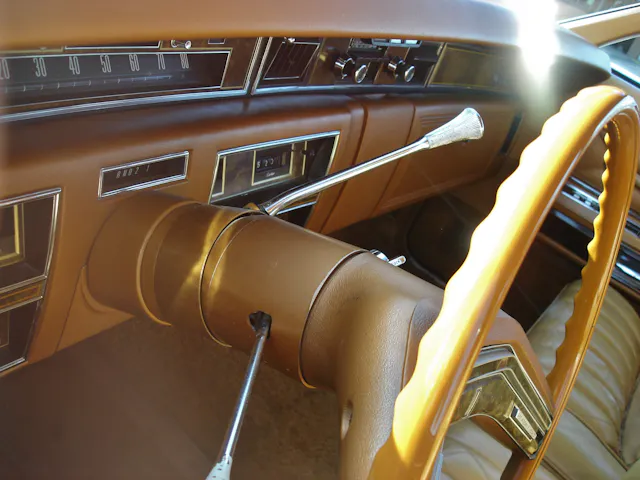
The Town Car and its two-door variant, the Town Coupé, were an optional package over the Continental coupe and sedan, primarily consisting of “floating pillow” seating, fancier door panels, power vent windows (known sometimes as “cigarette windows” back in the day), full vinyl roof, carpeted trunk with spare wheel cover, and more.

The biggest difference between the 1975-76 Continentals and the ’77 was the new Mark-style “Parthenon” grille, replacing the previous low, wide unit. The two-door Connie went for $9474 while the sedan was $9636. Of course, the Town Car/Coupé package added to the grand total.

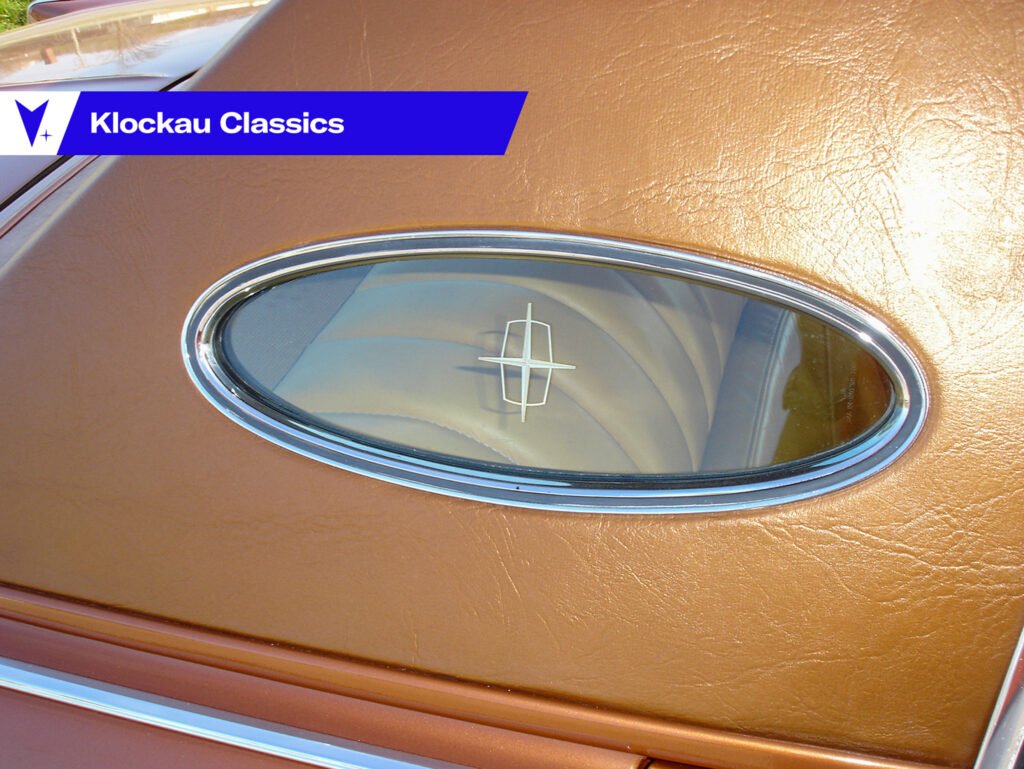
There was also a myriad of additional optional equipment, including the aforementioned Moondust colors, turbine-style aluminum wheels, polished, forged aluminum wheels, the half-top Coach Roof, and the optional oval opera windows in the C-pillar (on the sedan only, all two-door Continentals had the square rear quarter window with the Continental star set into the glass).
A lot of people assume that the opera windows came with the Town Car package, but that was not the case, as they were a separate extra. They are not common, but occasionally you’ll see a Town Car with a solid rear C-pillar, but all the Town Car goodies otherwise.
The Continental two-door weighed in at 4836 pounds. The sedan, 4880. Engine choices were the 179-horsepower, 400-cubic-inch V-8 or the 208-hp 460. Of course, all cars had power steering, power front disc/rear drum brakes, automatic temperature control, and white-sidewall Michelin tires.
Total production was 27,440 two-doors and 68,160 four-doors. There weren’t separate breakouts for Town Car or Town Coupé totals.

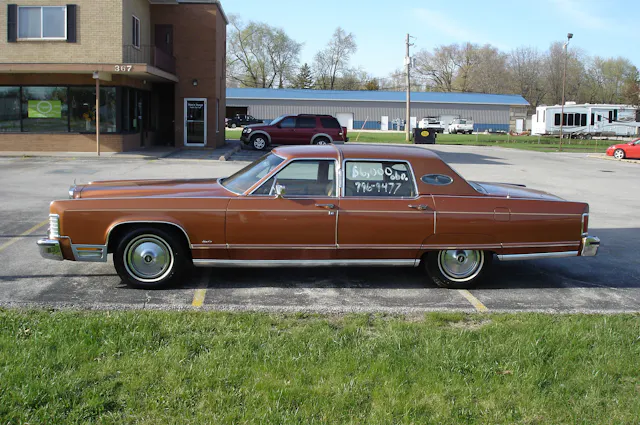
At the time, the soaped phone number and price on the window advertised a mere six grand to take it home, a steal in your author’s opinion. It was in great shape, with some slight wear to the leather on the driver’s seat about the only thing to complain about. I didn’t see a speck of rust anywhere, not even on the bumpers.

At any rate, it was gorgeous in this color, with the complementary Chamois leather interior, coach roof, and standard wheel covers, though the aluminum turbine wheels would have spiffed it up! And the next time I drove by, it was gone.

That was over 10 years ago, and I haven’t seen it since. I hope it went to a good home! If I hadn’t had both my 2006 Volvo V50 wagon and the 2000 Town Car Cartier at the time, I might have made an offer!