
Now Reading: How South Korean jet fuel — and pop music — are impacting Hawaiʻi and beyond
- 01
How South Korean jet fuel — and pop music — are impacting Hawaiʻi and beyond


How South Korean jet fuel — and pop music — are impacting Hawaiʻi and beyond
Uncertainty continues to surround the Strait of Hormuz as military conflict continues in the region.
U.S. Central Command said it carried out a round of “self-defense strikes” in southern Iran near the Strait of Hormuz, targeting missile launch sites and Iranian speed boats used to lay mines.
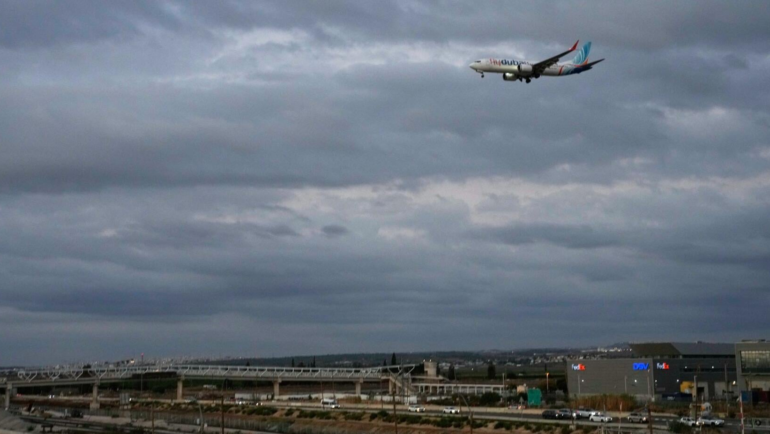
The strait’s closure has driven up the price of oil, but there’s another vulnerability threatening Hawaiʻi’s energy concerns: jet fuel.
Hawaiʻi imports around 70% to 80% of the jet fuel it consumes, and according to the Hawaiʻi State Energy Office, 95% of the jet fuel imports in 2025 came from South Korea. This year, it’s up to 99%.
To learn more about how South Korea became a key regional oil refiner and how the Iran War is impacting the crude oil the country imports through the Strait of Hormuz, HPR spoke with Jean Lee, Presidential Chair of the East-West Center in Honolulu.
Interview Highlights
On Hawaiʻi’s dependence on South Korean jet fuel
JEAN LEE: I would say this is our moment to give our listeners a wake-up call and to show exactly how what’s happening in the strait directly has an impact on us living on an island where we rely on planes, military, commercial, cargo to not only transport us interisland, to take us to the continent, to take us beyond and also to bring in critical and essential supplies to the islands. … So, as you point out, we have been relying on South Korean refiners to provide the bulk of our jet fuel, and so what happens when those South Korean tankers … can’t get through the strait to take that crude oil to South Korea to be turned into jet fuel that powers our aircraft? And so that is a dilemma that I have been watching.
On how South Korea became a major jet fuel exporter
LEE: South Korea does not have its own oil fields, but what they do is import crude oil, mostly from the Gulf. And they’ve built up over the decades, this massive infrastructure to refine crude oil and turn it into all kinds of refined products. And so that’s testament to their investment in technology, their innovation, the way that they’ve seen an opportunity. However, most of those refineries are built to process crude oil from the Gulf, and so because most of their crude oil cannot get out of the Gulf right now, they’re in a quandary, and that’s what we’re seeing right now. … So, it’s been challenging. And then, as we heard in the news today, that ceasefire may not hold. Tensions are still very high. The prospects of any kind of a deal seem distant, so we have to brace ourselves and prepare … for this continuing. South Korea is looking for other ways to diversify its sources, but that also means they’ve got a limited supply, and we are just one of many, many customers.
On seeing BTS in Vegas, and their economic impact on South Korea
LEE: I felt like it was a cultural moment that I could not miss, not only because they’re a global phenomenon, but … they have a significant economic impact on the South Korean economy.
LEE: They do bring billions every year to the South Korean economy, just by virtue of the fandom and all of the economic avid activity related to this absolute obsession with BTS, and then there’s that, as you mentioned, the soft power diplomacy, the ability they have to promote South Korean culture and to promote their message, which has been very much a message of inclusion, and so that has been really astounding to see. So I will tell you, as an ethnic Korean who grew up in Minnesota, I could not have imagined growing up at a time when no one knew anything about Korea, that I would see so many non-Koreans waving the South Korean flag, but also singing BTS songs in Korean.
This story aired on The Conversation on June 3, 2026. The Conversation airs weekdays at 11 a.m. Jinwook Lee adapted this story for the web.