
Since it emerged in the early 1970s from Black communities in New York City’s Bronx neighborhood, hip hop’s infectious energy has infused almost every facet of modern culture — including music on national stages, Olympic sports, fashion trends and even drug rehabilitation programs. In dance specifically, “hip hop” refers to dozens of substyles — like waacking, breaking, voguing and house — and has become a major category in competitive collegiate and professional spheres like the Universal Dance Association Nationals.
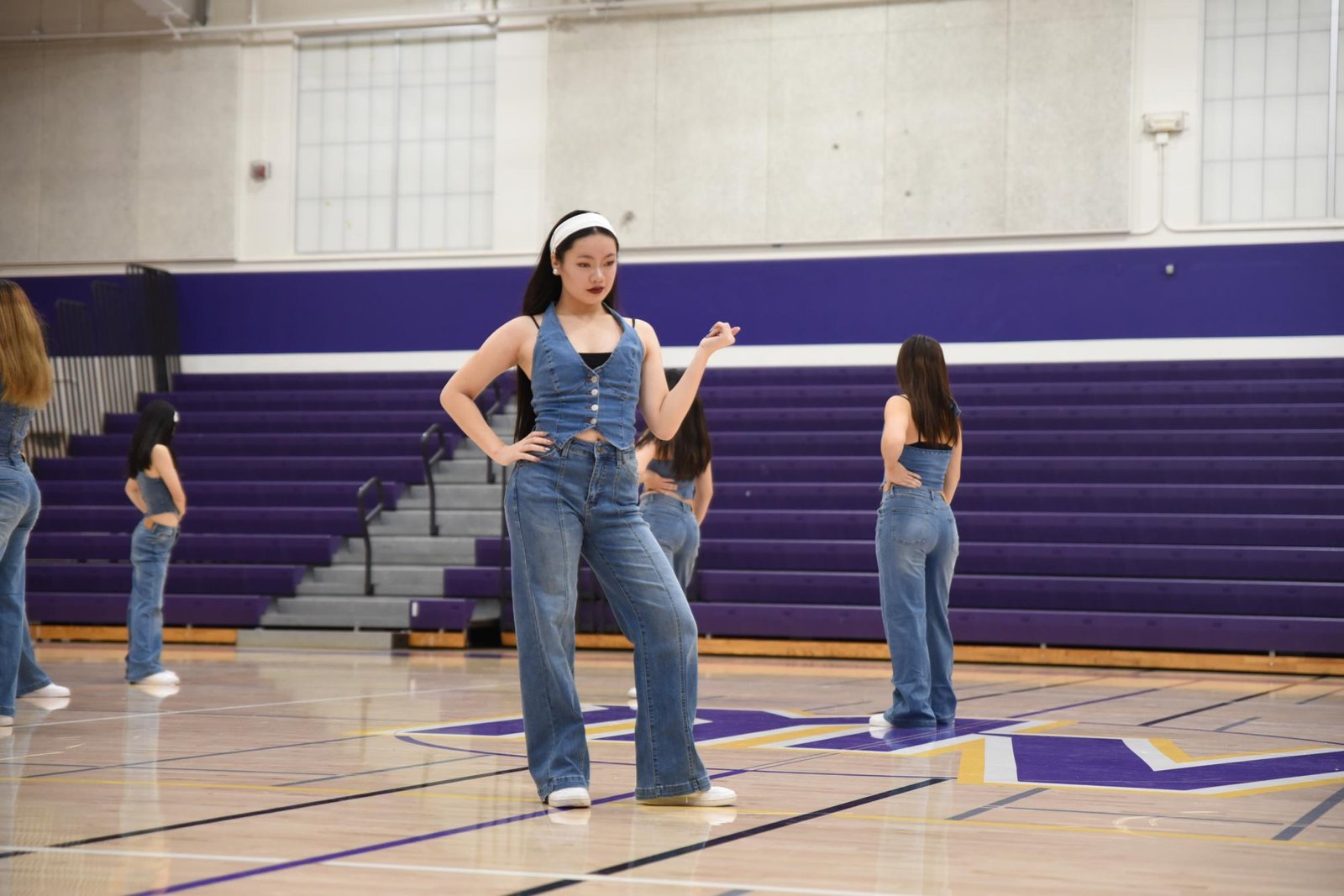
MVHS alum ‘25 Alyssa Yang first seriously tried hip hop her freshman year, when she joined the MVHS Dance Team. She performed at both competitions and school spirit events like rallies and football games. Although she had been introduced to hip hop before MVDT, she was still unfamiliar: after growing up doing Chinese dance, Yang says that hip hop, which isn’t a studio-derived style, was technically much harder to adjust to than other competition genres like jazz and contemporary dance.
“Hip hop felt like a foreign world,” Yang said. “But once I started doing it more, I had a lot more fun and I felt myself growing as a dancer, because I was learning to explore and perform more types of dance in a way that I wouldn’t have known to explore otherwise. I grew to love hip hop because there’s so much spirit in this style. It’s something that really engages with audiences and you also feel that energy.”
Yang currently attends the University of California, Berkeley, where she has joined a contemporary dance company and is considering participating in a hip hop-focused group this semester as well. Although Yang misses the more interdisciplinary fusion-style dance that she explored in high school, she says that competitive circuits, like the ones she was in as a MVDT member, can cause styles like hip hop to be overly sterilized. Many social media spheres share Yang’s sentiment, as dance competitions like the recent collegiate UDA Nationals have been criticized widely for prioritizing tricks and rigid synchronization over artistry in their scoring.
“For competitions, especially in high school, it feels so strict,” Yang said. “Teams focus so much on cleaning their routines, on making them really precise, that it loses some of the spirit that hip hop as a style originally had.”
The same demanding culture characteristic of competitive dance is one of the reasons why senior and Hip Hop Club co-president Sarah Shelke has found fulfillment in pursuing hip hop recreationally. Shelke joined MVDT in freshman year after first gaining dance experience through kathak, a form of northern Indian classical dance that is most often used for storytelling. Through MVDT, she, like Yang, competed and performed hip hop routines in groups of varying sizes. However, Shelke left MVDT after her sophomore year, and focused instead on growing Hip Hop Club with her co-founder, senior Megan Liu.
“Competing was definitely more intensive, but what I didn’t like about that intensive culture was that it took away from the fun of just being able to enjoy yourself in hip hop,” Shelke said. “With Hip Hop Club, there’s a lot more leniency. If we’re not feeling comfortable with a specific step, we can all change it to be how we want it to be. Then there’s more room for self expression in the club, and that’s what I really appreciate about our culture.”
Hip Hop Club is one of only a few dance groups at MVHS to not require members to audition before joining, which has led to the club accommodating a large range of skill levels. Shelke explains that officers bridge this gap in several ways, including one-on-one help with choreography for beginners and splitting up performance groups into skill-based subunits.
According to Shelke, incorporating inexperienced members is important because she believes hip hop should be universally accessible, especially since it originated as a street dance. Through the club, she’s noticed that hip hop has a unique ability to connect dancers with both each other and their own past experiences.
“Hip hop is really fun because when I was doing cultural dance, I felt that I couldn’t connect to the music, but with hip hop, I feel that connection on a much deeper level,” Shelke said. “Hip hop is also very diverse in itself, so even though I was focusing on a different style from what I did previously, the techniques I learned from kathak were still relevant. I think that connection goes for a lot of different cultural styles, so even as I’m leading Hip Hop Club, I can see that happen. Even if it’s someone who’s done something like Chinese folk dance in the past, we can see how those styles have helped us all connect to hip hop, and that’s what makes it very unique.”
Mirna “Mimi” Jiron de Llano, who teaches hip hop at Dance Academy USA in Cupertino, similarly believes that hip hop can inspire a unique connection. Jiron de Llano says that hip hop choreography’s accessibility is generally positive, but can cause dancers to overlook the genre’s rich history.
“When I teach, I always like to go over the history of hip hop, particularly the foundational styles that are considered the most old school,” Jiron de Llano said. “So that’s popping, locking, house, waacking and breaking — understanding where it’s from and how it originated. I really wish people would do their research more on the history of not just the styles, but the moves themselves, because people on TikTok, for instance, think, ‘Oh, this is a brand new dance move,’ when, in actuality, it’s been around for so long.”
Shelke affirms that dancers should understand the roots of a culturally rich genre like hip hop in order to fully appreciate and understand its versatility. According to her, many people don’t see past profanity or vulgarity in hip hop music, and therefore miss its artistry and meaningful uses in broader social movements and activism.
“I wish more people didn’t just think of hip hop as just a silly or fun style,” Shelke said. “There’s a deeper meaning to hip hop, through its cultural roots, and hip hop is still a very valid style where you can express deeper emotions. You can use hip hop as a medium for storytelling, which is what I always try to show.”
Moving forward, Shelke believes that hip hop has been and will continue to be an incredibly fulfilling addition to her dance journey. She says that hip hop has been a catalyst for her to grow as both a person and a dancer.
“I’ve had so much fun because after doing dance team, I felt a really big gap within myself and my connection to dance,” Shelke said. “Of course, school and other things get in the way of that. But hip hop really helped me to not only find my way to a different community, but also to find my connection again to dance and rediscover how much I truly do love it.”