
You May Also Like
Panic attacks in children and teens can feel sudden, scary and confusing. A child may seem fine one minute and terrified the next. Their heart may race. They may cry, shake or say they cannot breathe or are going to pass out. For parents, these moments can look like a medical emergency or even a behavior problem.
Early recognition and support can help children and teens feel safer and more in control. The American Academy of Child and Adolescent Psychiatry notes that panic disorder often begins during adolescence, though younger children can experience panic attacks as well. When parents know what to look for, they are better prepared to respond with reassurance, support and appropriate care.
In this article, you will learn:
- What a panic attack is
- How to spot panic attack symptoms in children
- What a panic attack feels like for kids and teens
- How to help and when to get professional support
What Is a Panic Attack?
A panic attack is a sudden wave of strong fear along with intense body symptoms. It can happen even when there is no real danger nearby. The body goes into “fight-or-flight” mode, which is the body’s alarm system.
This response is meant to protect us from danger, but during a panic attack, it can turn on even when a person is safe. The brain sends out an alert, and the body releases stress hormones like adrenaline. This can make the experience feel sudden, powerful and hard to control.
How Can I Tell If My Child Is Having a Panic Attack?
Parents should look for changes in emotions, body symptoms and behavior in their child. The shift is often fast and intense.
Panic attacks can look different depending on a child’s age and ability to describe their feelings. Younger children are more likely to cry, cling or complain of a stomachache or chest pain without knowing how to explain the fear. Teens may say they feel embarrassed, trapped or like they are “going crazy.” They may hide symptoms, leave class or avoid friends.
Emotional Signs
- Sudden fear
- Crying
- Clinginess
- Fear of dying
- Fear of losing control
Physical Signs
- Rapid breathing
- Nausea
- Chest pain
- Trembling
- Feeling faint
- Sweating
- Dizziness
Behavioral Signs
- Wanting to escape a room or situation
- Refusing to go to school
- Avoiding sports, social events or other activities
- Trouble falling asleep or staying asleep
It’s important to note that some of these signs can overlap with other conditions, such as medical issues or general stress. Observing patterns and triggers can help parents differentiate between a panic attack and other concerns.
What Does a Panic Attack Feel Like for a Child or Teen?
From a child’s perspective, a panic attack can feel like losing control over their mind and body. It’s not just the physical sensations — it’s the overwhelming fear and confusion that make the experience so intense. Many children describe feeling trapped, as though they cannot escape the fear even when they are safe.
Emotionally, they may feel a sense of doom or believe something terrible is about to happen. This can lead to thoughts like, “What’s wrong with me?” or “Am I in danger?” For teens, the experience may also include embarrassment or fear of being judged by peers, which can make them reluctant to share what they are going through.
The first panic attack is often the most frightening because it feels so unexpected. Children may think they are having a serious medical emergency, which can add to their distress. Understanding this emotional side can help parents provide reassurance and support.
Panic Attack vs. Anxiety Disorder: What’s the Difference?
Many parents ask about panic attack vs. anxiety attack or wonder if the two are the same. They are related, but they are not exactly alike.
- A panic attack is sudden. It comes on quickly and feels intense. Physical symptoms often peak within minutes.
- Anxiety is usually more gradual. Worry builds over time. A child may feel tense, nervous or restless for hours or days. They may have childhood anxiety symptoms without the sudden rush of a panic attack.
| Panic Attack | Anxiety |
| Sudden | Gradual |
| Intense fear | Ongoing worry |
| Strong physical symptoms | Milder symptoms, longer duration |
| Peaks quickly | Builds over time |
Some children who have panic attacks also have an anxiety disorder, such as generalized anxiety or social anxiety. Repeated panic attacks may also be part of what’s called panic disorder, which involves ongoing episodes of intense fear.
How Long Do Panic Attacks Last?
Most panic attacks last between five and 30 minutes, although lingering anxiety may continue longer.
The strongest symptoms often peak within a few minutes. After that, they usually begin to ease. Even so, a child may feel tired, shaky, emotional or worn out after the attack ends.
Some children may want to sleep afterward, while others may stay worried that another attack will happen.
What Causes Panic Attacks in Children and Teens?
Panic attacks do not always have one clear cause. They can happen when a child or teen feels stressed, overwhelmed or scared. Sometimes panic attacks seem to happen for no obvious reason, while other times they are triggered by specific situations or events.
Common Causes of Panic Attacks Include:
- School pressure
- Test stress
- Social anxiety
- Bullying
- Family conflict
- Trauma or grief
- Big life changes, such as divorce, moving or loss
- Too little sleep
Risk Factors for Panic Attacks Include:
- Family history of anxiety
- Existing anxiety disorders
- ADHD or depression
- Chronic stress
- Poor sleep habits
When a child feels overwhelmed, normal sensations like a racing heart or dizziness can feel scary. Fear of those symptoms can intensify the body’s alarm response, creating a self-fueling cycle of panic and worry about future attacks.
How To Help During a Panic Attack
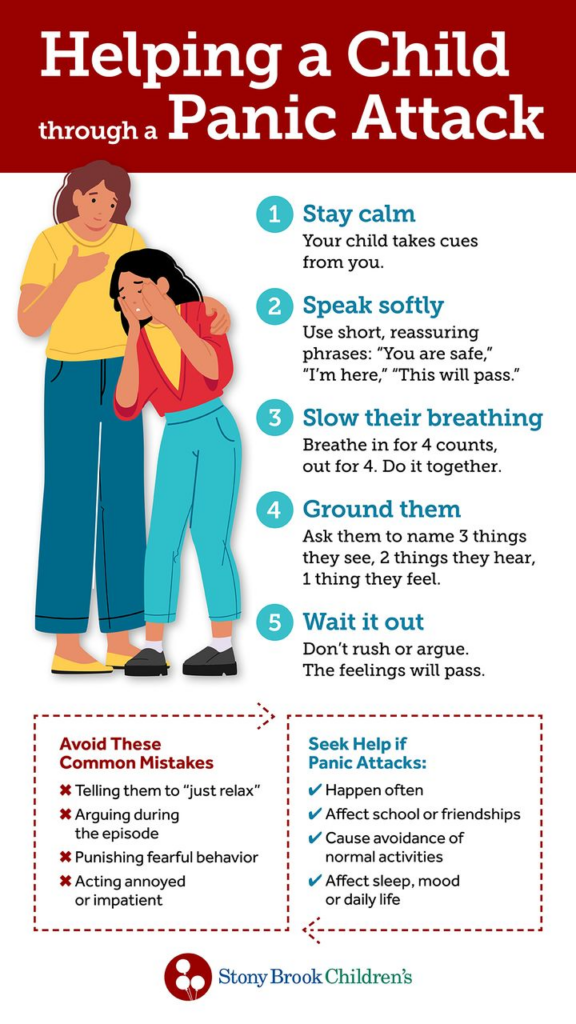
If your child is having a panic attack, your calm presence matters. You may not be able to stop it right away, but you can help it pass more safely and gently.
Ways To Support Your Child:
- Stay calm. Your child will take cues from you.
- Speak softly. Use short, reassuring phrases like, “You are safe. I am here.”
- Move to a quiet place if possible.
- Encourage slow breathing. Try breathing in for four counts and out for four counts.
- Use grounding techniques. Ask them to name:
- Three things they can see
- Two things they can hear
- One thing they can feel
- Wait it out with them. The feelings will pass, even if it takes time.
Avoid These Common Mistakes:
- Telling them to “just relax”
- Arguing during the episode
- Punishing fearful behavior
- Acting annoyed or impatient
The goal is not to force the fear away. The goal is to help the child feel safe while the body settles down.
When Should Parents Seek Professional Help?
It is a good idea to seek help if:
- Panic attacks happen often
- Symptoms interfere with school or friendships
- Your child avoids normal activities
- Sleep or mood gets worse
- Your child seems hopeless
- Your child talks about self-harm
Treatment for Panic Attacks in Children and Teens
Oftentimes parents will take their children to various specialists only to be told that there are no medical causes for their child’s issues. However, panic attacks are very real. The good news is with the right support they are treatable.
Treatment May Include:
- Cognitive behavioral therapy (CBT): CBT helps children understand panic attacks and learn coping skills such as calming thoughts and breathing techniques.
- Interoceptive exposure: A type of therapy that gently helps children experience and tolerate physical sensations in a safe, controlled way so they learn the symptoms are uncomfortable, but not harmful.
- Family support: Parents and caregivers can help by responding calmly, reducing stress and encouraging healthy coping habits.
- Medication: Medication may be recommended if panic attacks are severe, frequent or happen along with another mental health condition.
- Early treatment: Getting support early can help children feel safer, more confident and better able to manage symptoms.
Panic attacks in children and teens can feel overwhelming for both children and parents. If you notice repeated symptoms, use these tips as a starting point and talk with your child’s doctor or a mental health professional. Early support can help children build confidence, reduce fear and learn healthy ways to cope. With the right support, children and teens can learn to manage panic attacks and feel more in control.