
You May Also Like


Much of the region has been under an orange-level heat warning since this weekend.
RED LAKE — Some places have set new record highs as temperatures continue to soar in the region.
Red Lake and Pickle Lake both saw the hottest July 12 on record Sunday.
In Red Lake the mercury hit 36.4 C, three degrees higher than the 2006 record of 33.3 C.
Pickle Lake set a new high temperature record with 36.1 C, more than two degrees above the 33.7 C high seen in 1997.
That’s according to Environment Canada’s Warning Preparedness Meteorologist, Geoff Coulson.
Much of the Northwest region has been under an orange-level heat warning since this weekend. In many cases, said Coulson, temperatures are sitting in the mid-30s, with the Humidex making it feel more like the low-40s.
Coulson said that the Kenora area was forecasted at 36 Monday, nearing the record of 38.9 C set in 1936.
“It is possible some locations in Northwestern Ontario today and tomorrow could be getting into record territory as well,” he said.
“Because this is one of the more significant heat events of recent times, not everybody is necessarily acclimatized to lots of heat and humidity,” he explained.
“Things may be a little less hot on Tuesday but still above normal, and the warning likely (is) still going to continue for many areas, he said.
“And then we start to transition out of the high heat and humidity as we get into Wednesday and Thursday.”
Heat is not the only thing keeping people indoors, as heavy smoke has set across the region due to numerous wildfires.
“The smoke is impacting some communities off and on as the winds blow in from the prairies. So, we’re getting some wildfire smoke being contributed by the forest fire activity in Saskatchewan and Manitoba as well,” said Coulson.
He added that in the coming days, the highest concentrations of wildfire smoke will be between Thunder Bay and Fort Frances due to the fires along the Minnesota border.
“But again, with the activity in other parts of northwestern Ontario and the activity in Manitoba, we could occasionally see poor air quality due to wildfire smoke in a number of communities in northwestern Ontario.”
On Monday, the Northwest Health Unit shared tips for extreme heat warnings published by the Government of Ontario website.
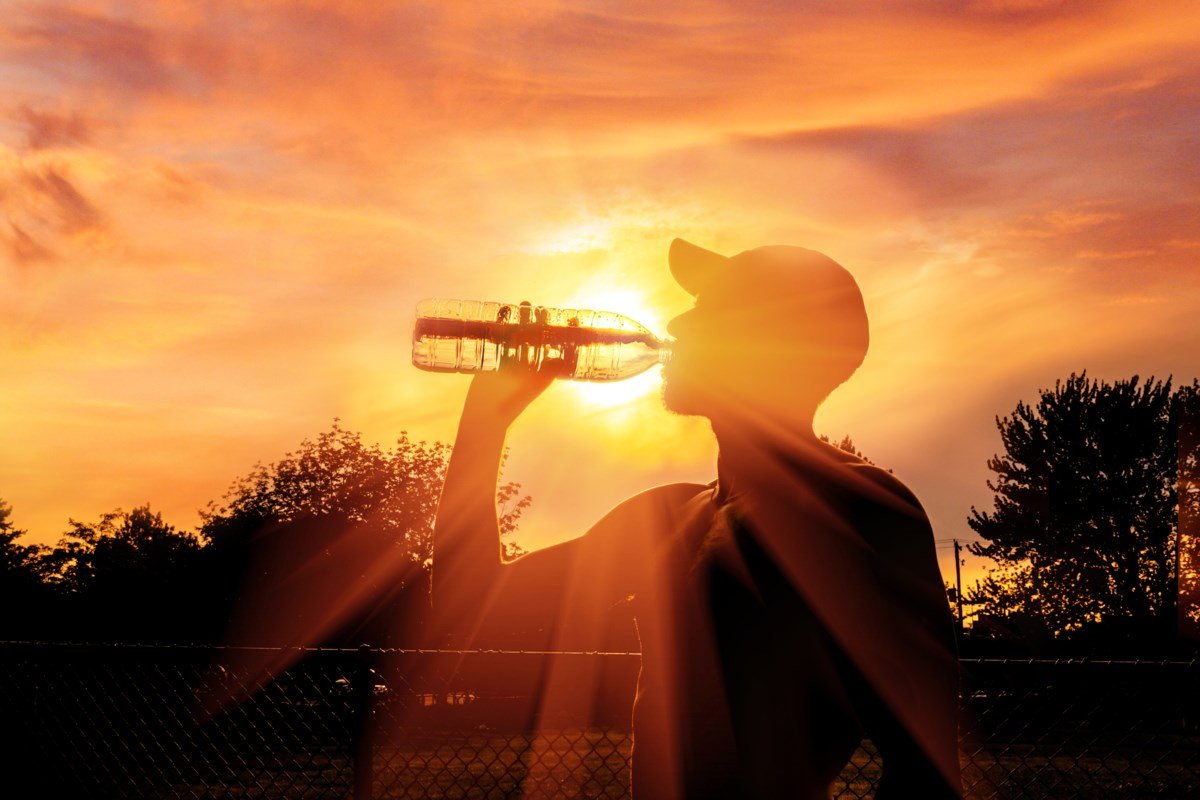
Coulson also stressed the importance of taking frequent breaks and drinking lots of fluids for those who must work outside in these conditions. He added that sports drinks are especially helpful for replacing the electrolytes lost by sweating.
He added that people should keep up-to-date on warnings and statements from Environment Canada, including the possibility of strong thunderstorms that are driven by the humidity.
The current heat wave is the first orange-level heat warning that Northwestern Ontario has seen, Coulson said, since the new colour-coded weather system with its yellow, orange and red levels, was established last November.
He added that there would need to be an “extremely rare event” to qualify a red-level heat warning, which has never yet occurred.
