
Sargassum blankets South Florida beaches… What about the West coast? Here’s what to know – NBC 6 South Florida
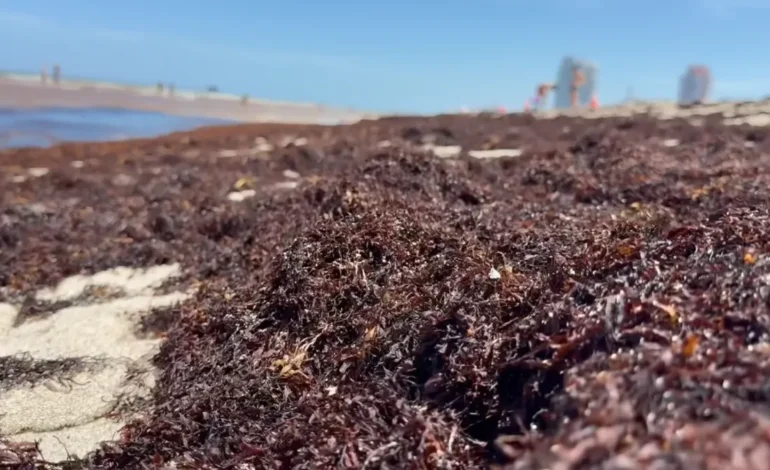

A surge in sargassum has blanketed South Florida’s beaches, and is also appearing on Florida’s Gulf Coast, though the seaweed buildup there remains significantly lighter than along the Atlantic Coast.
What is Sargassum and why does it smell bad?
Sargassum is a type of brown seaweed but recently its abundance has gathered public attention.
Once the seaweed washes ashore, it begins to rot, creating a gas called hydrogen sulfide, which not only smells bad (like rotten eggs) but can irritate beachgoers’ eyes, nose and throat, according to Miami-Dade County’s Parks, Recreation and Open Spaces Department .
Where did sargassum come from?
The seaweed originates from the West Coast of Africa and then travels to not only the Atlantic Coast but also the Gulf of Mexico.
It migrates via a giant mass of seaweed called the Great Atlantic Sargassum Belt that stretches 5,499 miles long.
According to the National Oceanic and Atmospheric Administration (NOAA), since the creation of the Great Atlantic Sargassum Belt, the seaweed has been gradually covering more surface area on Florida’s shore.
Why is there less sargassum in the West?
According to NOAA, the Gulf’s sargassum rates tend to be lower than other Florida coastlines. This is due to an ocean current called the Loop Current, which pulls rich nutrients such as sargassum into the gulf, but then back out and under the Keys, never touching the West Coast.
This minimizes the amount of seaweed that accumulates in the West part of Florida, though inconsistent patches still reach beaches near Naples, Fort Myers and along the gulf coast, including Alabama.