
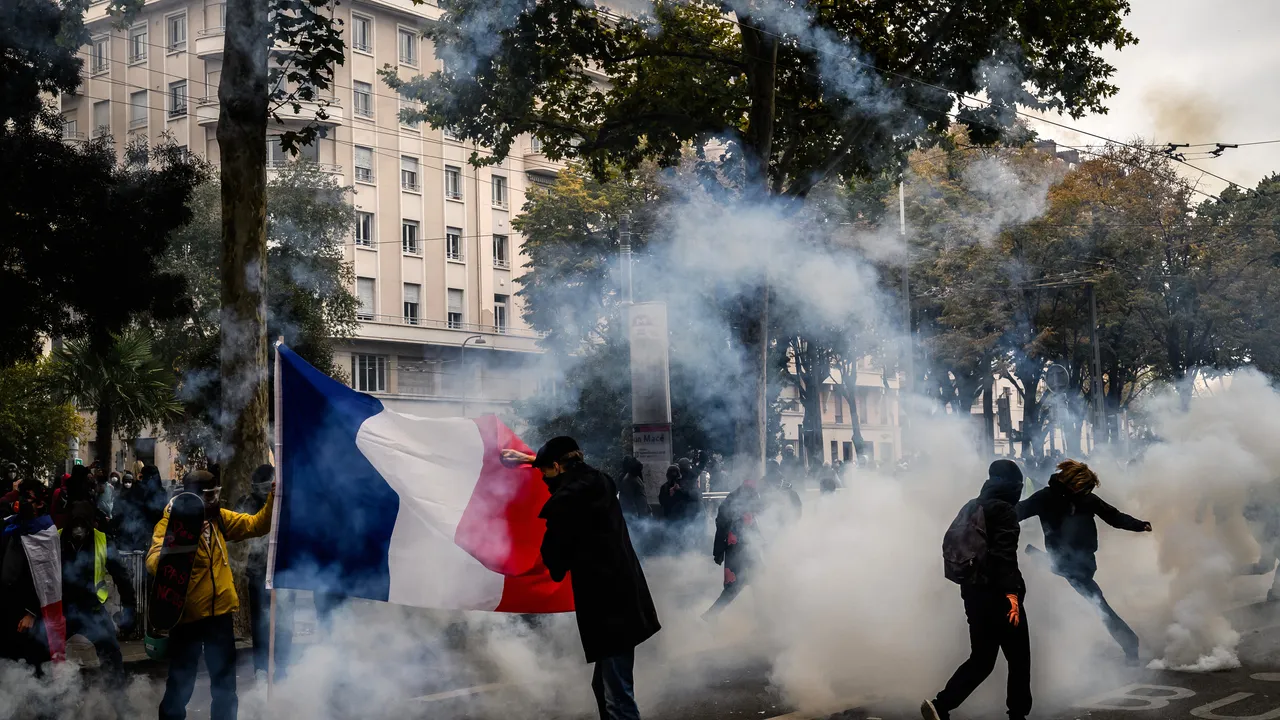
If there is one thing that the French know how to do, it is fight for their rights. It’s not for the goodness of politicians’ hearts that university fees in France are still €178 ($199) for a bachelor’s degree – compared with tuition fees of up to £9,790 ($13,055) a year in England for a standard course – but thanks to a population that refuses to back down when their rights are being threatened.
Since September, French high-school students have been fighting for better conditions, especially in suburban areas often forgotten by institutions. The movement has reached almost unprecedented proportions, with other sectors joining the students, demanding better learning conditions, fighting against the cost-of-living crisis, the hike in fuel prices and the erosion of social welfare.

People marched across France for a third consecutive Saturday on 31 October. The Ministry of Interior counted 320,000 demonstrators nationwide, including 70,000 in Paris, down from its national estimate of 410,000 the previous weekend. The youth inter-union put attendance at nearly 500,000 across France, including 200,000 in the capital.
The marches were mostly peaceful, although clashes broke out as some crowds dispersed. In its subsequent assessment, the ministry reported 779 arrests across the demonstrations and Halloween night combined. It also recorded damage to 36 businesses, including three that were looted. In Paris, the union march ultimately followed the capital’s eastern edge between Porte de Bagnolet and Porte de Charenton. The route had been disputed after police refused the unions’ request to march from Bastille to Nation.
The government is meanwhile facing pressure to address the demands behind the demonstrations. Prime Minister Sébastien Lecornu met trade union representatives at Matignon on Wednesday, 21 October, but union leaders criticised the lack of concrete measures following the talks. He met student representatives on Monday, 26 October, as the government announced an education package addressing several of the protesters’ demands. The measures include replacing Parcoursup – a portal used by students nationwide – in 2028, with initial changes to the university admissions process in 2027, and creating 15,000 additional higher education places between 2027 and 2028.
