
By Mike Ludwig
This article was originally published by Truthout
The Trump administration’s housing agenda targets immigrant families and the nation’s poorest renters.
Housing advocates celebrated a temporary victory last week after a lawsuit filed by tenants’ rights groups pushed the Department of Housing and Urban Development (HUD) to delay implementation of a policy change that would have gutted eviction protections for an estimated 3.8 million people in low-income households. The policy change was set to take effect on March 30, but HUD backed down on its implementation after tenants’ groups filed a lawsuit on March 2.
On March 13, HUD announced it would delay implementation of the policy change indefinitely and give the public 60 days to comment on the proposal, which would have left the nation’s poorest tenants in certain states vulnerable to “rapid, unfair evictions” for being “as little as one dollar short or one day late on rent,” according to the National Housing Law Project.
The proposal is backed by the landlord lobby and would revoke the 30-day notice rule, which requires federally subsidized housing authorities to notify tenants about unpaid rent and other charges at least 30 days before an eviction. The 30-day notice rule protects vulnerable renters in states with few legal protections, and the proposal is one of several by the Trump administration that would deepen housing insecurity amid an affordability crisis that is driving record rates of homelessness.
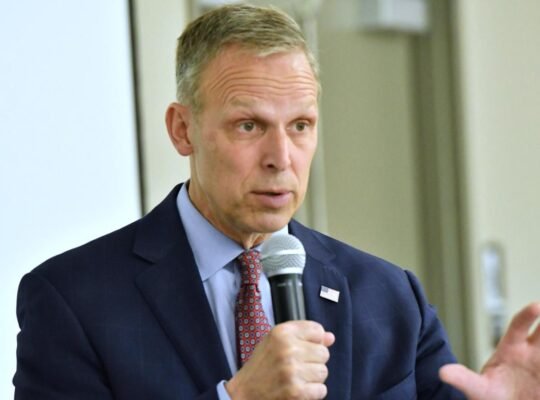
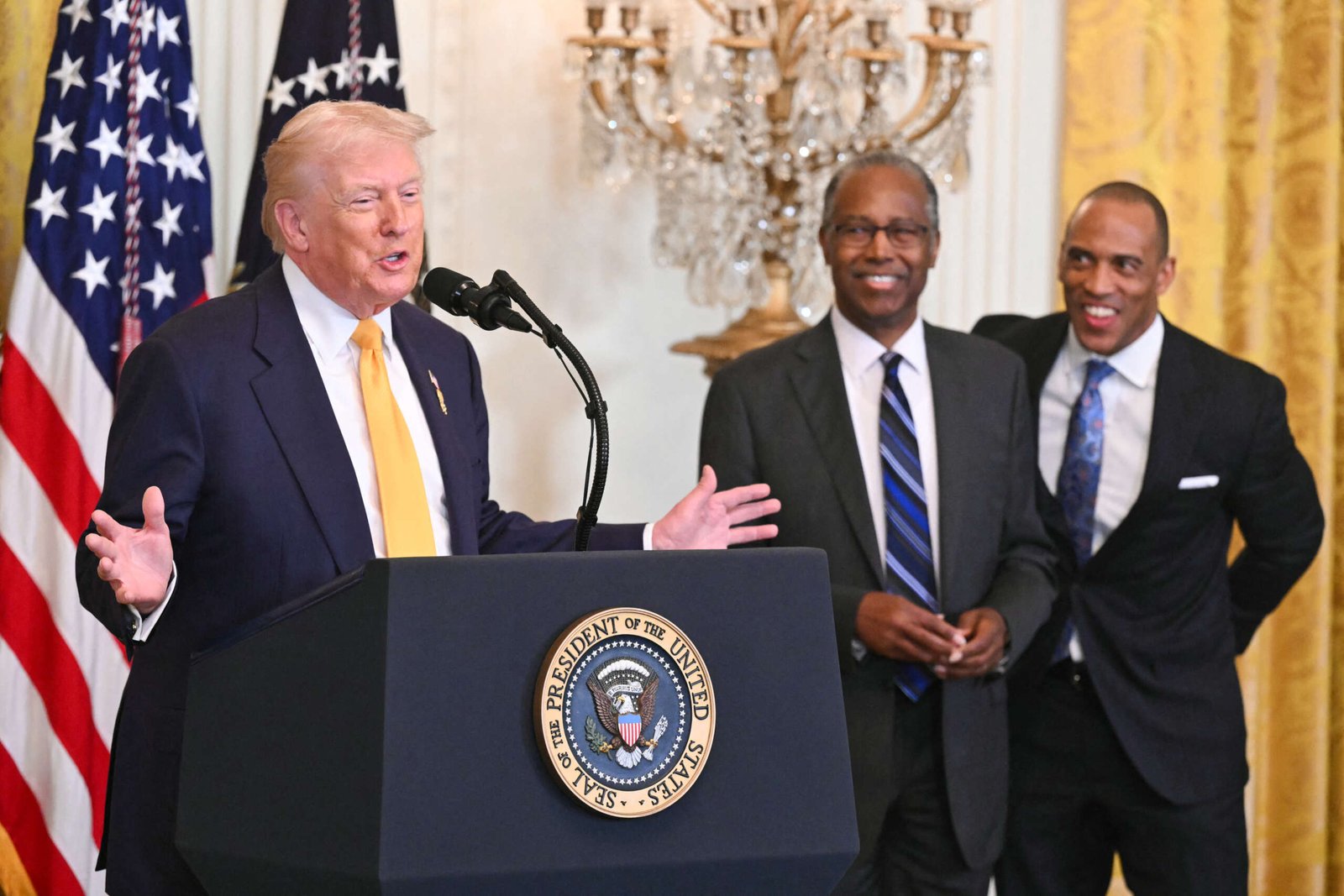
Scott Turner, President Donald Trump’s housing secretary at HUD, is also pushing controversial time limits and work requirements for federal housing assistance alongside new regulations that critics say are designed to separate families with mixed immigration status as part of Trump’s mass deportation agenda.
“Instead of addressing the housing crisis, Trump is dismantling programs and protections that keep our poorest neighbors housed,” said Hannah Adams, a senior staff attorney at the National Housing Law Project, in an interview. “The aggressive push to cut families’ housing benefits will harm all of us, while targeting immigrants, Black people, poor people, and people with disabilities.”
“War on the Poor”
HUD manages federal programs that fund housing projects and voucher programs for lower-income renters, doling out billions of dollars each year in subsidies earmarked by Congress to combat housing insecurity. The Biden administration strengthened protections for families receiving federal housing assistance during the COVID-19 pandemic, but Trump’s HUD slashed budgets for housing, gutted enforcement of federal standards, and is working to dismantle protections for vulnerable renters in what has been called a “war on the poor.”
Nick MacLeod, director of the North Carolina Tenants Union, said the Trump administration’s housing policies are colliding with the reality of the housing crisis in his state, leaving low-income tenants with nowhere to go. In North Carolina, Black communities, the working poor, the elderly, and people with disabilities are disproportionally displaced by evictions and gentrification, MacLeod said.
“We are on the precipice of a disaster,” MacLeod told Truthout. “This disaster that we are on the precipice of is not one that only affects very poor folks first, it is part of the broader move in the housing market to make sure everybody’s rent is going up and everybody’s costs are going up.”
HUD’s targeting of families of mixed immigration status has likely received the most public attention. In February, HUD proposed a rule that would require anyone receiving federal housing assistance to prove their status as a citizen or legal resident. This would bar an estimated 80,000 people in families with undocumented members from housing assistance, forcing them to choose between housing and staying together as a family.
“Separately, HUD has been trying to pressure housing authorities to verify immigration status and citizenship status in ways that are really questionable,” Adams said. “It’s transparently part of a larger project to discriminate against people without American citizenship.”
Adams said HUD does not provide rental assistance to noncitizens, but in some cases, undocumented people live with family members who receive housing vouchers or reside in public housing projects.
“In short, it’s going contrary to Congress’s will and violates existing law, and it will force families to either give up their desperately needed housing assistance or break up their families,” Adams said. “We believe families have a right to stay together as they currently do in HUD-assisted housing.”
The proposals would also create more hoops for citizens and legal residents to jump through before receiving support for affordable housing, a basic human need. About 3.8 million adults in the U.S. lack any form of documentation proving their citizenship, and another 17.5 million cannot easily access such documents, according to the Associated Press.
Breaking the Safety Net
A separate proposal would limit federal housing assistance to two years for adults without disabilities and require them to prove with documentation that they are working up to 40 hours per week. When Arkansas added similar work requirements to Medicaid, the federal health insurance program for low-income people, thousands of people lost their health coverage, but the state saw no increase in employment.
Trump originally proposed the work requirements along with a 40 percent cut to rental assistance for lower-income tenants, which was rejected by Congress. HUD Secretary Turner is now pushing the proposal through HUD as a federal regulation.
“Under President Trump’s leadership, the days of illegal aliens, ineligibles, and fraudsters gaming the system and riding the coattails of American taxpayers are over,” Turner said in a statement in February.
In many parts of the United States, where the wage floor remains at the measly federal minimum of $7.25 an hour, the cost of rent is simply unaffordable for large numbers of people.
As a result, about 9 million people receive some form of federal housing subsidies, and MacLeod said HUD’s citizenship and work requirements put virtually all of them at risk of losing their homes over issues with paperwork.
“The broader housing market is as unaffordable as it is” in part “because the public option has been so intentionally degraded,” MacLeod said, adding that the housing safety net is suffering “death by a thousand cuts.”
It appears that the Trump administration may be attempting to leave the agencies and institutions that make up the safety net defunded and broken, which would bolster Republican arguments for dismantling HUD and the safety net altogether.
MacLeod said public housing in the U.S. is at a crossroads. Policy makers must invest in the system or allow it to be dismantled by Republicans and private interests.
“So, we are either going to be looking at mass homelessness … or we can say enough of this breaking the system, enough death by a thousand cuts,” MacLeod said.
This article was originally published by Truthout and is licensed under Creative Commons (CC BY-NC-ND 4.0). Please maintain all links and credits in accordance with our republishing guidelines.