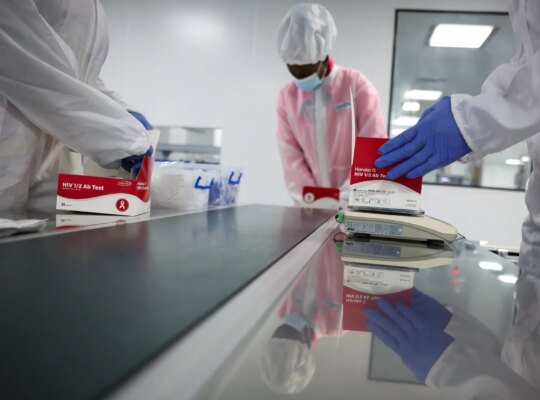


Insights and tools from the Fiocruz study in Brazil will help guide rollout strategies within the country and across Latin America. This work will strengthen ongoing efforts to reach populations most affected by HIV and will be essential for establishing sustainable access in regions not yet covered by originator access policies. Urgent solutions are needed to ensure these innovations can play their full role in ending the HIV epidemic.
Making new medicines widely available in low- and middle-income countries can take up to a decade or longer as regulatory approvals must be obtained, manufacturing must be secured, and prices must come down. Global momentum behind lenacapavir has set the drug on a rapid trajectory: South Africa registered the drug in record time in late October, followed by Zambia in November, and the first doses have already been delivered in Zambia and Eswatini through The Global Fund and PEPFAR. Broader rollout in early adopter countries is expected in early 2026.
In parallel, Unitaid, Wits RHI and the Clinton Health Access Initiative (CHAI), announced in September a landmark pricing agreement with Dr. Reddy’s Laboratories to manufacture generic lenacapavir for US$40 per person per year by 2027, and are working with Ministries of Health and other partners to support lenacapavir introduction and demand generation in countries preparing for rollout.
Together, these efforts are supporting countries to deliver lenacapavir faster and more effectively. Unitaid remains committed to work with countries and partners to address outstanding access barriers.
About this implementation research
The studies build on Unitaid’s long-standing investments in HIV prevention, which have supported the introduction of oral PrEP, the dapivirine vaginal ring, and long-acting cabotegravir. In collaboration with Gilead Sciences, Inc., these studies use product provided by Gilead, and this research focuses on how best to integrate lenacapavir into existing HIV and primary health care services as a PrEP options. They explore practical questions that shape how quickly and effectively programs can scale up – from which delivery models work best for different groups, including adolescent girls and young women, as well as men who have sex with men, transgender women, and other populations affected by HIV, to how health workers can be trained and supported to deliver the injectable safely and confidently. The studies also look at what drives people’s choices and continued use of different PrEP options.
To study these aims and ensure services reach those most at risk, Wits RHI is integrating lenacapavir into primary health care services in Department of Health clinics and deploying a mobile clinic to educational institutions and community hotspots and engaging peer educators to link young people – especially adolescent girls and young women – to HIV prevention. The team is also using digital platforms that reach more than 200,000 people each month, providing information and support to help individuals make informed choices about HIV prevention. In Brazil, Fiocruz is integrating lenacapavir into clinic settings in seven cities, including a mobile unit designed to reduce barriers to healthcare access for vulnerable populations. The project focuses on reaching men who have sex with men, transgender and non-binary persons, including adolescents, and will use peer invitations to help generate demand and an “mHealth” intervention to support decision making.
The work is being carried out in close partnership with South Africa’s National Department of Health and Brazil’s Ministry of Health, community advocates, and national technical working groups to strengthen national capacity and support the countries’ broader HIV prevention goals.
Additional quotes
Unitaid – Dr Philippe Duneton, Executive Director of Unitaid
“Access is not only about making a medicine available, it’s about ensuring it is acceptable and trusted by the people who will use it,” said Dr. Philippe Duneton, Executive Director of Unitaid. “By learning on most effective delivery models for each of the populations at high risk of HIV, including young women, we are providing countries with the evidence required for most impactful lenacapavir roll out – and getting the most out of every dollar invested.”
Fiocruz – Beatriz Grinsztejn, President of the International AIDS Society and Director of the HIV/AIDS Clinical Research Laboratory at Fiocruz
“At Fiocruz, our work is rooted in bringing science closer to the people who need it,” said Beatriz Grinsztejn, President of the International AIDS Society and Director of the HIV/AIDS Clinical Research Laboratory at Fiocruz . “This study, with Unitaid, helps us understand what it takes for lenacapavir to fit into daily life and truly expand choices in HIV prevention. The lessons we gain in Brazil will help improve access both here and across Latin America.”
About the partners
About Unitaid
Unitaid saves lives by making new health products affordable and available in low- and middle-income countries. Collaborating with partners, Unitaid identifies innovative treatments, tackles market barriers, and quickly delivers solutions to those in need. Since 2006, Unitaid has unlocked over 100 health products, addressing HIV, TB, malaria, women’s and children’s health, and pandemic preparedness. Every year, these products benefit more than 300 million people. Unitaid is a hosted partnership of the World Health Organization. www.unitaid.org
About Wits RHI
Wits RHI, is a research institute of the University of the Witwatersrand, established in 1994 by Professor Helen Rees to support South Africa’s newly democratic government in shaping national health policies, has grown into a leading African research and implementation institute with a global reputation for innovation and responsiveness to health challenges. With a 30-year track record in investigator-led and consortia studies, Wits RHI excels in policy development and implementation across diverse populations and all phases of clinical trials. Its multidisciplinary approach integrates research, technical assistance, advocacy, and health systems strengthening to deliver impactful solutions in infectious and vaccine-preventable diseases, maternal and family health, antimicrobial resistance, and climate-related health crises. The Institute applies rigorous epidemiological and qualitative methods to identify health problems, generate evidence, and evaluate interventions in real-world settings. Its work spans vaccines, therapeutics, diagnostics, and modelling, with a focus on HIV, TB, STIs, COVID-19, influenza, Mpox, Rotavirus, and outbreak pathogens including Poxviruses, Ebola, and Yellow Fever. www.wrhi.ac.za
About Fiocruz
The Oswaldo Cruz Foundation (Fiocruz) is a key institution within Brazil’s public health system and the leading center for health sciences, innovation, and technological development in Latin America. Founded in 1900, its mission is to generate, disseminate, and i apply scientific knowledge and evidence to strengthen the Unified Health System (SUS); promote health and quality of life; reduce social inequalities; and advance national innovation—guided by a firm commitment to the right to health and inclusive citizenship. Its education and research programs train public health professionals, foster scientific leadership, and conduct cutting-edge investigations across major health priorities. Recognized nationally and internationally for its pioneering work and multidisciplinary expertise, Fiocruz also plays a vital role in public health through the large-scale production of vaccines, biologicals, diagnostics, and essential medicines.