Eager to assist with the Trump administration’s immigration crackdown, Florida offered extra money to local law enforcement agencies so they could more easily help arrest and detain people. But the list of who’s getting that largesse — and who is missing out — probably isn’t what anyone would have expected.
So far, many of the state’s largest police agencies, including the Orange County Sheriff’s Office, have not applied for a share of the $250 million grant program state lawmakers authorized last year, according to an Orlando Sentinel review of the grants.
Instead, mid-sized and smaller agencies have put in for the biggest share of the money. And most of what they’re buying is standard police equipment, such as handcuffs and body cameras, or wish-list, high-tech items they couldn’t otherwise afford. Exactly how these purchases relate to immigration enforcement is not always easy to discern.
The Sentinel’s review also indicates the agency requests aren’t getting much public scrutiny from the board that reviews them, although it isn’t clear what may be going on behind the scenes. What is clear is that Florida, amid its leaders’ zeal to lead the nation in immigration enforcement, is throwing a lot of state taxpayer money at what was long considered a federal issue.
The agencies with the biggest approved spending plans to date are the sheriff’s offices in Lee County ($9.9 million), Polk County ($9.7 million), Osceola County ($9.4 million), and Escambia County ($5.9 million), none of which are among the state’s top four law enforcement departments by staff size, nor do they serve any of its top four counties. And the sheriff’s department in Jackson County, which hugs the Alabama and Georgia border and has fewer than 50,000 residents, is fifth with $3.8 million approved.
More than three-quarters of the approved funding is for new equipment. Bonuses for local cops and corrections officers got the nod, too, and some agencies asked for money to offset the cost of transporting detainees on behalf of U.S. Immigration and Customs Enforcement.
Anthony Coker, the executive director of the State Board of Immigration Enforcement, which approved the spending requests, did not respond to a message seeking an interview nor to emailed questions about the local law enforcement agencies’ plans for the state money.
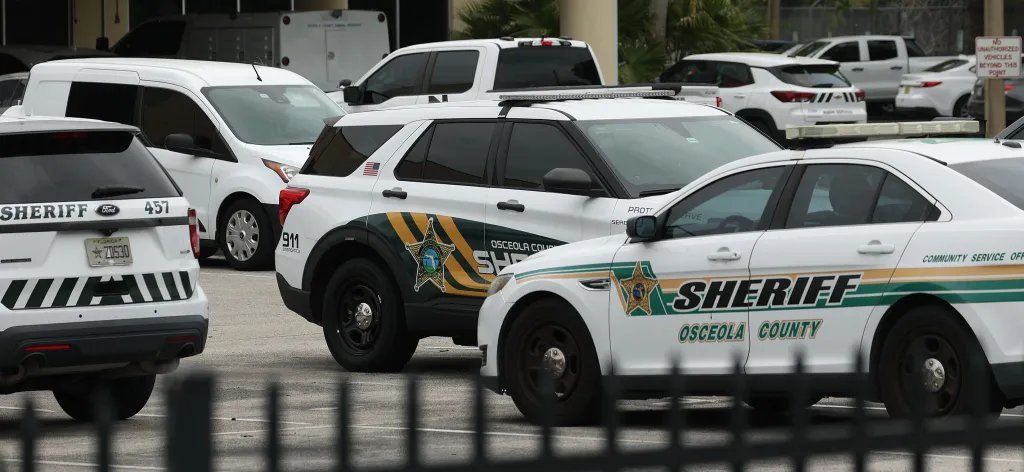
Osceola’s sheriff’s office has, by far, the biggest slice of the approved spending requests in Central Florida. But smaller police departments in Fruitland Park, Altamonte Springs and St. Cloud have been okayed for more modest awards, and Central Florida’s county jails all received funding either to buy more mattresses for detainees or to cover a portion of the costs to house them.
Osceola Sheriff Christopher Blackmon, appointed in June by Gov. Ron DeSantis, said tapping the state money makes sense.
“By being able to use the immigration enforcement award, it helps us if the budget is constrained,” he said. “It’s going to relieve Osceola County taxpayers and the county commissioners of having to find funds for additional body cameras and additional bulletproof vests.”
The cash injections come from a grant program created by the Florida Legislature during a special session last year. DeSantis wanted the money to help boost state efforts to round up migrants for deportation, a hallmark of President Donald Trump’s second term.
Since Sept. 30, when the first round of awards was approved, the immigration board – which includes DeSantis and three other statewide officeholders — has greenlit more than $60 million in funding requests, about 24% of available grant money.
Of that, $46 million million, or about 77%, is for new equipment.
The Osceola County Sheriff’s Office put in for 300 radios for $4 million, another $2.8 million for upgraded body-worn cameras for its officers and $1.44 million for “rifle-rated” ballistic armor for deputies and patrol cars.
The agency needs the armor because “the high risk of detaining individuals for immigration violations places officers in jeopardy, and it is essential that they are protected during apprehension operations,” it said in its application. It would also be the first time, Blackmon said, that its vehicles will have that type of protection.
Osceola’s jail, run by the county, got approved for $182,000 to buy a scanner that can detect “weapons, cellphones, and contraband that’s hidden under clothing and inside the body of ICE detainees” and $8,400 for new mattresses.
“We felt that the mattresses were essential to help us match what we’re starting to see,” said Chief E. Keith Neely.
The number of detainees has jumped from 110 in 2024 to 518 in 2025, he said.
Agencies can also apply for $1,000 bonuses for cops and corrections officers who complete training and participate in an operation with federal agents.
The Osceola sheriff’s office requested bonuses for 500 deputies — almost the entirety of its sworn ranks. Blackmon said he is having all deputies take part in the training so he can be flexible when it comes time for immigration enforcement.
“At any point in time, [ICE] could call up and say, ‘Hey, we’ve got targeted warrants in this area’,” Blackmon said. “Whoever’s working at that time would be the ones assigned to the detail, and that could be 24/7, 365. That’s why there’s so many.”
None of the other approved requests indicates bonuses for so many officers. The next highest total came from Polk County, which applied for 280 bonuses, to cover about 22% of its force. Seminole applied for 50, which would mean extra pay for about 7% of its officers.
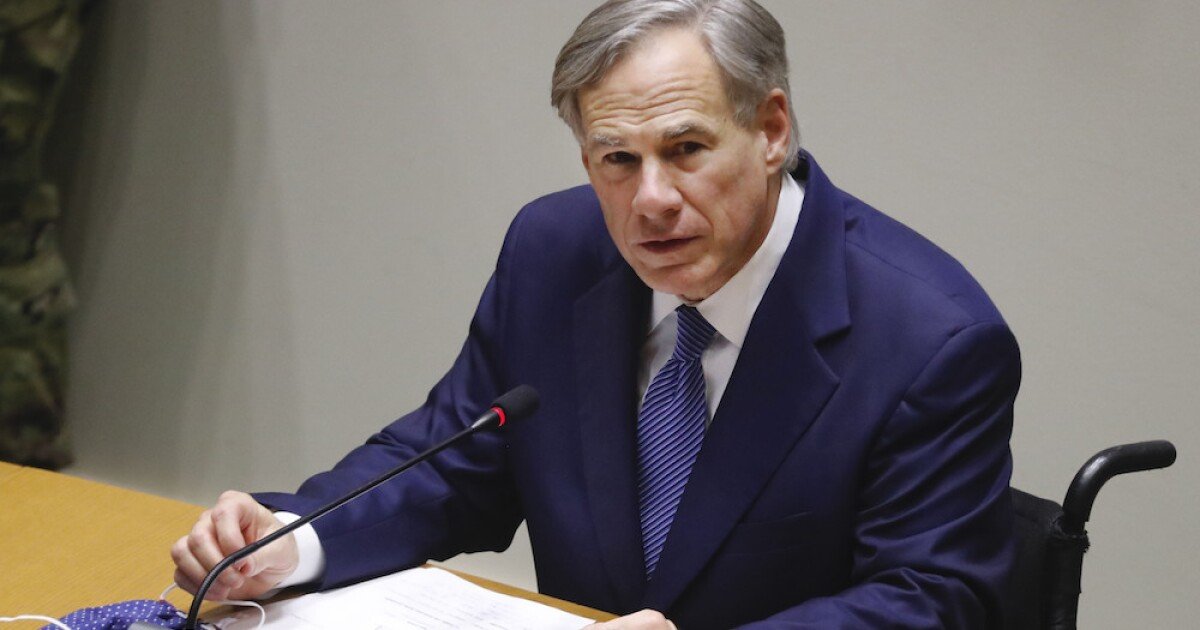
The awards have been approved at four meetings, the latest on Feb. 24. The immigration board — made up of DeSantis, Attorney General James Uthmeier, CFO Blaise Ingoglia and Agriculture Commissioner Wilton Simpson — typically approved them with little to no discussion.
It is not clear how staff vets the applications ahead of the meetings, though the Florida Phoenix reported last month that the Lee sheriff’s office did not get everything it requested. Still that office remains the state leader in getting grants approved.
The board unanimously approved Osceola’s award last month without discussion.
So far, many Central Florida law enforcement agencies haven’t applied for the state funding.
Nor have the state’s three largest sheriff’s offices — those in Miami-Dade and Broward counties and the Jacksonville Sheriff’s Office. Palm Beach and Hillsborough, Florida’s fourth and fifth largest sheriff’s offices were approved for $1.99 million and $490,000, respectively.
A spokesperson for Orange’s sheriff’s office, the sixth largest, said that though the agency hasn’t applied yet, it intends to later.
A spokesperson for the Orlando Police Department said only that the agency reviewed the funding application and hasn’t sought reimbursement.
Altamonte Springs won approval for 20 biometric scanners to “ensure consistent and reliable field identification of individuals during immigration enforcement activities.” St. Cloud did the same, getting an award for $38,000 to buy 20 for a department that now has four.
Fruitland Park, meanwhile, requested and was approved for $59,800 to cover the cost of license-plate reader cameras and GPS tracking systems.
The Seminole County Sheriff’s Office asked for and received approval to be reimbursed $1.16 million, most of which covers the cost of transporting detainees for ICE. Seminole was approved for $904,000 in transportation costs, more than twice the total for any other agency. The next closest was $364,000 for Clay County.
Seminole County said in its application that figure included $832,000 in overtime and benefits and about $72,000 in mileage for driving detainees 161,000 miles.
In its application, the sheriff’s office said its deputies are driving detainees to facilities in Orange and Volusia counties, an estimated 590 trips so far.
The Seminole sheriff’s office declined an interview request, referring any questions to ICE.
In Florida, police agencies are required to cooperate with ICE’s aggressive push to arrest more migrants, but that comes at a cost to sheriffs and police chiefs who have long contended they need bigger budgets to hire more officers, pay existing ones better and have top-of-the-line equipment.
“You’re seeing more and more people in jail on immigration detainer holds, and they have a cost to the local community — the federal government doesn’t reimburse a lot of that,” said former state Sen. Jeff Brandes, founder of the Florida Policy Project.
The Lee sheriff’s office, headquartered in Fort Myers, seemed eager to get all it could. The state approved its request for money to pay for bonuses, ballistic vests, surveillance towers, license plate readers and $4.3 million worth of body cameras with artificial intelligence translators.
In its application, the sheriff’s office said it is “one of the state’s highest-producing departments in immigration enforcement” and needs new equipment to aid in “the identification, location and removal of dangerous offenders.”
That may be true, according to a dashboard maintained by the State Board of Immigration Enforcement, with the Lee sheriff leading virtually all other agencies in “encounters” with migrants at more than 1,600. It is one of three agencies with more than 1,000 encounters. However, it’s unclear how accurate the dashboard is, as officials have lamented that many agencies report inconsistently, or not at all.
That sheriff’s office is the ninth largest in Florida.
But as the Florida Phoenix reported last month. Lee’s sheriff’s office initially applied for close to $23 million, a figure that was chopped down before the Feb. 24 meeting began.