
You May Also Like


Manufacturers of ultraprocessed foods argued the city and county of San Francisco is the real party in interest in the case, not California.
OAKLAND, Calif. (CN) — A federal judge on Thursday tossed a first-of-its-kind lawsuit brought by the San Francisco city attorney against major food manufacturers over ultraprocessed foods back to state court.
In December, San Francisco sued several major food companies in San Francisco Superior Court. The city claims the “unfair and deceptive” marketing of ultraprocessed foods violated California’s Unfair Competition Law and public nuisance statute.
The city says ultraprocessed foods such as candy, chips, processed meats, sodas, energy drinks, boxed macaroni and cheese and cereal take a toll on the public health care system, with states and cities taking up much of the burden. It claims the foods were “designed to be cheap, colorful, flavorful, and addictive.”
It seeks a statewide order enjoining the manufacturers from “deceptive marketing,” to stop and abate the companies’ public nuisance and civil penalties on behalf of the people of California.
In January, the food manufactures got the case removed to the Northern District of California, but U.S. District Judge Jon Tigar, a Barack Obama appointee, issued a quick ruling after a Thursday hearing on venue.
“The court concludes that the statewide injunction request is the primary relief sought and that the available forms of relief slightly favor finding the state to be as the real party in interest,” he said in his order.
At the Thursday hearing, PepsiCo attorney Josh Wesneski, representing over a half dozen large food conglomerates with some of the most well-known brands on the markets, said the real party in interest is San Francisco and not California, and the city and county would receive all the potential civil penalties in the case just as an individual would.
“Even if the county has to use these funds for civil protection purposes, it’s ultimately the county’s decision how to use those funds within that sphere,” he said.
Wesneski said “money is fungible,” and if the plaintiff prevails and wins $1 million in the case, it would ultimately go to its civil consumer protection fund, not the state or its residents, making room in its budget to fund other things.
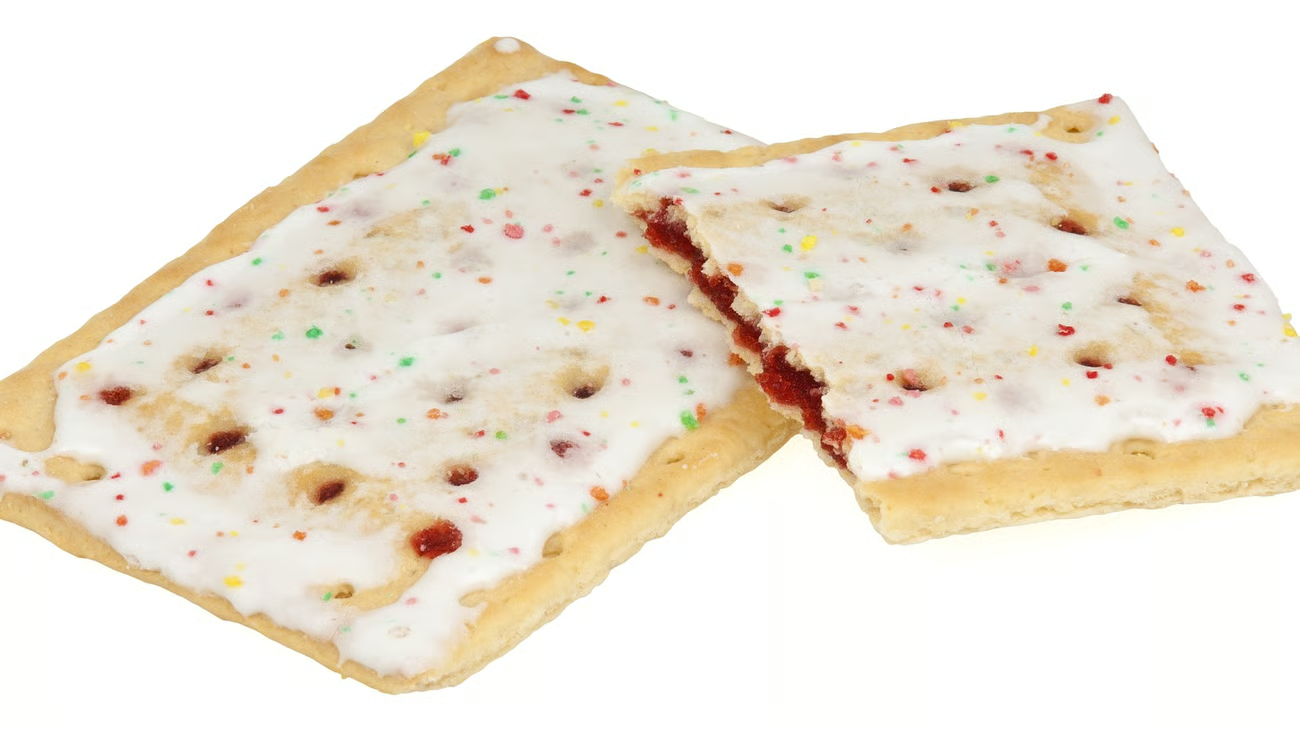
Other defendants include Kraft Heinz Company, which makes Kool-Aid and Lunchables, and Kellogg, which makes cereals, Pop-Tarts and Pringles. General Mills and Post Holdings, along with the Coca-Cola Company, Mondelez International, Nestle USA, Kellanova, Mars Inc. and Conagra Brands are also defendants.
The city claims the companies have “created a public health crisis,” arguing that consuming ultraprocessed foods can be directly tied to health risks including obesity, Type 2 diabetes, heart disease and cancer. The city additionally accuses the companies of deliberately targeting children, communities of color and low-income consumers, copying the playbook of Big Tobacco.
Jesse Lanier, representing the San Francisco City Attorney’s Office, said it brought the suit on behalf of the people of California, because “the defendants have collectively and individually manufactured and distributed these dangerous food products throughout California.”
With the case moved back to San Francisco Superior Court, San Francisco can access a lower standard for injunctive relief.
“Civil penalties collected by San Francisco used for future consumer enforcement and consumer protection statutes, which serves a state interest, means that’s money the state doesn’t have to spend pursing that exact same interest,” she said.
“That is one of the reasons why the Legislature expressly granted local prosecutors the concurrent authority to bring cases just like this one before the court today.”
Subscribe to our free newsletters
Our weekly newsletter Closing Arguments offers the latest about ongoing
trials, major litigation and rulings in courthouses around the U.S. and the world,
while the monthly Under the Lights dishes the legal dirt from Hollywood,
sports, Big Tech and the arts.
