

Now Reading: California hospitals, union pull competing ballot measures
- 01
California hospitals, union pull competing ballot measures

California hospitals, union pull competing ballot measures
By Kristen Hwang, CalMatters
This story was originally published by CalMatters. Sign up for their newsletters.
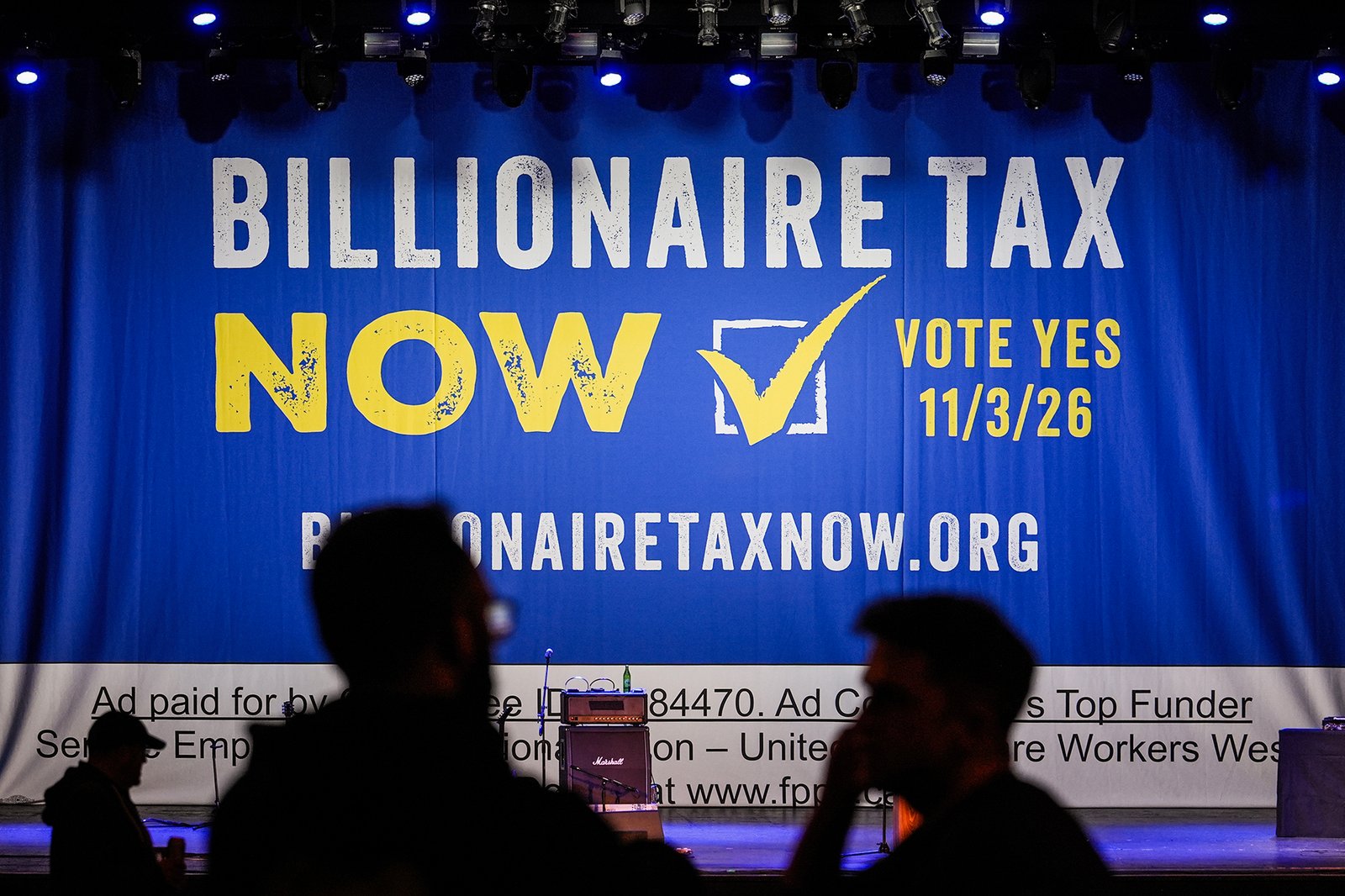
California hospitals and the state’s largest health workers union reached an agreement Thursday to pull two competing initiatives from the November ballot hours before a state deadline. But a separate measure to impose a one-time tax on billionaires remains headed toward voters, potentially reshaping how California funds healthcare.
That measure would levy a one-time 5% tax on California billionaires if approved by voters. Supporters estimate the tax would bring in $100 billion to replace recent state and federal healthcare cuts. The union accused Gov. Gavin Newsom, who tried to strike a last-minute deal to kill the ballot measure, of having “no plan” to prevent cuts projected to lose jobs and leave millions of Californians uninsured, according to recent projections.
“We thought it was important to do everything we could to try to solve that problem,” said Dave Regan, president of Service Employees International Union-United Healthcare Workers West.
In addition to the wealth tax, SEIU-United Healthcare Workers West had qualified an initiative to limit how much hospital executives are paid; while the California Hospital Association hit back with a proposal to limit the union’s political spending without member approval. Those two measures will no longer appear on the ballot under a deal brokered by the California Federation of Labor Unions, AFL-CIO.
Union members argued that money has been siphoned away from patient care through federal and state budget cuts as well as business decisions that support costly executive salaries. In turn, hospitals and some experts contended that capping leadership salaries would drain talent from pricey California and result in worse patient care.
Initially the two sides were adamant that they weren’t interested in negotiating, but Thursday’s agreement is the latest reminder that few things are fixed in Sacramento politics. Both sides had raised tens-of-millions of dollars to support their proposals.
Carmela Coyle, hospital association president and CEO, said in a statement that the agreement would “ensure high-quality health care services are accessible throughout California.”
Lorena Gonzalez, president of the labor federation, said the deal would support “quality healthcare and good union jobs to Californians.”
SEIU-United Healthcare Workers West declined to comment on the agreement.
A history of dealmaking
This marked the sixth time the union has attempted to cap healthcare executive salaries at $450,000 through state or local ballot measures.
For decades the union led by Regan has used ballot initiatives to gain leverage over the healthcare industry, broker deals with lawmakers and push its political agenda forward.
Voters may remember dialysis center initiatives appearing on three back-to-back ballots in 2018, 2020 and 2022. All three failed, and the dialysis industry spent hundreds of millions of dollars to defeat them.
That strategy is what SEIU-United Healthcare Workers West does — and what it’s doing this year.
Since 2012, the union has sponsored 48 state and local ballot initiatives spending $120 million. Most of the measures have been withdrawn or voted down. Despite those specific failures, the strategy has yielded major wins, including a $25 per hour health worker minimum wage. On that issue, the union asked voters across multiple cities to increase salaries before striking a deal with lawmakers and hospitals that included a 10-year moratorium on local minimum wage ballot measures.
That strategy is shaping debate over this year’s most contentious measure, which would put a major question before voters: whether California should impose a new tax on its wealthiest residents to help fund healthcare.
The proposal has drawn opposition from an unusual mix of business interests, Newsom, billionaires and progressive groups like Planned Parenthood and the California Teachers Association.
“We have to use all of the tools in our toolbox,” union spokesperson Renée Saldaña said prior to the agreement. “We see the ballot initiative as one way to take it directly to California voters.”
Good policy or ballot blackmail?
It’s a game of cat-and-mouse dating back to the early 1900s. California special interests spend millions to place a ballot initiative before voters; use it for political leverage; and ultimately strike a deal with lawmakers or political rivals to pull the measures in exchange for some other benefit.
Dan Schnur, a longtime Republican analyst and political communications professor at USC, said special interests have always taken advantage of ballot initiatives to try and advance their agendas. What makes SEIU-United Healthcare Workers West unusual is how often it repeats initiatives that fail, but the willingness to do so may be what gives the union so much political leverage.
“A ballot initiative is the ultimate blunt instrument,” Schnur said. “The threat of a ballot measure can help shape negotiations in the Legislature on the same subject.”
John Matsusaka, a USC law professor and executive director of the Initiative and Referendum Institute, said ballot initiatives are intended to allow voters to decide directly whether a proposal should become law. This helps bypass a Legislature that constituents may feel doesn’t actually reflect their interests.
California groups have attempted to pass more initiatives than any other state, Matsusaka said, but wielding them for leverage is an unhealthy way to view the law.
“Laws shouldn’t be used as bargaining chips in your negotiations in my opinion,” he said.
Supported by the California Health Care Foundation (CHCF), which works to ensure that people have access to the care they need, when they need it, at a price they can afford. Visit www.chcf.org to learn more.
This article was originally published on CalMatters and was republished under the Creative Commons Attribution-NonCommercial-NoDerivatives license.