
SCOTUS allows Trump to end deportation protections for Haitian, Syrian refugees – Jurist.org
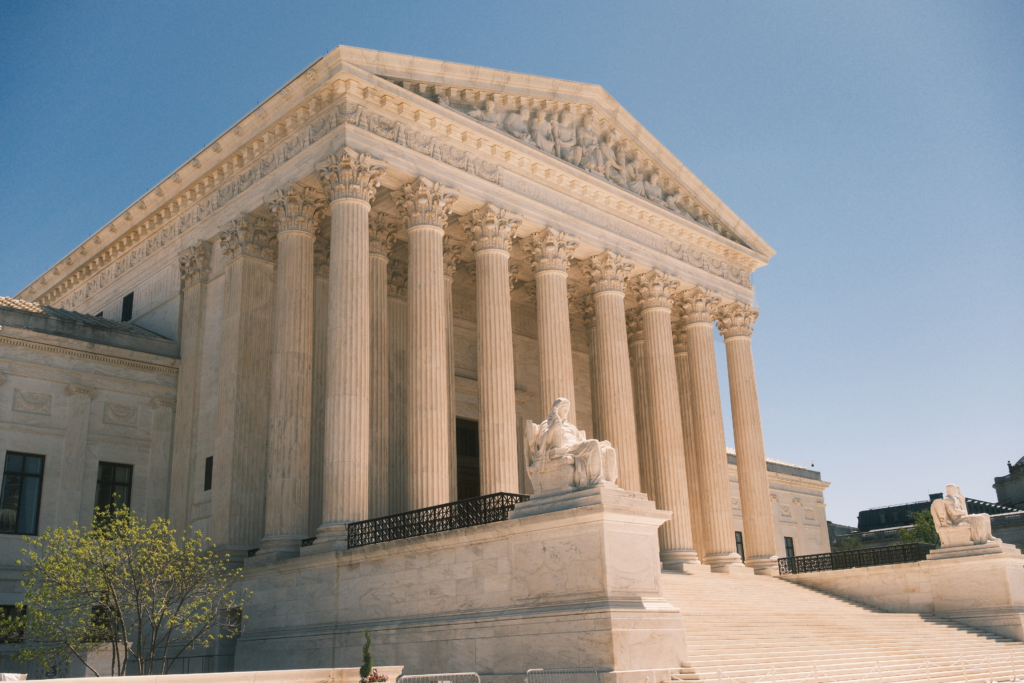
The US Supreme Court on Thursday allowed the US President Donald Trump’s administration to end temporary deportation protections for hundreds of thousands of immigrants from Haiti and Syria.
The 6-3 decision held that federal courts may not second-guess the government’s decision to end the program. The decision reverses orders from federal judges in New York and Washington, DC, that had paused the terminations. It also clears a path for the administration to strip the status from nationals of other countries as well.
Justice Samuel Alito wrote for the conservative majority that the Temporary Protected Status (“TPS”) statute bars judicial review of the homeland security secretary’s determinations. He held that challengers could not keep their protections in place while their lawsuits proceed. The law, he wrote, “expressly restricts” courts from reviewing such decisions. He also rejected the Haitian plaintiffs’ separate constitutional claim that the terminations were driven by racial bias. Instead, Alito reasoned that the administration’s stated rationales could rest on “race-neutral grounds,” including simple opposition to the program’s methodology. Concurring, Justice Clarence Thomas contended that the lower court lacked jurisdiction over the equal-protection claim. He further wrote that noncitizens have no equal-protection rights against the federal government.
Justice Elena Kagan, joined by Justices Sonia Sotomayor and Ketanji Brown Jackson, dissented sharply. She argued that the statute still lets courts check whether officials followed the procedures Congress required. Kagan referred to many of President Trump’s past remarks about Haitians: a “shameful” epithet, the false rumor that Haitian immigrants were eating their neighbors’ pets, and his claim that immigrants were “poisoning the blood” of the country. She wrote that the statements were so “repellent and racially inflected” that the majority declined to include them. Hundreds of thousands of lives, she warned, would be uprooted while litigation continued.
Created in 1990, TPS lets nationals of countries beset by war, disaster, or other upheaval live and work in the United States in increments of up to 18 months. It does not offer a path to citizenship. Last year, Then–Homeland Security Secretary Kristi Noem moved to end the designations for about 350,000 Haitians and 6,000 Syrians. She had certified that conditions in both countries had improved enough for people to return. The State Department nonetheless keeps Haiti and Syria on its “do not travel” list, citing pervasive violence, kidnapping, and terrorism. Challengers allege the administration cut procedural corners, including falsely claiming Noem had consulted the State Department. They also allege that Noem acted with anti-Haitian animus. Lawyers pointed to four Haitian women deported in February who, they said in court documents, were later found killed.
The ruling’s reach extends beyond just Haiti and Syria. TPS currently shields roughly 1.3 million people from 17 nations, and the administration has already moved to terminate protections for 13 of them. The justices had previously cleared the way for the government to end the program for more than 600,000 Venezuelans while that litigation continued.
The White House celebrated the outcome, with a spokeswoman saying that TPS was not “a pathway to permanent status.” Rep. Tom Tiffany (R-Wisc) said the country was finally “putting the ‘T’ back in TPS.” Rep. Mike Lawler (R-NY), while affirming Trump’s authority to end the program, said he “strongly disagree[d] with ending Haitian TPS at this time.” He instead urged an orderly six-month wind-down to prevent hospital and nursing home strain.
Liberals overwhelmingly opposed the decision. Rep. Ayanna Pressley (D-Mass), co-chair of the House Haiti Caucus, called it “a rubber stamp for a cruel and callous administration.” Sen. Ed Markey (D-Mass) called it “one of the most immoral things” the administration or the Court had ever done. Immigrant-rights groups, the challengers’ attorneys, and others likewise warned that the decision would uproot longtime residents and lead to needless deaths. The underlying cases now return to the lower courts, though the protections can lapse in the meantime.
Taiwan dispatch: Ministry condemns China after Kenya blocks delegates from Ocean Conference
Ghana dispatch: former finance minister granted permanent residence in the US, thwarting extradition efforts
When Authority Becomes Ownership: Parastoo Ahmadi and the Drift of Iranian Law
Who Gets to Belong? Indonesia’s Minority Faiths and the Limits of Legal Protection
Disenfranchisement as punishment: Ghana weighs democratic order against an inalienable vote
The Legal Architecture of Reparations: A Conversation with Kwesi Pratt Jnr.
Canada passes first Citizenship Act
On June 23, 1946, Canada’s first Citizenship Act received royal assent, establishing Canadian citizenship as distinct from British subject status. Learn more about the Citizenship Act, 1946 from the Canadian Museum of Immigration at Pier 21.
Federal Housing Administration created
On June 27, 1934, the National Housing Act created the Federal Housing Administration (now part of HUD), which put the power of the federal government behind home financing, helping to make homeownership a reality for tens of millions of Americans and powering the residential real estate industry.
ICJ decides LaGrand Case, Germany v. U.S.
On June 27, 2001, the International Court of Justice (ICJ) ruled in the LaGrand case that foreign nationals must be informed of their right to contact the embassy of their home country after arrest. Brothers Karl and Walter LaGrand were arrested in 1982 for murder and armed robbery in Arizona. However, authorities did not inform the men of their right to assistance from the German consulate under the terms of the Vienna Convention on Consular Relations. The U.S. Supreme Court in 1999 upheld the convictions in Germany v. US. Germany then brought the issue before the ICJ, which issued a provisional order to stay the executions. Arizona nonetheless executed the LaGrand brothers in 1999. Two years later, the ICJ held that the US had violated both the provisional order and the Vienna Convention.