
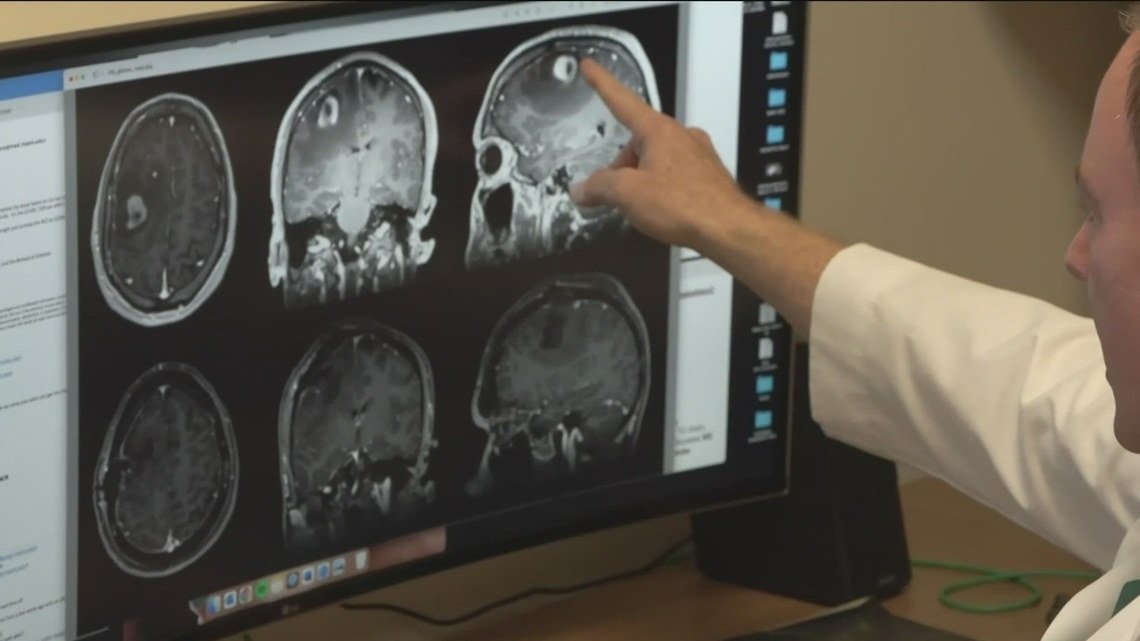
The study found people’s brains aged regardless of whether or not they had COVID.
SAN DIEGO — A new study reveals that the COVID-19 pandemic has accelerated brain aging in adults, whether or not they contracted the virus. British researchers found that people’s brains aged nearly six months during the pandemic compared to pre-pandemic times.
The study, which compared brain scans from 1,000 people during and before the pandemic to scans from others taken during “normal” times, sheds light on the neurological impact of pandemic-related stress and isolation.
“What’s already been established is anybody that had COVID, these changes are more likely to occur, but this showed that just being part of that whole experience that we all went through of isolation did physically age the brain,” said Dr. Erik Perkins, a neurologist with Sharp Rees-Stealy.
While the changes were slight and no cognitive decline was found, the accelerated aging of adult brains is concerning, as it can potentially lead to early-onset dementia.
The study found that men’s brains aged faster than women’s, though it remains unclear whether these effects can be reversed.
Dr. Michael Lardon, a psychiatrist and associate clinical professor at UCSD’s School of Medicine, explained the potential mechanism behind these changes.
“And one of the ideas in illness, whether it’s physical or mental, is that it’s an inflammatory response…the more stress you go through, the more inflammation probably in your brain,” said Lardon.
Both doctors emphasized the importance of maintaining brain health through social, physical, and intellectual activities, as well as proper sleep and minimizing exposure to harmful factors.
“Maybe we can mitigate inflammatory responses so people won’t develop these changes in the future. But in terms of reversing brain disease, that’s very, very difficult,” said Perkins.
The study’s findings have sparked interest in further research.
“It gives us a platform to further investigate, and hopefully, one day we can find a way to maybe reverse some of these changes,” said Lardon.
Public reaction to the study has been mixed, with some individuals relating to the findings and others remaining skeptical. One person commented, “Living in that time period, you were unsure of the future,” while another stated, “I don’t feel like my brain has aged.”
As researchers continue to investigate the long-term neurological impacts of the pandemic, this study provides valuable insights into the complex relationship between global events and brain health.