
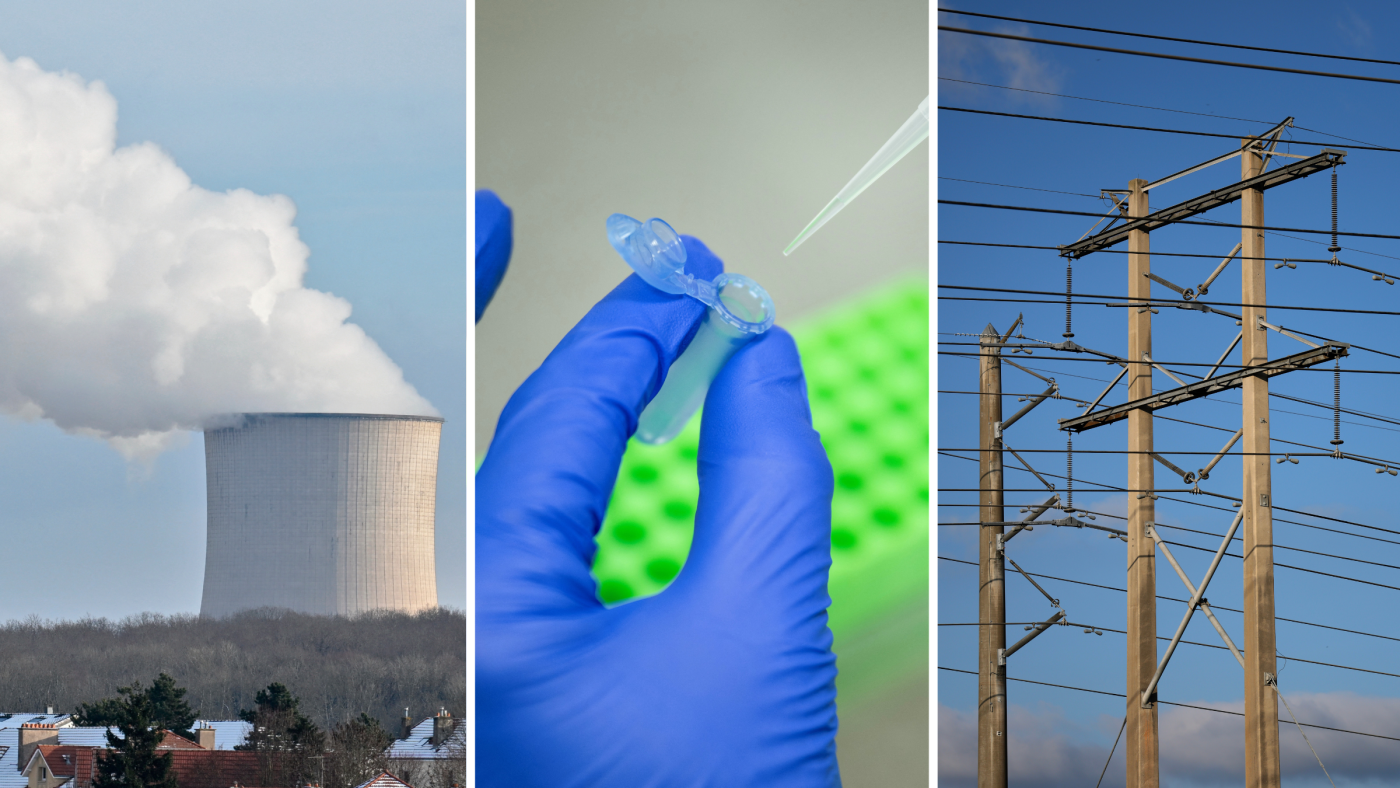
You May Also Like

EMILY KWONG: Short Wavers, I know every podcast everywhere asks you to follow them. And it’s for a good reason. For us, as a show on a public media budget, one of the best ways you can help us grow and thrive is to follow us from wherever you’re listening. Thank you. We appreciate you.
ANNOUNCER: You’re listening to Short Wave, from NPR.
REGINA BARBER: Hey, Short Wavers, Regina Barber here with a list–
[MUSIC PLAYING]
BARBER: –made from our friends over at MIT Technology Review.
AMY NORDRUM: This is the 25th year, actually, that our newsroom has put out a list of 10 breakthrough technologies.
BARBER: This is Amy Nordrum, executive editor of that newsroom. And she says that this list describes which technologies they think matter most each year.
NORDRUM: We’re really looking for high-impact advances that we think will change the way we live and work in the future.
BARBER: For better, like–
NORDRUM: Potentially help us solve major problems like climate change or improve our wellbeing and our health as humans.
BARBER: And for worse.
NORDRUM: We also include advances that we think are equally as significant, but might have very negative consequences. We had military drones on the list a few years ago.
BARBER: This year, Amy says a large chunk of the list is on AI technology because that area has taken off. But they’ve also included other important advances that may not have risen above the noise for people not paying close attention.
NORDRUM: You know, what’s going on in biotech or the latest climate progress, especially at a moment where it can feel like there’s not as much being made generally, especially here in the US.
BARBER: So today on the show, we go through some of the top 10 breakthrough technologies of 2026 by MIT Technology Review, including Amy’s favorite on the list.
NORDRUM: This is so not fair. But, I mean, I guess, I always have a personal favorite, honestly, or one that I’m just kind of most interested in. This time, it’s in the space category.
BARBER: You’re listening to Short Wave, the science podcast from NPR.
[MUSIC PLAYING]
BARBER: OK, Amy, let’s start in the land of EVs. Right now, they’re generally made with lithium ion batteries. But mining lithium is– it’s harmful to the environment. It can have, like, poor labor conditions. And it’s a finite resource. So you all focus on sodium ion batteries. What’s the big deal there?
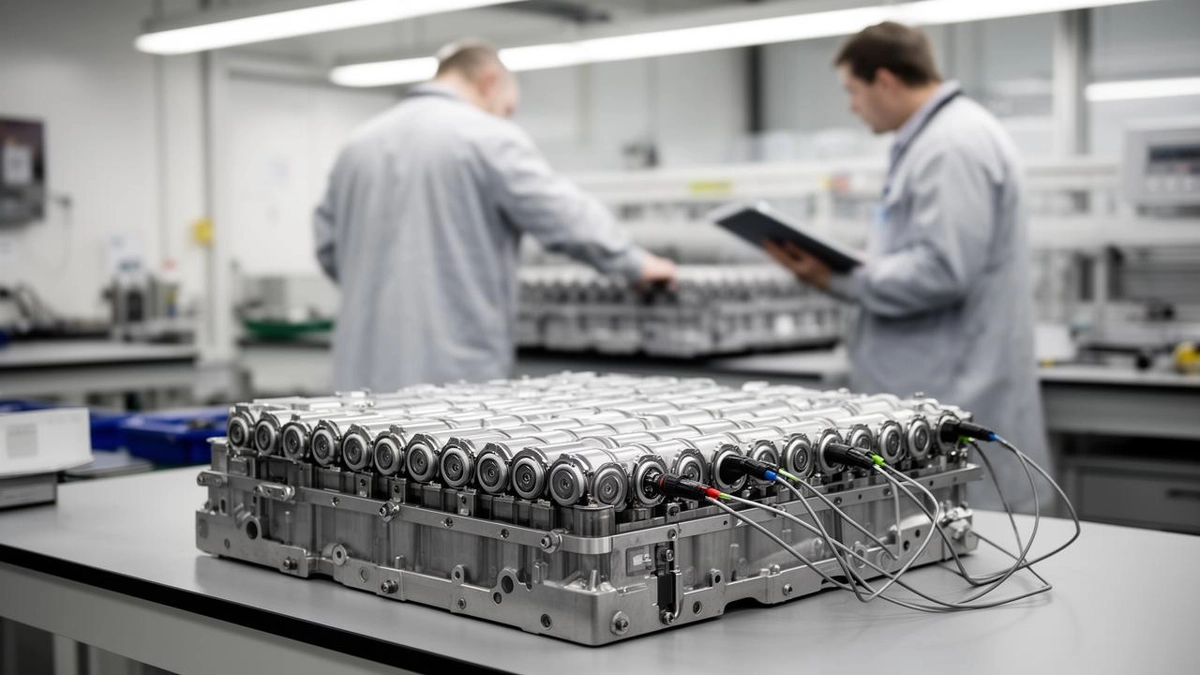
NORDRUM: Well, lithium has really been the go-to battery chemistry for decades at this point. And sodium ion batteries could shake that up, really, for the first time in a meaningful way, if they’re able to scale up. And these batteries would be much easier to produce. Lithium supply is very concentrated in just a handful of countries. But you can find sodium everywhere. It’s the same sodium that you find in sea salt. So this could make it much easier to produce batteries. And we’re going to need more batteries over the coming decades to store renewable energy, to operate electric vehicles, to do all kinds of things in our lives.
BARBER: Yeah, what would this switch mean for, like, the EV market in the long term?
NORDRUM: Well, it would give manufacturers another option for EVs and one that is, you know, made from a material that’s much more abundant and less vulnerable to supply chain risks, for example. And over time, these might actually make EV batteries cheaper. Right now, they’re– sodium ion batteries are not cheaper than lithium ion. But as you scale up and produce more of them, some analysts think that they could someday be about a third of the– as expensive as lithium ion batteries–
BARBER: Wow.
NORDRUM: –to produce. And in the end, that might help bring down the cost of an electric car and make it more affordable for more people.
BARBER: OK, next tech, we’re going to go into space. OK, so, so many, like, sci-fi books, movies that I love, show humans, like, living in space. But to date, like, only a few hundred have actually made that trip. So how do you think that’s going to change?
NORDRUM: Well, we’ve already started to see it change in the last couple of years. You know, we’ve seen companies like Blue Origin and Virgin Galactic offer suborbital flights of a few minutes to provide people with the experience of weightlessness and just, you know, private citizens, not professionally trained astronauts. Even NASA has started allowing private astronauts to travel up to the ISS with a company called Axiom. And that’s been happening for the last couple of years. But really, what’s changing now is that there’s this whole rash of new private space stations that are due to be launched over the next couple of years, and which will eventually replace the International Space Station, which has been operating for decades. And those private space stations will not just support government missions, but in many cases, also private astronauts from companies that want to do research in space or people who just want to get a view outside, you know, a space station window of the Earth that we all live on.
BARBER: Can you give me, like, a visual? Like, how big are these, you know, space stations going to be? What are they going to look like?
NORDRUM: Yeah, I got to say, they’re going to look pretty fancy, based on some of the mockups that I’ve seen. Some of the companies active here have been seemingly trying to provide a pretty, like, luxury space experience, for lack of a better word.
BARBER: Yeah.
NORDRUM: So Axiom is one that has, you know, contracted with, like, a famous French architect and designer to design the inside. It has spacesuits designed by Prada. There’s different amenities–
BARBER: Wow.
NORDRUM: –in some of these– some of these space stations. And they’re not nearly as big as the International Space Station–
BARBER: OK.
NORDRUM: –certainly not in these first iterations. They’re a fraction of the size, really. Over time, they hope and intend to scale up to that. But in the next couple of years, we’ll be seeing much smaller models launching.
BARBER: I mean, space travel sounds cool. Is there a larger impact to us here on Earth?
NORDRUM: That’s a really fair question. I mean, we could see, you know, for example, if this opens up access to more private companies doing research, maybe there will be pharmaceuticals that are developed based on that research or new kinds of electronics and semiconductors that companies, you know, might not have otherwise had time on the International Space Station to devote to that research. So there could be some kind of second-, third-order effects like that. And certainly, a number of these private space companies intend to provide access to countries that have never before had access to the International Space Station or been able to–
BARBER: Oh, wow.
NORDRUM: –send astronauts up there.
BARBER: Let’s move on to gene-edited babies. We’ve heard a lot about this for a while. Like, why did this make the list this year?
NORDRUM: Well, this year, we put it on the list because there was a quite remarkable treatment done back in May of 2025, when a baby named KJ was treated for a rare genetic condition that this baby had with a treatment, a gene-editing treatment, that was just for him. It’s the first of its kind that’s been personalized in this way. There have been other gene-editing treatments based on CRISPR in the past. But this one was just for KJ, based on the misspelling in his DNA. And it was done with a newer form of CRISPR, the gene-editing tool, called base editing, that actually lets you rewrite individual letters, rather than just delete or snip out genes, as the–
BARBER: Wow.
NORDRUM: –kind of first iteration of CRISPR did. So we think it’s– you know, it’s the first of its kind. And honestly, we don’t know quite how it went yet. The baby seems to be doing much better this many months on. But it’s the first example of this kind of new, highly personalized gene-editing treatment that many more people could receive with very rare conditions that, you know, wouldn’t otherwise be attractive to a pharmaceutical company to develop a treatment for.
BARBER: What are the hopes and the worries about this technology?
NORDRUM: Well, you know, physicians, researchers that did this at the University of Pennsylvania, they’ll need to continue to watch closely and see, you know, what the results were and whether there are any unintended effects. But they do tend to move forward with the trial on this technology so that they can actually get FDA approval for it. You know, it will certainly likely be very expensive because we’re talking here about a treatment for literally– designed for one person.
BARBER: Yeah.
NORDRUM: You know, the estimates I heard with this one example were between $800,000 to $1 million, which is roughly maybe the cost of a liver transplant, but certainly out of reach for many.
BARBER: What could be the impact in decades to come?
NORDRUM: It’s a great question. I mean, there’s, you know, potentially thousands of genetic diseases that could potentially, you know, be treated this way and are quite rare. And so people do need these personalized treatments. So you might think about brain diseases or muscular dystrophy as potential candidates. So, you know, over time, this could be something ideally that would be available to many more people with many more different kinds of very rare genetic disorders.
BARBER: So this is not exactly the same, but it is on the list. And it’s kind of related to all this, something called embryo scoring. Can you talk about that a little bit?
NORDRUM: Sure, yes. So, you know, a lot of times, people going through IVF today, they have the option to scan embryos prior to implantation for genetic diseases, if they have one, that they do not wish to pass on to their child. And this has been done for years. There’s a lot of, you know, public support for this kind of thing, and many parents choose to do that. And then, lately, we’ve also seen some companies start to advertise other services of similar kinds of tests, saying, we’re not just going to help you screen for severe genetic diseases that you might pass on, but we’re going to help you actually pick your best embryo based on how intelligent that baby might grow up to be or their eye color or their height and your preferences for your child.
BARBER: It goes into eugenics.
NORDRUM: Yeah, there’s a lot of people that see that in it and–
BARBER: Yeah.
NORDRUM: –are concerned for that reason. And then some of the companies providing this say, that’s not what we’re doing. We’re actually giving parents choice over the– you know, the child that they have. But, you know, there’s also just scientific questions. You know, a lot of the genetic disorders that this testing had provided guidance on were due to, like, a single gene or a single base within a gene. Whereas these new traits that some of the companies are advertising, they’re– they kind of come from many different interactions of genes. And so–
BARBER: Right.
NORDRUM: –it’s probability. And it’s– there’s no guarantee that some of the services would actually reliably give you the outcome that you’re wanting for your child, which, to their credit, some of the companies do acknowledge with disclaimers on their site.
BARBER: OK, Amy, we’re going to go through a few more rapid-fire style. Number one, next-gen nuclear.
NORDRUM: I mean, as your listeners probably know, we need more energy for all kinds of things in the future, whether it’s heat pumps or AC or data centers. And one of the power sources that a lot of people are looking to is nuclear. But the problem is, there’s a lot of reactors in the past that have gone way over budget and taken a long time to build. Now there’s a new generation of reactors being designed by a bunch of companies that–
BARBER: OK.
NORDRUM: –you know, could be built cheaper and perhaps more quickly. They’re smaller in size. They use different kinds of fuel or coolant.
BARBER: Wow. OK, number two, you mentioned it, data centers, but specifically AI data centers.
NORDRUM: So everybody’s been using, you know, a lot of AI in their daily life, whether they, honestly, know it or not. It’s built into all kinds of things that we use every day. And now there’s a huge investment going into building more data centers by lots of different companies. And these are really a new breed of infrastructure. They’re massive facilities that use hundreds of thousands of specialized chips called GPUs, and also require their own kind of very specialized cooling systems. So this new class of infrastructure is something that we wanted to recognize on this year’s list because it’s unique to our time.
BARBER: And to round it all out, a slightly fun one, in my opinion, a gene resurrection.
NORDRUM: Well, you’ve heard a lot about, you know, extinct animals. Maybe that might be coming back, according to the claims of some companies.
BARBER: Right. But they might not be coming back. But, yes.
NORDRUM: They might not be coming back. And so we were quite careful with our– our framing of this. What we think is quite exciting, though, is the efforts around bringing back genes from ancient creatures into modern-day animals or plants, often for conservation purposes or to help those plants adapt to climate change. There’s been a lot of work in this ancient DNA space and now new efforts to, you know, help endangered species get more genetic diversity by reintroducing genes from past organisms.
BARBER: So maybe we’re not resurrecting the woolly mammoth, but we might be helping endangered species survive?
NORDRUM: I think that’s the more accurate way to think about it, yes.
BARBER: [CHUCKLES] Amy, thank you so much for coming back on the show. I love hearing about this list every year. Please come back next year.
NORDRUM: It’s been a pleasure. I’d love to talk about it with you again in 2027.
[MUSIC PLAYING]
BARBER: We’ll link to the 10 breakthrough technologies of 2026 by MIT Technology Review in our show notes. If you liked this episode, check out our episode on last year’s top 10 technologies to look for, or our episode on building structures in space. We’ll link to them in our show notes. I’m Regina Barber. Thank you for listening to Short Wave, from NPR.
[MUSIC PLAYING]
Copyright © 2026 NPR. All rights reserved. Visit our website terms of use and permissions pages at www.npr.org for further information.
Accuracy and availability of NPR transcripts may vary. Transcript text may be revised to correct errors or match updates to audio. Audio on npr.org may be edited after its original broadcast or publication. The authoritative record of NPR’s programming is the audio record.
