Quick Read
- Tesla patented ‘Bit-Augmented Arithmetic Convolution’ (US20260017503A1) on January 15, 2026.
- The patent allows modern 16/32-bit AI models to run on older 8-bit Hardware 3 (HW3/AI3) FSD computers.
- This extends the lifespan of millions of existing Tesla vehicles without requiring hardware upgrades.
- Four Indian-origin engineers – Ritvik Rawat, Rohan Dhesikan, Srihari Sadhu Sampathkumar, and Alex Nihal Singh – are credited as inventors.
- Elon Musk’s praise for the team sparked an X debate about H-1B visas and immigrant tech workers amid new US immigration restrictions.
Tesla recently published a groundbreaking AI patent, US20260017503A1, titled ‘Bit-Augmented Arithmetic Convolution,’ which promises to significantly extend the operational lifespan of its Hardware 3 (HW3/AI3) Full Self-Driving (FSD) computers by enabling advanced AI models to run on older hardware without requiring costly upgrades. The innovation, revealed on January 15, 2026, not only offers a critical upgrade path for millions of existing Tesla owners but has also unexpectedly ignited a fervent public discussion on X (formerly Twitter) regarding the vital role of immigrant engineers and the contentious H-1B visa program in the United States.
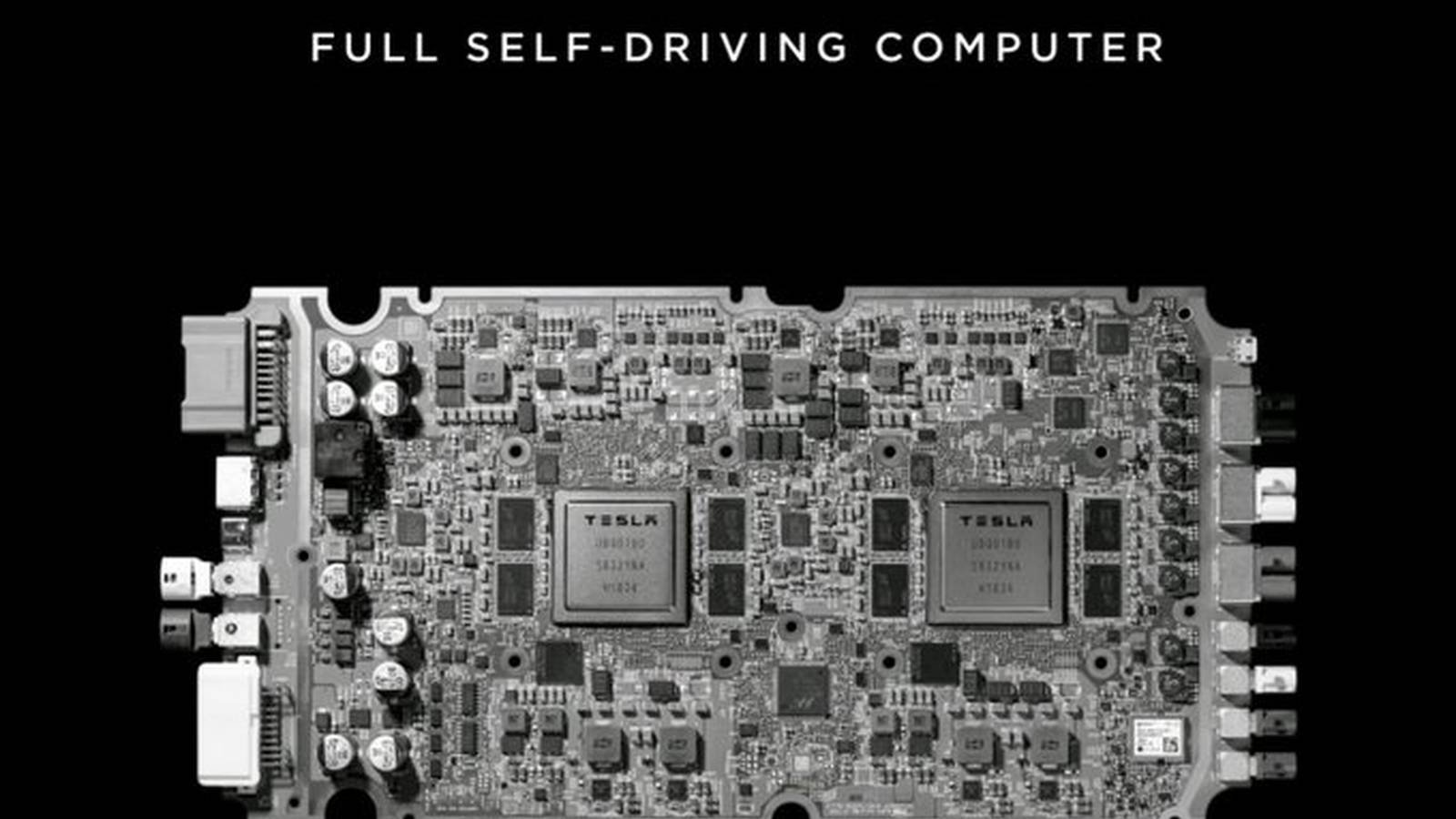
For years, a persistent concern among Tesla owners has been hardware obsolescence. The promise of a ‘Full Self-Driving capable’ vehicle often comes with the unspoken anxiety that newer, more powerful computers might quickly render existing hardware outdated, forcing owners into expensive upgrades or leaving their cars behind in the technological race. This new patent directly addresses that fear, suggesting a sophisticated software-driven solution to a hardware problem. The core idea, first highlighted by X user @tslaming, is to allow modern, high-precision AI models, which typically demand 16-bit or even 32-bit processing, to seamlessly operate on older, lower-precision (8-bit) hardware like the AI3 chip, which was first introduced in 2019.
Extending the Life of Existing FSD Hardware
The challenge Tesla faced was significant: how to bridge the gap between rapidly evolving AI models and the fixed capabilities of older hardware. Modern neural networks thrive on higher precision, meaning they process data with more detail and nuance, leading to greater stability and accuracy in complex tasks like autonomous driving. However, these advanced models don’t naturally fit onto the 8-bit architecture of the AI3 chip. Traditionally, companies might address this by shrinking or simplifying the AI models to fit the hardware, a compromise that often comes at the cost of performance and safety margins. Tesla’s patent offers a more elegant workaround, sidestepping this performance trade-off entirely.
Instead of forcing high-precision data into a low-precision environment, Tesla’s patented method involves a clever mathematical and software-based approach. It splits a high-precision number, such as a 16-bit value, into smaller, manageable 8-bit segments. These segments are then processed individually by the AI3 chip’s existing neural network accelerator – the very hardware responsible for identifying cars, lanes, and pedestrians. Once processed, the results from these smaller chunks are meticulously stitched back together to reconstruct the original high-precision answer. In essence, the 8-bit chip is made to ‘behave’ like a 16-bit or even 32-bit system by executing a series of lightweight, additional operations. This innovative technique avoids the need for larger, hotter, and more power-hungry silicon, offering a pathway to significant capability enhancements through software alone.
The implications for Tesla and its millions of customers are profound. This ‘bit-augmented arithmetic convolution’ creates a realistic upgrade path where AI3-equipped vehicles can approach AI4-class capabilities without a physical computer swap. It means Tesla can continue to develop and deploy its most advanced Full Self-Driving software across its entire fleet, from AI3 to AI4 and future AI5 systems, albeit with varying efficiency levels. This preserves a meaningful and cost-effective upgrade trajectory for existing owners, ensuring their vehicles remain cutting-edge for longer. While the solution is not without minor trade-offs, including slightly higher latency and increased power consumption, and acknowledging that camera hardware limits still apply, the overall payoff – millions of Teslas continually getting smarter instead of aging out – is immense.
Inventors and the H-1B Controversy
Beyond its technical merits, the patent unexpectedly became a focal point for a broader societal debate. The document listed five inventors, four of whom were identified as being of Indian origin: Ritvik Rawat, Rohan Dhesikan, Srihari Sadhu Sampathkumar, and Alex Nihal Singh. Elon Musk, never one to shy away from public commentary, reposted an X thread detailing the patent and its inventors, praising the Tesla AI team in his characteristic style: ‘Necessity is the mother of invention. The @Tesla_AI team is epicly hardcore. No one can match Tesla’s real-world AI.’
Musk’s endorsement propelled the post into wider circulation, where the conversation took a sharp turn. One X user specifically highlighted the Indian-origin names on the patent with a pointed comment: ‘And what does woke right say? cheap labor, ofcourse.’ This remark directly challenged critics who frequently dismiss immigrant engineers, particularly those holding H-1B visas, often characterizing them as expendable or as undercutting American workers. The implication was clear: the same individuals who lauded the technological breakthroughs in AI often contradictorily devalue the very engineers responsible for those innovations when discussions shift to immigration.
This exchange resonated deeply within the ongoing US immigration debate, particularly concerning the H-1B visa program. Indian engineers constitute a substantial portion of H-1B visa holders, especially in critical tech and AI sectors – the very fields driving patents like Tesla’s FSD software. Despite their contributions to some of Silicon Valley’s most advanced systems, these professionals are frequently targeted in political rhetoric, labeled as ‘cheap labor’ and accused of depressing wages or replacing domestic workers. The X debate starkly underscored this contradiction: cutting-edge innovation is celebrated at the highest levels, while the skilled individuals building it are sometimes reduced to political talking points.
The timing of this debate was particularly sensitive, unfolding against a backdrop of renewed restrictions on legal immigration in the United States. Under recent administrative plans, new H-1B visa petitions are anticipated to face a hefty $100,000 fee, a move widely perceived as significantly limiting employers’ capacity to hire foreign talent. Furthermore, announcements regarding reductions in legal immigration, increased deportations, and further restrictions on H-1B visa holders in 2026 have amplified anxieties among immigrant tech workers nationwide. The Tesla patent, therefore, became more than just a technical achievement; it became a flashpoint for a larger discussion about the value, recognition, and future of immigrant contributions to American innovation.
The confluence of Tesla’s technical ingenuity in prolonging the relevance of its autonomous driving hardware and the subsequent public discourse surrounding the diverse origins of its engineering talent highlights a critical paradox in the modern technology landscape: the indispensable role of global talent in driving innovation often stands in stark contrast to the political rhetoric and policy shifts that can marginalize or devalue their contributions.