Unlock the White House Watch newsletter for free
Your guide to what Trump’s second term means for Washington, business and the world
The writer is the director of the White House Office of Science and Technology Policy
Fully realising the transformative potential of AI requires governments worldwide to prioritise the adoption of the best technology. The best AI stack is made in America, and the US is eager to deliver it to partners and allies. That is why President Donald Trump launched the American AI Exports Program.
A central focus of the conversations at this week’s India AI Impact Summit in New Delhi is the widening gap in AI adoption between advanced and developing economies. For too long, nations seeking international development aid faced a choice between symbolic gestures that came with an ideological lecture and one-sided but more practical help from nefarious actors.
This was the case for American AI exports. The Biden administration’s approach to AI diffusion relegated countries such as India, the UAE and Poland to a “Tier II” group with significant restrictions on technology access. This represented a lose-lose AI diplomacy strategy, cutting off partners from the best technology and America’s most innovative companies from doing business around the world.
Under President Trump the US is rethinking how it advances international development and how technology can play a critical part in delivering a lasting impact. The American AI Exports Program is built on the confidence that both developed and developing countries can build a sovereign AI capability if given the chance.
While developed economies are primarily concerned with how their national champions will fit into the competitive global AI ecosystem, nations without a robust native industry wonder how they will participate in it at all.
Emerging economies face two main obstacles to AI adoption and full participation in this future. The AI stack is both expensive and incredibly complex. Countries need both financing and the technical sophistication for last-mile deployment of AI applications. It is not enough to purchase these tools; to realise their benefits, governments must learn how and where to use them.
The US recognises these obstacles and wants to equip our partners around the world to overcome them. We are mobilising a cross-government effort to address potential partner nations’ financing needs. The US International Development Finance Corporation, the Export-Import Bank of the United States, the US Trade and Development Agency and the Millennium Challenge Corporation have all launched initiatives alongside a new World Bank fund to support the American AI Exports Program and facilitate full-stack adoption.
To empower partner nations as they integrate the AI stack, we are also launching the US Tech Corps, a new initiative under the Peace Corps that brings this historic government programme into the 21st century. The Tech Corps will provide strategic and operational depth as partners improve performance across sectors with AI applications, such as precision agriculture tools increasing crop yields for farmers, telemedicine programmes extending healthcare access to isolated communities, and energy management systems providing more reliable power.
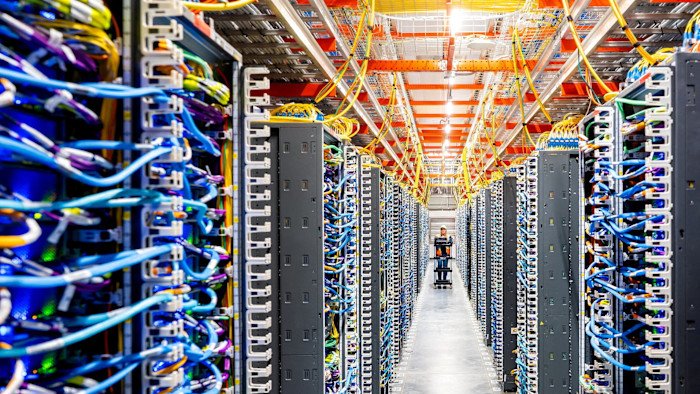
America remains the undisputed leader in AI. The technology’s fundamental breakthroughs were developed in American universities, research labs and companies. From GPUs to data centres to frontier models and fine-tuned applications, American businesses have set the gold standard for the whole AI stack.
This leadership brings with it a responsibility to share the foundations of a new golden age of innovation. We stand ready to work with partners around the world to ensure that creativity, freedom and prosperity are at the heart of today’s technological revolution, for the benefit of all our citizens.