

Now Reading: The world’s largest desert is enormous and there’s hardly any rain – but it’s not hot. Here’s why
- 01
The world’s largest desert is enormous and there’s hardly any rain – but it’s not hot. Here’s why

The world’s largest desert is enormous and there’s hardly any rain – but it’s not hot. Here’s why
When most people think of the word desert, a hot, sand-covered expanse usually springs to mind. But what actually constitutes a desert?
A desert is defined as having less than 250mm of water a year falling from the sky. So a desert is somewhere that’s very dry, but not necessarily very hot.
Covered in dunes and the occasional palm tree, the Sahara is what we might traditionally think of as a desert – the entire 9.4 million square miles of the Sahara generally receives little more than 100 millimetres of rain per year.
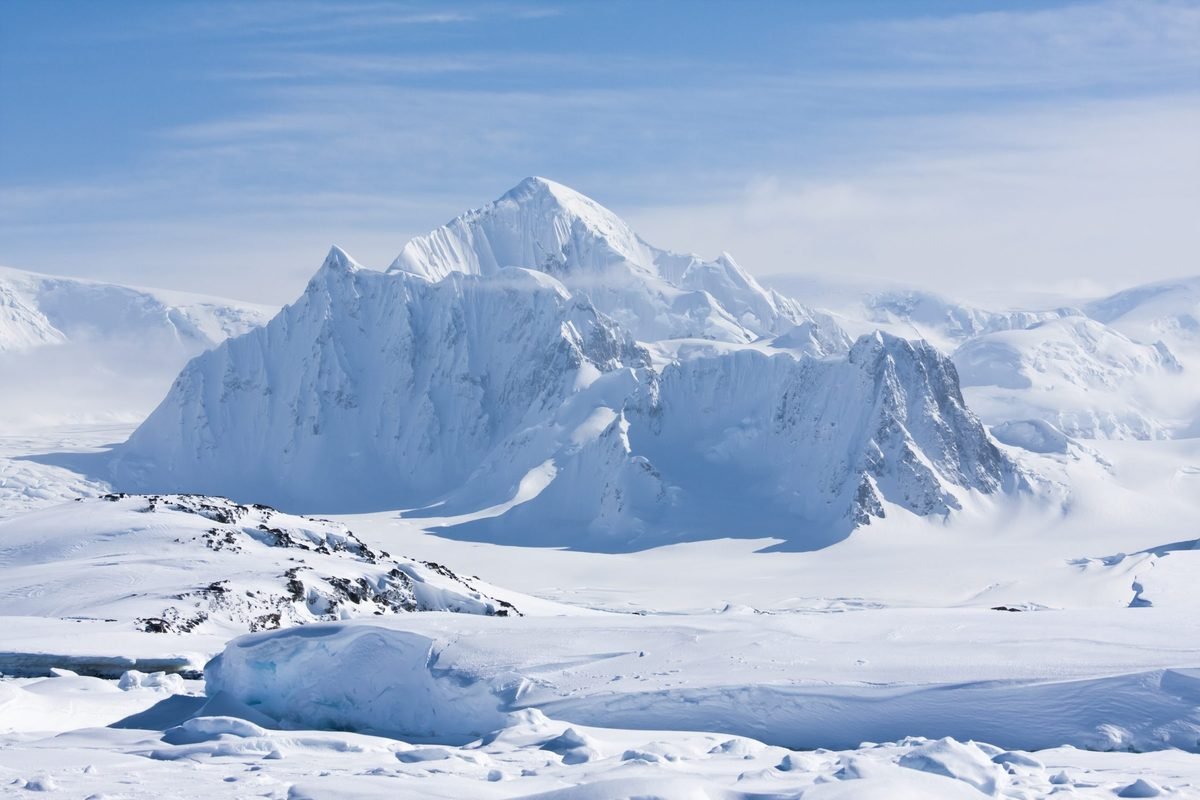
But there’s somewhere else on the planet that constitutes a desert and is even bigger: the desert of Antarctica. The continent of Antarctica is on average the driest, coldest and windiest of the continents, with annual precipitation that averages 166 millimeters.
It holds 90 per cent of the Earth’s total surface fresh water in its ice sheet and covers a whopping 14.2 million square kilometers.

The inhospitable conditions mean that most of the animals we associate with Antarctica – such as Emperor penguins and seals – are focused around its shores and seas. But there are other animals that live in Antarctica such as the Antarctica midge (Belgica antarctica), which is the only insect that can survive there year-round.
Antarctica is a polar desert and is colder than the Earth’s other polar desert – the Arctic. Whereas the Sahara has reached temperatures of over 50 degrees celsius, Antarctica’s temperatures stretch down to -89 degrees celsius.
Top image: a peak in Antarctica. Credit: goinyk/Getty Images