
Colorectal cancer is rising among younger adults, even those who appear healthy. A Boston father is sharing his diagnosis in hopes of raising awareness about getting screened.At 37, Christopher Kowalski is the last person you’d expect to be fighting cancer. He’s a former Boston College baseball player, a runner who works out almost every day, a husband and a dad to two young kids. By all accounts, he appears healthy.So when the call came, it changed everything.”I’m at the golf course, so I got the call, and he said, ‘Chris, are you alone?’ I could hear it in his voice, and I knew something was wrong. And he goes, ‘Listen, we got the results back of the CT, and you have colon cancer. Unfortunately, some of it’s spread to the liver,'” Kowalski said.It was stage 4 colon cancer, and just days before the call, Kowalski says life looked normal, but there were small signs that something was off.”I started getting a little bit of fatigue. And for those that know me, I don’t really get tired because I have a big motor. And then I started getting a little upper ribcage pain,” Kowalski said.After the devastating diagnosis, he says it was his wife who helped him reset his mindset.”I give my wife more credit than anything on the planet. She goes ‘We have 48 hours. We’re going to let everything out; crying, emotions, let everything consume you, and let it out. You’re an inner-city kid from Dorchester. You’ve never been afraid of a fight,'” Kowalski said.Kowalski’s story is becoming more and more common.Doctors say colorectal cancer — cancer of the colon and rectum — has been rising among younger adults for years.”Unfortunately, that’s a trend. I’ve been seeing more young people with colorectal cancer. We’ve been seeing people in their 20s and 30s, even,” says medical oncologist Dr. Leon Pappas at Mass General Brigham.The reason is still being studied. Gastroenterologists and clinical researchers say there are some contributing factors, like diets low in fruits and vegetables and high in processed foods, especially meats.And many younger patients are getting diagnosed later, because the warning signs can be subtle.”Any symptoms that are concerning for colon cancer, such as blood in the stool, changes in bowel habits, abdominal pain, loss of weight that’s unexplained, patients should be aware of those and go to their primary care doctor or any other medical professional that they know in order to look for screening,” Pappas said.Pappas created a personalized treatment plan for Kowalski, combining chemotherapy and a clinical trial.”So once I did biopsies in my liver, once I did biopsies in my colon, there we understood what, if there were any mutations, we understood what the actual cancer was, and then we developed a treatment plan to target it specifically,” Kowalski said.Doctors say new treatments like these are pushing survival further.”With new treatment paradigms, with the ability to incorporate surgery and radiation therapy when a good systemic therapy works. I think with those modalities, we are curing also more people, even in the advanced stage four setting, which is very encouraging,” Pappas said.While treatments continue to improve, doctors say the biggest lifesaver is catching the disease early. That’s why they’re urging more people to get screened. And although colonoscopies are considered the gold standard, there are more options.”There’s a stool test that some doctors mail to your house. You can get a CT scan. You still do a bowel prep, but it’s called a virtual colonoscopy or a CT colonography, coming out with blood tests now, so you can just go to the lab and get tested. There’s so many different options. The best one is the one that gets done,” said clinical researcher and gastroenterologist Dr. Adjoa Anyane-Yeboa at Mass General Brigham.A message Kowalski continues to share to save lives.”We have over 200 people in my network have gotten colonoscopies now. Unfortunately, eight of them have had polyps, but I say it’s almost like fortunately-unfortunately, because fortunately we found them.”Doctors stress early detection is key, especially if you’re experiencing symptoms that are not of the norm, and it doesn’t matter your age.Kowalski is aiming to turn his diagnosis into awareness — inspiring others to get screened. He said it’s a lesson he learned from his Boston College baseball captain, Pete Frates.
Colorectal cancer is rising among younger adults, even those who appear healthy. A Boston father is sharing his diagnosis in hopes of raising awareness about getting screened.
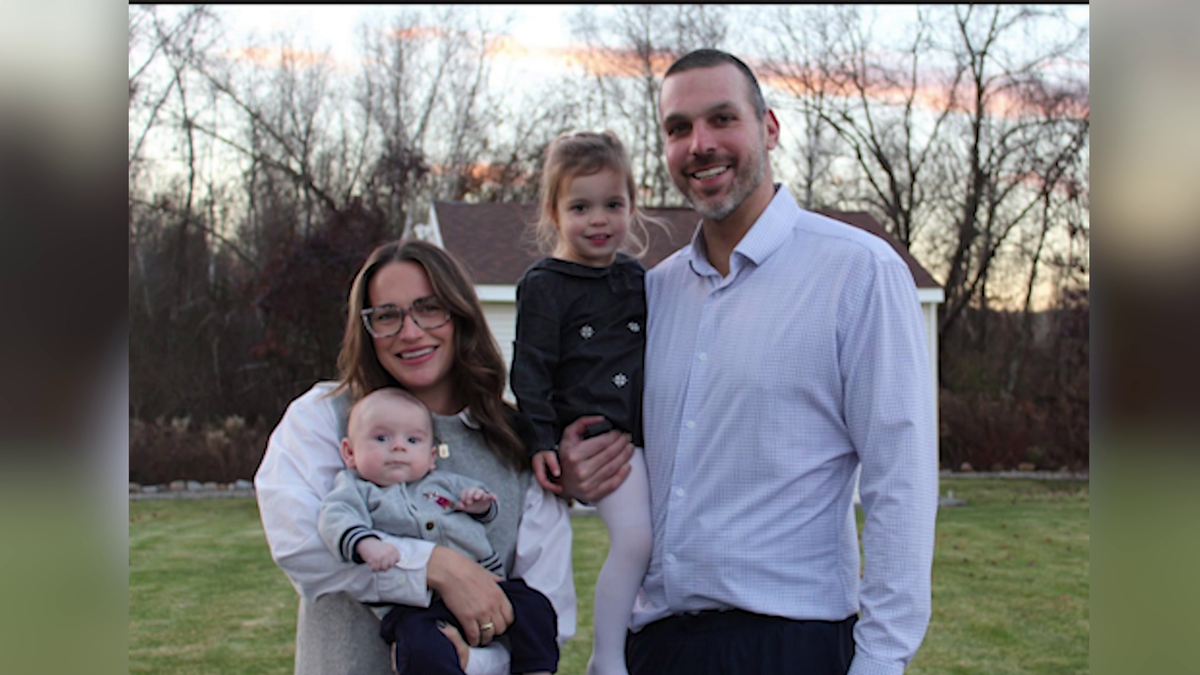
At 37, Christopher Kowalski is the last person you’d expect to be fighting cancer. He’s a former Boston College baseball player, a runner who works out almost every day, a husband and a dad to two young kids. By all accounts, he appears healthy.
So when the call came, it changed everything.
“I’m at the golf course, so I got the call, and he said, ‘Chris, are you alone?’ I could hear it in his voice, and I knew something was wrong. And he goes, ‘Listen, we got the results back of the CT, and you have colon cancer. Unfortunately, some of it’s spread to the liver,'” Kowalski said.
It was stage 4 colon cancer, and just days before the call, Kowalski says life looked normal, but there were small signs that something was off.
“I started getting a little bit of fatigue. And for those that know me, I don’t really get tired because I have a big motor. And then I started getting a little upper ribcage pain,” Kowalski said.
After the devastating diagnosis, he says it was his wife who helped him reset his mindset.
“I give my wife more credit than anything on the planet. She goes ‘We have 48 hours. We’re going to let everything out; crying, emotions, let everything consume you, and let it out. You’re an inner-city kid from Dorchester. You’ve never been afraid of a fight,'” Kowalski said.
Kowalski’s story is becoming more and more common.
Doctors say colorectal cancer — cancer of the colon and rectum — has been rising among younger adults for years.
“Unfortunately, that’s a trend. I’ve been seeing more young people with colorectal cancer. We’ve been seeing people in their 20s and 30s, even,” says medical oncologist Dr. Leon Pappas at Mass General Brigham.
The reason is still being studied. Gastroenterologists and clinical researchers say there are some contributing factors, like diets low in fruits and vegetables and high in processed foods, especially meats.
And many younger patients are getting diagnosed later, because the warning signs can be subtle.
“Any symptoms that are concerning for colon cancer, such as blood in the stool, changes in bowel habits, abdominal pain, loss of weight that’s unexplained, patients should be aware of those and go to their primary care doctor or any other medical professional that they know in order to look for screening,” Pappas said.
Pappas created a personalized treatment plan for Kowalski, combining chemotherapy and a clinical trial.
“So once I did biopsies in my liver, once I did biopsies in my colon, there we understood what, if there were any mutations, we understood what the actual cancer was, and then we developed a treatment plan to target it specifically,” Kowalski said.
Doctors say new treatments like these are pushing survival further.
“With new treatment paradigms, with the ability to incorporate surgery and radiation therapy when a good systemic therapy works. I think with those modalities, we are curing also more people, even in the advanced stage four setting, which is very encouraging,” Pappas said.
While treatments continue to improve, doctors say the biggest lifesaver is catching the disease early. That’s why they’re urging more people to get screened. And although colonoscopies are considered the gold standard, there are more options.
“There’s a stool test that some doctors mail to your house. You can get a CT scan. You still do a bowel prep, but it’s called a virtual colonoscopy or a CT colonography, coming out with blood tests now, so you can just go to the lab and get tested. There’s so many different options. The best one is the one that gets done,” said clinical researcher and gastroenterologist Dr. Adjoa Anyane-Yeboa at Mass General Brigham.
A message Kowalski continues to share to save lives.
“We have over 200 people in my network have gotten colonoscopies now. Unfortunately, eight of them have had polyps, but I say it’s almost like fortunately-unfortunately, because fortunately we found them.”
Doctors stress early detection is key, especially if you’re experiencing symptoms that are not of the norm, and it doesn’t matter your age.
Kowalski is aiming to turn his diagnosis into awareness — inspiring others to get screened. He said it’s a lesson he learned from his Boston College baseball captain, Pete Frates.