
Florida collects more than 5,000 frozen iguanas in two-day period
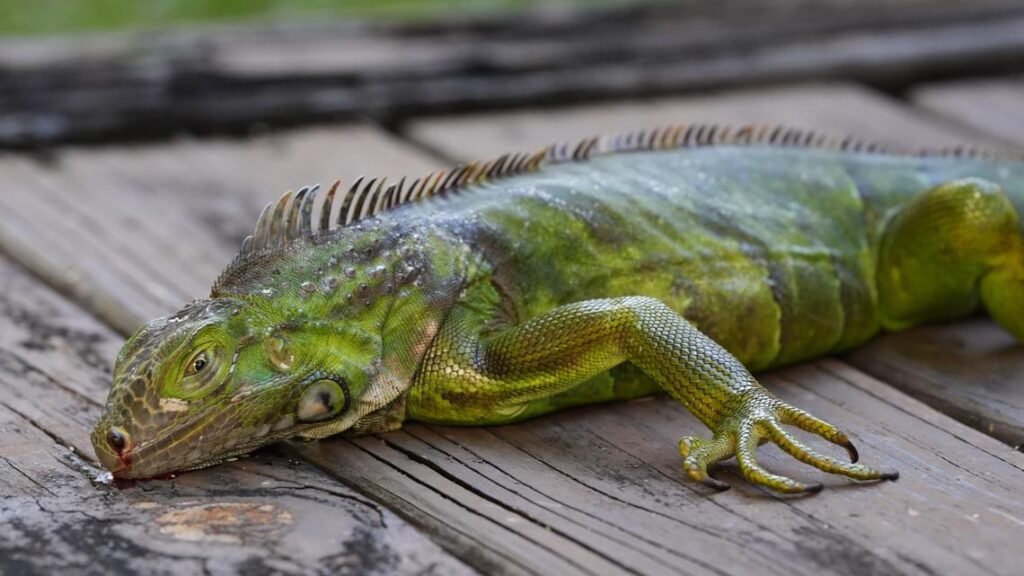
“We are NO LONGER accepting green iguanas at FWC offices,” Florida wildlife officials wrote.
TAMPA, Fla. — Florida’s falling frozen iguana phenomenon has found its way back into national headlines, with viral videos of people making a blanket out of the cold-stunned reptiles and even using them as a pizza topping.
But for wildlife officials, this cold snap was a chance to remove some of the invasive species from the state, where they threaten native species and damage local landscapes.
The Florida Fish and Wildlife Conservation Commission (FWC) issued an executive order over the weekend that allowed people to remove cold-stunned iguanas from the wild without a permit and bring them to five drop-off sites across South and Southwest Florida, including one in Lakeland.
Now that the collection period is over, the FWC is revealing just how many frozen reptiles were turned in.
Wildlife officials say 5,195 invasive green iguanas were removed from Florida’s ecosystems on Feb. 1-2.
“We are NO LONGER accepting green iguanas at FWC offices,” the FWC wrote in a post on X. “Temporary regulations only allowed people to transport green iguanas to @MyFWC offices on Feb. 1 & 2.”
As a reminder, you can still humanely kill green iguanas on your property or with landowner permission at any time, since they aren’t a protected species.
“The removal of over 5,000 of these nonnative lizards in such a short time span was only possible thanks to the coordinated efforts of many staff members in multiple FWC divisions and offices, our partners, and of course the many residents that took the time to collect and turn in cold-stunned iguanas from their properties,” FWC Executive Director Roger Young said in a statement.
What happened to the iguanas in Florida?
Green iguanas become cold-stunned and temporarily lose all muscle control when temperatures fall into the 40s or below.
While the iguanas may look dead, they’re still alive and will regain function as they warm up. Because of this, you should never bring them into your home.
“Iguanas can recover from cold-stunning more quickly than you might expect and, once recovered, can act defensively, with long tails that whip and sharp teeth and claws,” the FWC wrote.
Some of the 5,000+ cold-stunned iguanas turned in to the FWC on Feb. 1-2 were given to permit holders authorized to sell the reptiles out of state. Any that could not be transferred were humanely killed by trained staff.
How did iguanas get to Florida?
Green iguanas are native to Central America, tropical parts of South America and some eastern Caribbean islands.
They were first reported in Florida in the 1960s in Hialeah, Coral Gables and Key Biscayne along Miami-Dade County’s southeastern coast, according to the FWC. A study from the University of Florida says an exotic pet dealer is known to have purposely released more than 300 of them in that area in 1964.
“Since then, additional intentional and unintentional releases of pet iguanas have likely contributed to their spread in peninsular Florida,” the study reads.”
Now, green iguana populations stretch along the Atlantic Coast in Broward, Martin, Miami-Dade, Monroe and Palm Beach counties and along the Gulf Coast in Collier and Lee Counties. There have also been reports as far north as Alachua, Highlands, Hillsborough, Indian River and St. Lucie counties, the FWC says.