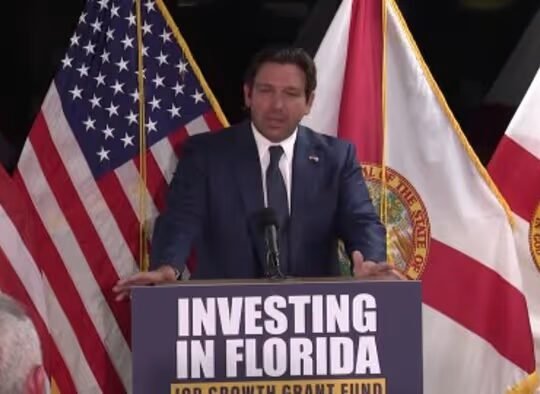


The political landscape in the United States has undergone notable shifts in the wake of the recent election cycle. Following the 2024 presidential election, a clear focus has emerged on the implications for future candidates, particularly Ron DeSantis. As the former Florida governor navigates the aftermath of his defeat against President Trump in the Republican primaries, the discussion surrounding his aspirations for the 2028 election becomes increasingly relevant.
Ron DeSantis, once viewed as a formidable contender, now faces the challenge of reestablishing his position within a party that has become deeply entwined with Trumpism. Despite DeSantis’s previous successes as governor, including a strong handling of the COVID-19 pandemic, the recent election results have highlighted a waning influence of Trump as a candidate and the need for DeSantis to recalibrate his strategy. His defeat has not only impacted his political capital but has also set a precedent for how he may approach the upcoming race.
The implications of these developments extend beyond just DeSantis; they encompass the broader Republican Party dynamics that will shape the 2028 presidential election. With Trump’s grip on the party slowly diminishing, several potential candidates, including DeSantis, might find themselves vying for a more fragmented Republican base. This evolving environment offers both challenges and opportunities for the governor as he contemplates his path forward. The shifting allegiances within the party could either bolster his comeback or hinder it, as he seeks to distance himself from Trump’s legacy while maintaining core GOP support.
Understanding Trump’s Resurgence and Its Impact on DeSantis
The political landscape of the Republican Party has been significantly shaped by the recent resurgence of former President Donald Trump. His ability to galvanize a substantial voter base remains unmatched among contemporaries, presenting substantial challenges for Ron DeSantis as he considers a potential comeback in the 2028 election. Trump’s appeal transcends mere party loyalty; it encompasses a diverse coalition of voters who are drawn to his unfiltered communication style and his agenda that prioritizes nationalism and conservative values.
Trump’s strategic positioning, particularly his focus on issues that resonate with a broad demographic, has solidified his standing within the party. His remarks about future candidates have notably included endorsements and critiques, with particular emphasis on figures like JD Vance, indicating a preference for maintaining influence over new challengers rather than allowing them to establish their own platforms. This dynamic inherently complicates DeSantis’s political positioning, stripping him of the earlier momentum he experienced as a rising star within Republican circles.
The fallout from DeSantis’s previous electoral loss further exacerbates his current predicament. Voter sentiment towards Trump, bolstered by his past presidency and ongoing popularity, has painted DeSantis’s journey as an uphill battle. Many former Trump supporters remain loyal to him, viewing DeSantis as simply an extension of Trump’s policies without the charisma that the former president brings to the table. Thus, for DeSantis to advance his aspirations in 2028, he must navigate this intricate political minefield—adopting strategies that resonate with the core Trump voter base while simultaneously re-establishing his own identity that aligns with broader conservative objectives. Understanding the nuances of Trump’s resurgence is crucial for any future ambitions that DeSantis may harbor within the Republican Party.
Polling Insights: A Closer Look at DeSantis’s Current Standing
Recent polling data reveals nuanced insights into Ron DeSantis’s positioning within the Republican Party as he eyes a potential presidential bid in 2028. Following an initial surge in popularity, DeSantis has experienced fluctuations in his approval ratings, which have raised questions about his viability as a candidate. Current polls indicate that he is trailing behind former President Donald Trump, who maintains a substantial lead among GOP voters. According to recent surveys, Trump’s support hovers above 50%, while DeSantis’s numbers have recently dipped to approximately 30% in preference ratings.
Political analysts note that this shift may stem from several factors, including DeSantis’s handling of key issues during his gubernatorial tenure and his approach to national topics, which may not resonate as strongly with the broader Republican electorate. Furthermore, emerging challengers within the party are also vying for attention, which could complicate DeSantis’s prospects. Names like Nikki Haley and Mike Pence have begun gaining traction, adding to the competitive landscape for the 2028 nomination.
Experts suggest that DeSantis needs to recalibrate his campaign strategy to reclaim relevance among GOP voters. Engaging more actively with the party’s base and addressing pressing issues could prove essential for revitalizing his image. As focus shifts towards the 2028 election cycle, polling data will serve as a critical barometer for DeSantis’s effectiveness in reversing his fortunes.
In summary, while DeSantis’s early policymaking decisions garnered initial support, his recent poll standings suggest a need for strategic revision. For him to be a serious contender in the upcoming primaries, understanding voter sentiment and responding accordingly will be key components of his comeback attempt in 2028.
The Importance of Endorsements and Alliances
In the landscape of American politics, endorsements play a critical role in shaping candidates’ trajectories, particularly for those vying for higher office. For Ron DeSantis, endorsements can significantly bolster his credibility and visibility as he navigates the path toward a potential presidential campaign in 2028. The support of influential figures, especially in his home state of Florida, may provide him with a strategic advantage as he positions himself for the future.
One key relationship that could enhance DeSantis’s prospects is his alliance with Byron Donalds, a rising star within the Republican Party. Their collaboration has the potential to strengthen DeSantis’s claim to the foundational support critical for any serious contender. Donalds, a member of the House of Representatives and a vocal supporter of conservative principles, embodies many of the values that resonate with the GOP’s base. His endorsement could serve as a powerful signal to potential voters of DeSantis’s alignment with essential party tenets.
Furthermore, forming strong alliances within the Florida GOP could enable DeSantis to solidify his influence in the state. This support is vital not just domestically, but also as a part of a broader strategy to engage with national Republican networks. By forging relationships with prominent GOP figures and grassroots organizations, DeSantis can create a foundation of loyalty that enhances his visibility and strengthens his campaign infrastructure.
Ultimately, the strategic importance of endorsements and alliances in politics cannot be overstated. For Ron DeSantis, cultivating these relationships is paramount as he aspires to mount a competitive campaign for the presidency. By gaining the support of key figures like Byron Donalds and fostering solid connections within the party, he may significantly improve his chances of making a successful comeback in 2028.
The Racial Overtones of Leadership: DeSantis’s Commitment to Diversity
Ron DeSantis, as a prominent political figure, has come under scrutiny regarding his perception in the context of race and diversity. As he positions himself for a potential presidential run in 2028, the question of how he navigates these sensitive narratives is crucial for appealing to a broader electorate. DeSantis has faced accusations of fostering racially insensitive policies, reflecting a broader struggle within the Republican Party regarding race relations.
One prominent example of the racial controversies surrounding DeSantis involves his administration’s educational policies, which critics argue disproportionately affect minority communities. Initiatives aimed at reshaping curricula have been perceived as attempts to minimize discussions around systemic racism. This has led to heightened public discourse about his commitment to diversity and inclusion, raising questions about his effectiveness as a leader for a diverse constituency.
DeSantis’s much-publicized commitment to Israel is another area that some interpret as a double-edged sword in the discourse of racial issues. While his dedication to strengthening U.S.-Israel relations is welcomed by many, it presents a lens through which critics can scrutinize his prioritization of certain minority communities over others. In balancing issues of faith, ethnicity, and race, DeSantis must carefully navigate these waters to ensure that he is perceived not only as a leader of his party but also as a leader who is responsive to the needs of all Americans.
Overall, overcoming the allegations of racism that have surfaced from his past actions will require a comprehensive strategy from DeSantis. His commitment to addressing the concerns of minority groups, coupled with a transparent dialogue, will be essential in reshaping his public perception as he gears up for the 2028 presidential race.
Leadership Qualities: Do DeSantis’s Actions Reflect Presidential Potential?
Ron DeSantis, the Governor of Florida, has drawn significant attention for his leadership style and decisions in recent years. His approach to governance has often polarized opinions, yet it raises important questions about his potential as a national leader. Analyzing his actions and policies offers insight into whether he embodies the qualities expected of a presidential candidate capable of uniting a diverse nation.
One notable aspect of DeSantis’s leadership is his focus on education policies. He has advocated for parental rights in education, positioning himself as a champion for family values. His push for legislation that aims to enhance educational choice reflects a broader trend among successful leaders who seek solutions rooted in community engagement. However, this approach has drawn criticism for its perceived divisiveness, suggesting that while his intentions may be positive, the execution may not resonate with all demographics.
Additionally, DeSantis’s handling of the COVID-19 pandemic revealed both strengths and weaknesses in his leadership. While he prioritized economic reopening and individual freedoms, detractors argue that his policies lacked sufficient emphasis on public health measures. Successful leaders often demonstrate the ability to navigate complex issues with a nuanced approach, balancing public health and economic viability. This raises the question of whether DeSantis can adapt his leadership style to address diverse viewpoints effectively.
Political analysts frequently draw comparisons between DeSantis and other influential leaders, examining how their governance styles have shaped public perceptions. Leaders like Barack Obama and Ronald Reagan managed to inspire across party lines, fostering a sense of unity. For DeSantis to enhance his presidential potential, he may need to re-evaluate how his decisions are perceived on a national scale and work towards redefining his public image. Doing so could play a crucial role in positioning himself favorably as the 2028 election approaches.
Revamping Florida’s Medical Marijuana Industry: A Seizing Opportunity
The medical marijuana industry in Florida has seen significant growth since its legalization, yet challenges persist that present a unique opportunity for Governor Ron DeSantis as he considers his presidential aspirations. By focusing on the improvement of this sector, he can not only address public health concerns but also reshape his image as a forward-thinking leader sensitive to the needs of his constituents.
One of the pivotal issues surrounding Florida’s medical marijuana industry is the regulatory framework that governs it. Currently, many patients and healthcare providers face barriers to access due to a complex and often confusing set of regulations. Simplifying these processes could enhance accessibility for patients who rely on medical cannabis for therapeutic benefits. If DeSantis champions reforms that streamline patient registration and promote equitable distribution of medical marijuana, he could significantly strengthen his appeal among voters who prioritize healthcare issues.
Further, improving the infrastructure and education surrounding the medical marijuana industry can work towards dispelling misconceptions and stigma associated with its use. DeSantis could implement statewide campaigns that educate both the public and medical professionals about the benefits of marijuana as a treatment option. This would not only bolster public support for the industry but also foster a more informed electorate that recognizes the potential therapeutic applications of cannabis.
Additionally, investing in research initiatives related to medical marijuana could position Florida as a leader in the field, attracting both researchers and businesses. Such steps would demonstrate DeSantis’s commitment to innovation and public health, reinforcing his capability as a candidate. By successfully navigating the complexities of Florida’s medical marijuana landscape and advocating for necessary reforms, DeSantis can effectively reshape his public image and create a solid platform as he eyes the 2028 presidential election.
Overcoming Lingering Negativity: Strategies for a Successful Comeback
To successfully navigate the political landscape and regain favor with voters, Ron DeSantis could implement a multi-faceted strategy that focuses on policy reform, relationship building, and a forward-looking vision. First and foremost, concentrating on policy reform can be a crucial step. By addressing controversial issues head-on and promoting bipartisan initiatives, DeSantis can demonstrate his commitment to improving the lives of everyday Americans. This approach not only helps mitigate lingering negativity but also positions him as a leader willing to be pragmatic in governance.
Additionally, establishing strong relationships within the Republican Party is essential. DeSantis should engage with party influencers and grassroots organizers to foster a collaborative environment. Building alliances can provide a solid support base and amplify his message to a wider audience. Attending party events, participating in local discussions, and actively contributing to the party’s agenda will help solidify his position within the party. Through effective relationship building, he can transform skepticism into confidence among party members.
Emphasizing a forward-looking vision is equally vital for capturing the attention of voters. DeSantis should focus on addressing the concerns and aspirations of the American populace, particularly regarding issues such as the economy, healthcare, and education. By articulating a clear, optimistic vision for the future, he can inspire hope and encourage engagement among voters, thus counteracting past negativity. Moreover, promoting innovative solutions that align with public sentiment can consolidate DeSantis’s stance as a proactive leader.
In conclusion, by embracing policy reform, fostering relationships within the Republican Party, and advocating a forward-looking vision, Ron DeSantis can strategically overcome the lingering negativity surrounding his political image. This comprehensive approach may facilitate a successful comeback, setting the stage for his aspirations in the 2028 presidential race.
Conclusion: The Road Ahead for Ron DeSantis
Ron DeSantis’s journey toward a potential presidential bid in 2028 remains filled with both challenges and opportunities. As he reflects on the previous electoral cycle, it is evident that he must strategically navigate the political landscape to regain momentum. The initial enthusiasm that propelled him into the national spotlight has waned, leaving questions about his ability to rally support and capture the Republican nomination.
One of the major hurdles for DeSantis is re-establishing his appeal to a diverse voter base. In an increasingly divided political climate, he must balance the concerns of moderate Republicans with the expectations of the party’s more conservative factions. His governance style in Florida, often viewed as polarizing, may need to be recalibrated to attract a broader coalition. Furthermore, addressing pressing national issues such as the economy and public health will be critical in reshaping his public perception.
Moreover, the absence of formidable challengers within the party could work in his favor. A clear path in the Republican primaries, combined with influential endorsements and a solid campaign strategy, may enhance his prospects. DeSantis’s ability to communicate his vision for America’s future will play a significant role in energizing his base. Establishing a robust fundraising network and engaging with voters on key issues are necessary steps he must take to lay a strong foundation for his candidacy.
Ultimately, the road ahead for Ron DeSantis is fraught with uncertainties. As he reevaluates his approach, the political landscape will undoubtedly continue to evolve. His capacity to adapt and connect with the electorate will determine whether he can rise from the setbacks and effectively position himself for a presidential comeback in 2028. Thus, followers and critics alike are left to ponder if he can indeed reclaim his aspirations on the national stage.