
TAMPA, Fla. — As global conflicts continue to affect travel around the world, some Tampa Bay travelers may be surprised to learn that their travel insurance may not cover disruptions tied to war or military conflict.
A local travel expert spoke with Spectrum Bay News 9 about what travelers should know before booking an international trip.
Phones continue ringing and itineraries keep getting confirmed at Exeter International, a Tampa-based luxury travel company that arranges international tours.
“Life savers, dream makers,” said company president Gwen Kozlowski.
But behind the excitement of planning trips abroad, Kozlowski says that global conflicts are increasingly affecting where — and how — people travel.
She says the Middle East plays a major role in global aviation routes.
According to Kozlowski, the region serves as a critical hub connecting travelers from Africa to Europe, Asia and North America.
“There are very little non-stop flights from the U.S.,” she said.
Along with helping clients finalize their itineraries, Kozlowski says she also educates travelers about how to get the most protection for their trip. She says many people may not realize standard travel insurance policies often do not cover acts of war, terrorism or military conflict.
“It’s a delicate situation,” Kozlowski said. “We have never had people traveling to Iran, so that wouldn’t come up for us. But we did have a number of people affected by air closures in the Middle East.”
As the spring break travel season begins, Kozlowski encourages travelers to read the fine print of their policies to understand exactly what is covered.
“Oftentimes, the least expensive travel insurance policy you can buy is just for medical insurance,” she said. “There are other travel insurance policies that cover trip cancellation and some that have more robust coverage for reasons for cancellation. Then there’s a thing called ‘Cancel for Any Reason.'”
She adds that having both travel insurance and an experienced travel advisor can make a major difference if plans suddenly change.
“If you’re working with someone that really knows the destination, they probably have contacts that can help you,” Kozlowski said. “So you are not alone. And I think that’s super important now — knowing that somebody has your back.”
Kozlowski says the right guidance and coverage can help protect your travel investment — instead of turning a dream trip into an unexpected expense.
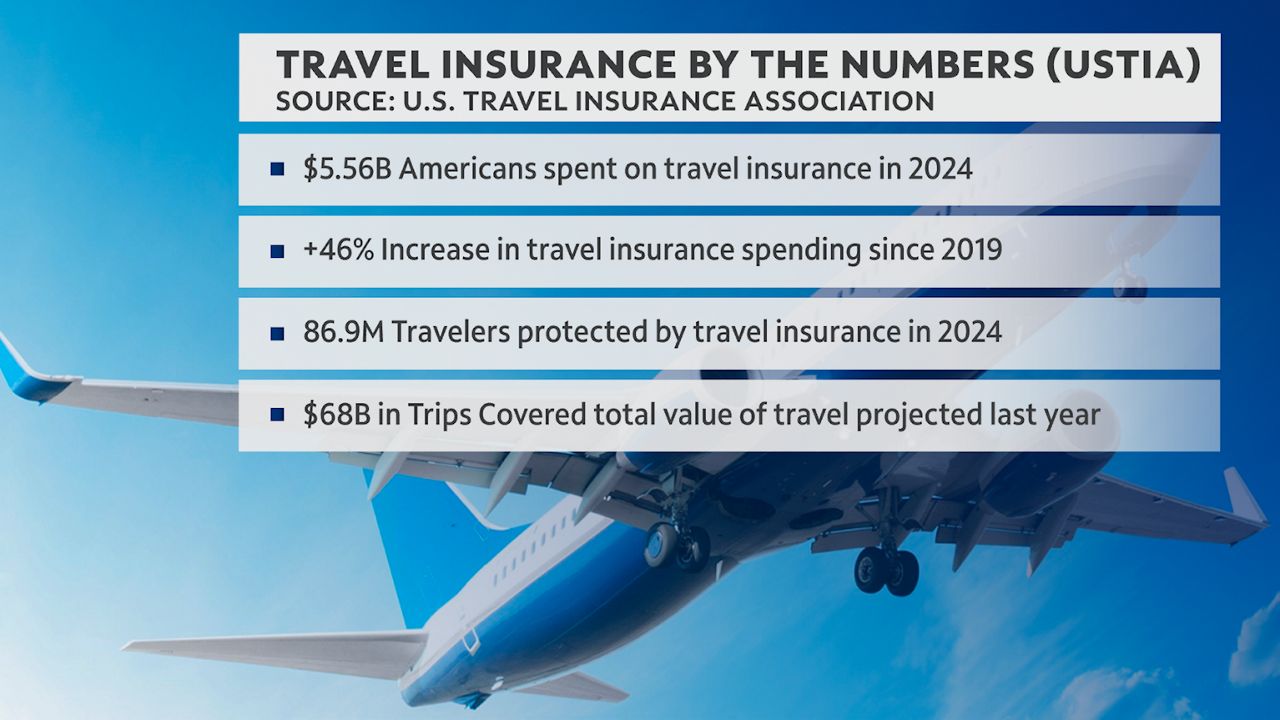
According to the U.S. Travel Insurance Association:
- Americans spent $5.6 billion on travel insurance in 2024
- That’s a 46% increase since 2019
- Nearly 87 million travelers were protected
- Covering about $68 billion worth of trips
Brandon Bates, president of the U.S. Travel Insurance Association (USTIA) shared the following statement with Spectrum Bay News 9:
“Travelers today are navigating an increasingly volatile global landscape. While standard policies traditionally exclude acts of war, some travelers are choosing ‘Cancel for Any Reason’ options and enhanced non-medical evacuation services to address geopolitical uncertainty. Travel insurance goes beyond financial reimbursement, and our industry has doubled down on 24/7 crisis communication and real-time safety alerts to act as a lifeline for those on the ground.
“When purchasing a policy, travelers should look beyond the premium to ensure it includes specific evacuation support. More crucially, travelers should purchase coverage at the time of booking, as insurance is designed to protect against the unexpected, not the already unfolding.”