Tesla And Hyundai Drive South Korea EV Boom
The electric vehicle (EV) market in South Korea is in the midst of a dramatic transformation, with record-shattering sales, fierce price competition, and a heated debate over government subsidies. In the first quarter of 2026, the country saw an unprecedented surge in EV sales, driven largely by aggressive pricing strategies and shifting consumer preferences. But as the market expands, questions about fairness, domestic industry support, and the future of imported brands have come to the forefront.
According to data from the Kaizyu Data Research Institute, South Korea’s domestic passenger EV sales soared to 72,321 units in the first quarter of 2026, a staggering 153% jump from the 28,547 units sold during the same period last year. This marks the highest quarterly sales volume ever recorded in the country. The surge was propelled by both imported and domestic brands, with Tesla leading the charge and local giants Hyundai and Kia also posting their best-ever EV sales figures. The early confirmation of government subsidies, the impact of the Iran war on global oil prices, and additional funding allocated by the National Assembly all contributed to this rapid growth.
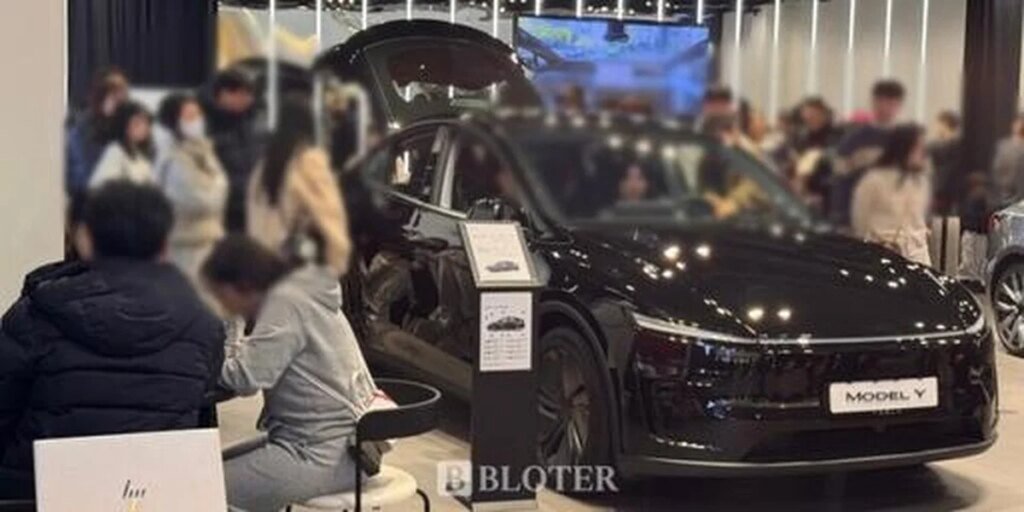
Breaking down the numbers month by month, January 2026 saw 5,528 EVs sold, but as soon as major discounts kicked in from Tesla and domestic automakers in February, sales skyrocketed to 29,689 units. By March, with gasoline prices still climbing, monthly sales reached 37,104 units. Tesla’s Model Y emerged as the clear favorite, with 15,325 units sold—a 587% leap from the previous year. Kia’s EV3 followed with 7,832 units sold (a 54% increase), trailed by the EV5 at 6,306 units, Hyundai’s Ioniq 5 at 5,334 (up 110%), and the Tesla Model 3 at 4,550 (an 85% increase).
What’s driving this frenzy? Industry insiders point to a combination of factors: competitive pricing, timely government support, and the simple reality that high fuel prices are nudging more drivers toward electric options. As one automotive industry official explained to Chosun Biz, “The current EV price range seems to have broken down the psychological barriers for consumers. The key factor for future consumer choice will be how attractive each brand can make their vehicles at these price points.”
Indeed, price has become the battleground. Tesla’s decision to slash prices on its main models—dropping the Model Y Premium Long Range to 49.99 million KRW in December 2025 and the Model 3 to 41.99 million KRW in January 2026—has had an electrifying effect. After applying subsidies, the effective purchase price for the Model Y hovers around 47 million KRW, while the Model 3 can be had for just over 30 million KRW. Domestic brands are following suit: Kia’s EV3 is now available in the 32 million KRW range, the EV5 at 34 million KRW, and Hyundai’s Ioniq 5 at around 46 million KRW after discounts and incentives.
This aggressive pricing strategy isn’t unique to South Korea. According to Autodaily, Tesla’s global sales have rebounded after a period of stagnation, with a 315% increase in Germany and a 203% jump in France over the past year. In South Korea, Tesla accounted for 69% of all imported EV registrations in March 2026, selling 11,130 units—a 330% increase from the same month last year. The company’s dominance was so pronounced that its March sales outpaced both BYD, the fast-growing Chinese brand, and Hyundai’s domestic EV sales of 7,809 units.
The market’s response underscores a simple truth: price is king. As Autodaily put it, “Tesla’s sales surge demonstrates that price is a key factor driving demand in the EV market.” The company’s software-centric vehicle design and mass production capabilities allow it to cut prices more flexibly than traditional automakers, who struggle to match such moves without overhauling their cost structures. Even so, rivals are trying to keep pace. Volvo recently dropped the price of its entry-level electric SUV EX30 by about 7 million KRW, resulting in more than 2,000 customers on the waiting list. BMW’s iX3, priced lower than expected, racked up 2,000 pre-orders in just three days. Hyundai and Kia have responded with new entry trims and additional promotions, with Kia’s cumulative sales reaching 34,303 units by March 2026—a 190.7% year-on-year increase.
But as the market heats up, the rules of the game are changing. The South Korean government has announced new criteria for EV subsidies set to take effect in July 2026, sparking controversy and accusations of favoritism toward domestic automakers. The revised system allocates 40 points to quantitative factors like sales, but 60 points to qualitative measures such as R&D investment, domestic contribution, service capacity, and safety response. Hyundai and Kia, with their extensive R&D investments and patents, are poised to score highly. Imported brands like Tesla and BYD, which lack significant domestic production or research facilities, are expected to receive lower scores—effectively shrinking their subsidies.
For Tesla, this presents a new challenge. While the company has built a solid service network in South Korea, its absence of local R&D facilities and limited patent holdings could hurt its standing under the new rules. BYD, a recent entrant to the market, faces even steeper hurdles, with little domestic investment to show. The government insists the new criteria are about ensuring consumer benefits and safety, not targeting foreign brands. However, critics see it differently. According to Radiance Report, industry voices argue that the policy smacks of “economic nationalism,” warning that it could restrict consumer choice and undermine the price competitiveness of imported EVs, ultimately distorting the market.
The debate has spilled over into political circles, with lawmakers and industry leaders closely watching to see whether the criteria will be revised before implementation—and how the changes might reshape the competitive landscape. Meanwhile, the National Assembly’s recent approval of a supplementary budget, which includes 230 billion KRW for zero-emission vehicle subsidies, is expected to further stimulate EV adoption, at least in the short term.
Looking ahead, the market is bracing for new arrivals. Tesla is set to launch a six-seater version of the Model Y (dubbed Model YL), while Chinese brand Zeekr is preparing to debut its premium mid-size SUV 7X. Hyundai and Kia are also rumored to be planning new or updated models to maintain their momentum. Yet, as Kwon Oh-chan, a senior official at the Korea Automobile Mobility Industry Association, cautioned in a March 2026 report, “While the market is recovering, continuous and strengthened subsidies are necessary to achieve the mid-to-long-term target of 4.2 million EVs by 2030.”
As South Korea’s EV market accelerates, it’s clear that price, policy, and innovation will all play decisive roles in shaping the road ahead. Whether the new subsidy rules will level the playing field or tilt it remains to be seen, but for now, Korean consumers are enjoying more choices—and better deals—than ever before.