

Now Reading: Volcanic ash from Mexican volcano spotted over Florida
- 01
Volcanic ash from Mexican volcano spotted over Florida

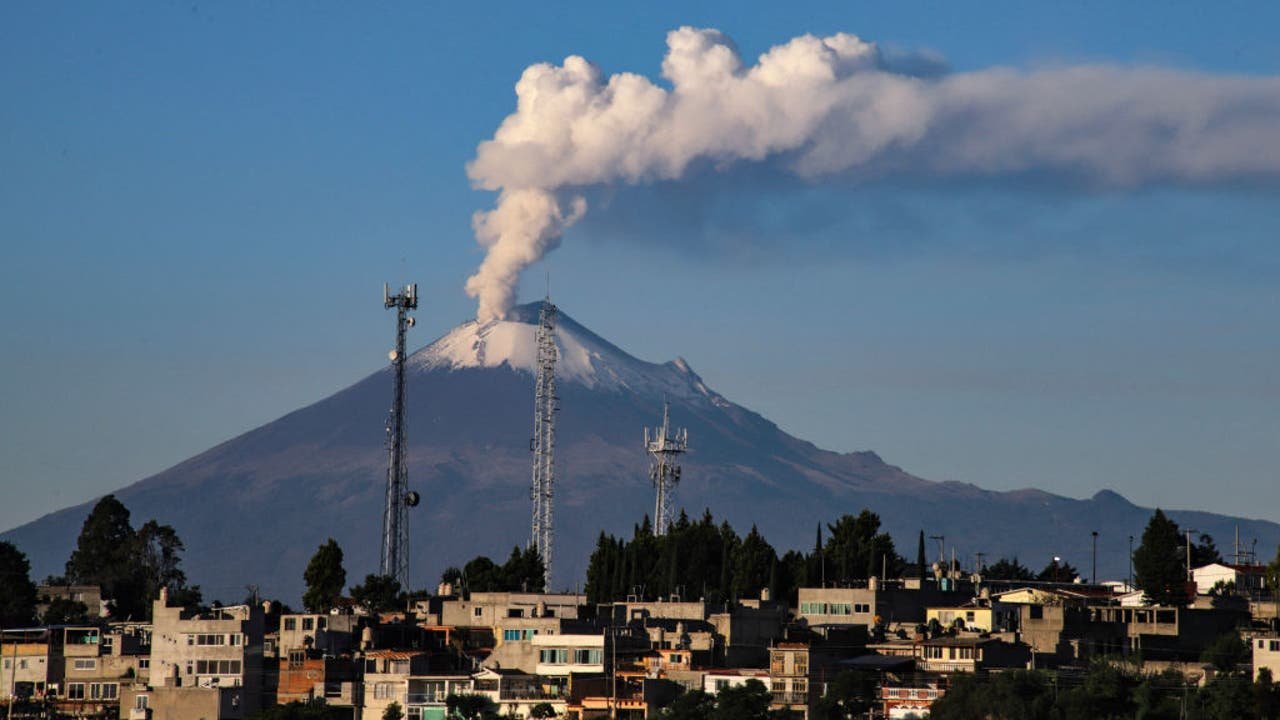
Volcanic ash from Mexican volcano spotted over Florida
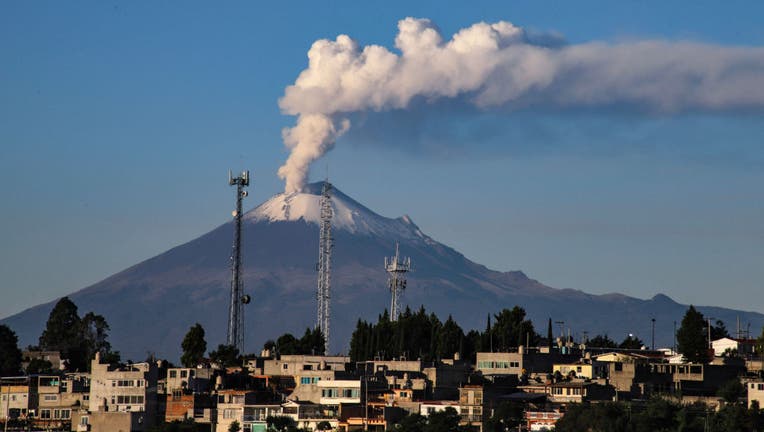
The Popocatepetl volcano releases a plume of gas and ash as seen from the town of San Hipolito Chimalpa in Tlaxcala, Mexico, on October 23, 2024.
NOAA satellites detected plumes that started from the Popocatépetl volcano and traveled hundreds of miles to the northeast.
According to the National Weather Service office in Jacksonville, Florida, pilots reported seeing the ash in the air near Sarasota, along Florida’s Gulf Coast, and if skies were clear, a colorful sunset was possible around elevated concentrations of ash.
The country’s National Disaster Prevention Center reported observing emissions of water vapor, volcanic gases and ash from the mountain and the possibility of minor to moderate-sized explosions.
In May 2023, ash emissions forced authorities to open evacuation shelters, close nearby schools, and temporarily shut down airfields, including Mexico City’s Benito Juárez International Airport.
Hawaii’s Kilauea volcano erupting again
David Phillips, the Deputy Scientist-in-Charge of the USGS Hawaiian Volcano Observatory, joins LiveNOW’s Austin Westfall to discuss what’s happening with Hawaii’s Kilauea volcano.
The last major eruption was reported in 800 A.D., and if a similar event were to occur today, the USGS estimates that hundreds of thousands of lives would be at immediate risk.
Estimates of the number of active volcanoes vary, but a survey by the Global Volcanism Program identified 35 volcanoes that have been active over the past 11,700 years.