

As Gulf War Three drags into its third month, it sure seems super-unpopular with both the foreign policy community and, more importantly, the American people. Nate Silver has created an Iran War tracker, and the numbers it’s spitting out are grim for Trump:
Donald Trump didn’t see the usual “rally-around-the-flag” boost to his approval ratings when the war started, and now, his net approval rating in our average is at a second-term low of -16.7….
The war has been unpopular since its outset (unless you’re a MAGA voter). Support for the war locked in quickly and has been steady at about 40 percent since the start of the conflict. However, opposition to the war has increased from about 48 percent to 54 percent.
This unpopularity is consistent with other polls about Iran, other poll roundups about the Iran war, poll trackers about Trump more generally, and even Politico-style insider baseball stories of Republicans desperately attempting to wishcast a better future.
Why is Trump doing so badly on Iran? There are the obvious reasons, of course:
The hard-working staff here at Drezner’s World, however, would like to suggest an additional reason for why the public is so sour about this war of choice: the way Trump is trying to sell the war relies on a narrative that is completely at odds with his normal political and rhetorical style. Trump usually promises instant gratification, and he can’t do that with Iran.
When it comes to politics, Donald Trump’s short attention span fits well with a large chunk of American voters, who also like the idea of instant gratification. And that is how Trump likes to campaign and govern. He likes to promise instant and easy solutions to wicked problems, like solving the Russo-Ukrainian War within 24 hours of taking office. Obviously, many of Trump’s promises went unfulfilled, but the point is that he promises immediate results. He is not a politician who tends to pledge pain now and gain later.
The thing is, that is how he has attempted to govern in his second term. Almost immediately after he won in 2024, Trump and his cabinet started suggesting short-term pain would precede long-term gain. Instead we have gotten short-term pain and incurred long-term malaise, but you get my point.
This is now the Trump team’s playbook to sell the war with Iran. The New York Times’ Erica Green recently wrote, “Mr. Trump has said he understands there will be short-term pain from the war, which he accepts as a necessary price to ensure that Iran cannot have a nuclear weapon.” This has been a running theme of the past five weeks — sure, there will be some temporary problems but that is worth the long-term reward of a neutered Iran.
Could Trump or his allies be correct that the long-term gain will be worth it? Perhaps, but I really doubt it. Absent successful regime change, it seems unlikely that Iran will voluntarily relinquish any element of its nuclear program. It’s looking to institutionalize its informal toll on crossing the Strait of Hormuz, which sure seems like a promising new revenue source for the mullahs in Iran.
More importantly, it is nearly impossible for a president and an administration that is obsessed with winning the meme wars to pivot to a “please just be patient” strategy. It’s incongruous and disjunctive with all of Trump’s standard presidential rhetoric.
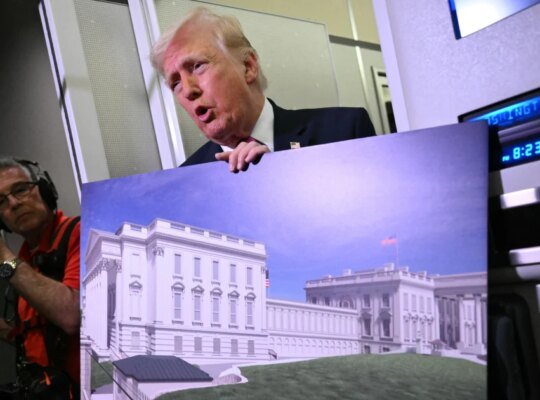
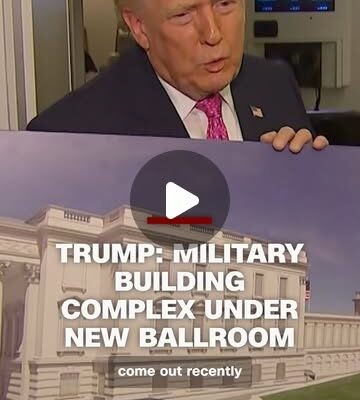
It’s also completely at odds with Trump’s immature style of leadership. This is a man who is getting briefed about the progress of the Iran war with video montages that last less than two minutes. It’s impossible for him to think about the long run with Iran when he’s already bored and distracted with the short run.
There have been signs over the past week that Trump has grown bored with the war and just wants to move onto other topics. The Wall Street Journal’s Annie Linskey, Alexander Ward, and Alex Leary reported this out a few days ago:
President Trump has told associates in recent days that he wants to avoid a protracted war in Iran and that he hopes to bring the conflict to an end in the coming weeks.
Nearly one month into the war, the president has privately informed advisers he thinks the conflict is in its final stages, urging them to stick to the four-to-six-week timeline he has outlined publicly, according to people familiar with the matter. White House officials planned a mid-May summit with Chinese leader Xi Jinping in Beijing with the expectation that the war would be concluded before the meeting begins, some of the people said.
The problem is Trump has no easy options for ending the war, and peace negotiations are at a nascent stage.
In discussions with outside political allies, his attention has at times shifted to other topics, including the coming midterm elections, as well as his decision to send immigration agents to airports and strategies to move legislation to tighten voter-eligibility rules through Congress. Trump told an associate that the war was distracting from his other priorities, one of the people said.
The president appears ready to shift to his next big challenge, another person who spoke to him recently said, though Trump didn’t say what that might be….
Trump has for weeks sought to characterize the war as a temporary distraction, emboldened by January’s swift military operation in Venezuela. He has called the conflict an “excursion” and a “military operation.”
MSNOW’s Jake Traylor reporting echoes the Journal’s and has White House sources:
Trump calling the war already won is “mostly hyperbole,” said a senior White House official granted anonymity to speak candidly about the administration’s thinking. “It’s part [of Trump] just wanting to declare victory and move on.”
That impulse, the official said, has become more pronounced in recent days.
“[Trump] is getting a little bored with Iran,” the official said. “Not that he regrets it or something — he’s just bored and wants to move on.”
A second White House official who was granted anonymity for the same reason said that Trump has begun to “move on” from the conflict and has started shifting conversations and personal focus toward the economy, domestic issues and the upcoming midterm elections….
But for Americans to feel the war has ended, it very likely has to actually end — something that has proved difficult, as some top administration officials push for the military campaign to escalate, and as Iranian officials have publicly rejected any suggestion that they are ready to negotiate.
Trump can’t say the war is over because not even he can sell that Big Lie. And he can’t persist with the “short-term pain is worth the long-term gain” gambit because it contradicts everything about Trump’s brand of immediate gratification.
In short, the American people ain’t buying what Trump is trying to sell them on the war with Iran — not just because it’s plainly false, but because it contradicts Trump’s brand of immature leadership, which relies entirely on the sugar high of instant gratification. That dog won’t hunt.