
Pharma marketers frequently cite the need to craft marketing that’s rooted in empathy. For Katie Williams, chief marketing officer (CMO) at GSK’s consumer health spinoff Haleon, empathy manifests as the intersection of curiosity and humility — and it’s a skillset that pharma CMOs should constantly be working toward.
“I have this philosophy of staying just outside of my comfort zone,” Williams says. “Staying humble enough to know you may not know all the answers — you may not understand someone’s life or behaviors or interests — but curious enough to go figure it out. That’s where empathy is unlocked.”
The common thread among all five CMOs interviewed is that some variation of curiosity remains a key skillset in the role, one that will help usher in a better understanding of emerging trends and unlock future growth.
“I always say curiosity is the most underrated quality,” says Kate Cronin, CMO at Medtronic Diabetes and former CMO at Moderna. “When you’re curious and you’re learning about the science, you want to understand: ‘What makes this product better than that product, and how do they work? How can we showcase that and bring it to life?’”
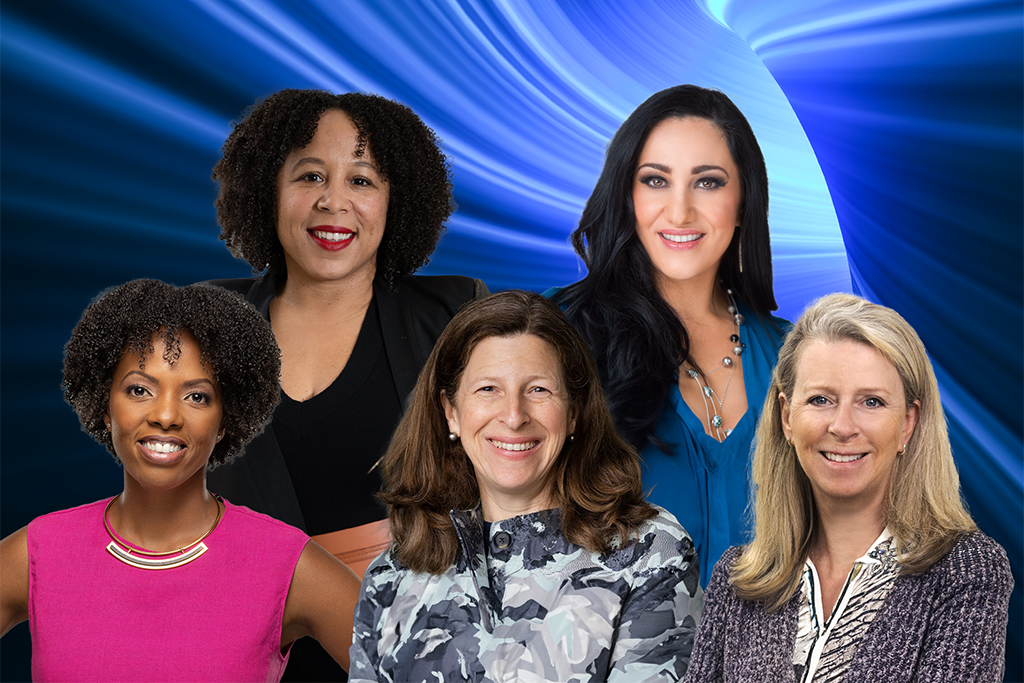
In the final part of a three-part series on pharma CMOs, MM+M dives into the skillsets that make them successful, how they stay abreast of emerging trends in the rapidly changing healthcare landscape and what the future will look like in 2026 and beyond.
Related stories

In the first of a three-part series, five pharma CMOs discuss how the role has changed and the demands they’re juggling in 2025.

Five pharma CMOs break down how their marketing teams are organized and how they foster creativity within their teams.
The skillsets future CMOs need
Both Cronin and Williams say tapping into their science backgrounds fosters a sharper sense of curiosity. Prior to their marketing careers, Williams served as a research scientist at consumer goods company Procter & Gamble and Cronin worked as a neuroscience researcher at Weill Cornell Medicine.
“The more you understand the science, the better you are at communicating it in ways that your audience will understand,” Cronin explains. “The curiosity associated with science is what can make people who have science backgrounds really successful in marketing.”
But marketers don’t need a research background to develop that scientific sense of curiosity. It’s becoming especially crucial for CMOs in the ever-changing world of healthcare, as they face rapid developments in areas like AI.
“There are new things to learn every day. If you’re not remaining curious, you would struggle as a CMO today,” Williams explains. “A critical part of being a scientist is being comfortable asking lots of questions. [As a CMO], I try to surround myself with people and information that can stretch me into a different level of comfort.”
Williams adds that curiosity might play out by sitting down with the R&D side of the organization to help understand the science behind products; or “getting out of the office and being with your agency partners” to think externally and see how creativity is evolving, or to grasp what’s happening in culture that could be relevant for the brand.
“
The more you understand the science, the better you are at communicating it in ways that your audience will understand.
Kate Cronin
Supplementing a strong foundation in the commercial understanding of the business with curiosity in other aspects of the business — such as consumer and retailer needs or how tech and data are evolving — can help unlock new areas of growth.
This plays into change management, another essential skill that several CMOs pinpointed. Guiding their marketing organizations through future changes — and transitioning its resources, capabilities and insights — can usher in future opportunities.
Lina Polimeni, chief corporate brand officer at Eli Lilly, believes being able to communicate in a diplomatic way helps her succeed as a head of marketing. Honing that ability is especially important in 2025, with federal policy decisions — from tariffs to drug pricing measures changes — impacting pharma.
“If our job is to get medicines to patients, we have to know how to work with any type of government and geopolitical situation,” Polimeni points out. “Likewise, if my job is to get a certain message to people, I ask myself: ‘Do I want to be right, or do I want to be efficacious?’ It inspires me to work for the outcome.”
For Gail Horwood, CMO at Novartis, having a strong grasp of cultural insights — an understanding of “what people want and when they want it” — is essential. She says her interest in studying consumer behavior traces back to her time in traditional print media, including stints as an editor at Conde Nast and the dawn of the internet in the 1990s.
“What was exciting to me, and what I always focused on, was connecting with a person and giving people information the way they wanted it,” Horwood says. “It was energizing and exciting that you could create things, get a response, optimize them and move forward.”
She says AI has “exponentially accelerated” this process, and that part of gaining cultural understanding as a CMO now involves trying all of the new AI tools and emerging technologies.
“Sometimes people have this vision of what a CMO does, but I am right there with the teams learning, because it’s all new,” Horwood says. “I always say, ‘Think about how AI applies to the work you’re doing, then apply it.’ It’s not just about knowing it; it’s about doing it [yourself] and really rolling up your sleeves.”
Staying on top of new trends
With rapid advances in AI and technology comes a need to stay abreast of all the emerging trends. The CMOs interviewed say they do so by relying on in-person networking opportunities with other marketing leaders, including in fields outside of pharma, ingesting a large amount of online content and even scrolling on TikTok.
Genentech CMO Erica Taylor, who is leaving her role this month for one with parent company Roche, stays fresh by attending marketing conferences in person rather than simply taking in information online.
“It allows for something far more immersive than the snackable,” she notes. “I’ll read an article here, listen to a podcast there; but getting two to three days to immerse deeply into topics and network with other marketing leaders is more gratifying. I come back energized with new ideas when I’m able to do that.”
Cronin often looks to consumer marketing for inspiration: “I like to take a page out of their book and say, ‘Hey, Budweiser is doing this. What if we could learn something from that?’” she says.
She also invests her time in consumer insight tracking to learn about new trends — she calls it being “obsessed” with what consumers are thinking and doing. That often means becoming an early adopter of new consumer tools. She points to 2018 when she downloaded TikTok after watching her kids use it.
“I was like, ‘I’ve got to figure out what this is,’” she recalls. “I download all these apps in the beginning, just to explore and see if this is something that a marketer can use.”
“Sometimes my kids are the greatest source of [consumer insights]; they speak like a foreign language to me,” she adds. “So I’ll think, ‘Well, maybe we should be using some of those words if we’re targeting Gen Z.’”
Williams says she makes sure to consume a lot of content — whether it’s listening to podcasts or watching documentaries. But she often also sees social media as the fountain of the most cutting-edge cultural trends.
And she doomscrolls just like the average person, she admits.
“Perhaps not as much as my teenagers; but it’s important to understand [social media] is where so much information and cultural context is happening and changing, minute to minute, hour to hour,” Williams said.
What does the future look like for the role of CMO?
The CMO role outside of pharma, such as in consumer packaged goods, is somewhat established and defined. In pharma, it’s still a relatively new role and can change from company to company and from person to person, according to Polimeni.
“In the pharma industry specifically, one of the challenges in the future is going to be continuing to establish strategic continuity for the role itself,” she says.
All CMOs interviewed spoke about AI as being a core component of the role in the future. Taylor pointed to AI changing the nature of search engine optimization (SEO), and that pharma marketers will have to increasingly think about how to feed large language models (LLMs) like ChatGPT the right content. In a world where many people are now reading AI summaries before clicking links on Google, pharma marketers will need to craft their messaging so that it appears in those AI summaries and responses.
“
It’s important to understand [social media] is where so much information and cultural context is happening and changing, minute to minute, hour to hour.
Katie Williams
Amid the rush to experiment with AI, however, CMOs and other marketing heads should not forget to pay attention to how AI impacts customer experience, Polimeni stresses.
“That’s where the attention needs to be, versus marketers going straight to thinking, ‘Well, how can I use AI in my creative?’” she says. “That will be a challenge in the future for CMOs.”
Ultimately, Polimeni believes that the marketing organizations that will have an impact and continue to thrive in pharma are the ones that understand that the fundamentals of marketing remain the same.
“There are going to be tools and trends that you can use — and they have to be accelerators — but at the core of everything that we do is we’re making medicine for people, and that needs to stay at the center,” she emphasizes.
CMOs will also be tasked with aggressive growth demands in 2026 and beyond, with Williams citing Haleon’s new Win as One strategy, a plan that includes a goal to reach one billion more consumers by 2030 — which would double its current scope — as an example.
Certain key marketing behaviors will help reach that goal, she says, such as putting the consumer first, and connecting paid, owned and earned media together. Those practices often revolve around the question: “How can we go faster?”
“How can we use these new technology enablers like AI to help us understand the consumer better, get more efficient with how we develop content or partner with our agencies to bring creative to life and provide more productivity throughout the organization?” Williams says.
While remaining fastidiously curious to unlock that growth remains a pillar of the future, Williams believes it needs to be balanced out with “EQ,” or emotional intelligence. That balance is needed to support an organization that can often become “overwhelmed and overworked” because of all the constant change.
In a future where growth demands dominate in marketing, she hopes to see this “emotional intelligence” extended to consumers more as well.
“One of our biggest challenges right now is helping consumers manage their concerns around their wallets and affordability, especially in areas where it’s so important to their lives, like healthcare,” Williams notes. “We’re working on being mindful of how we can support them in their self-care and in a way that’s affordable.”
If Taylor were to boil down the main piece of advice for future CMOs, she puts it simply: “You’ve got to love to embrace change.”
“It has to get you up in the morning,” she says. “I stay energized by this future state — what it will mean for us, our patients and our organization. Anyone who aspires to a level of leadership, your gaze is to the future, but you can’t lose sight of where people are today and making sure that we can get there.”