
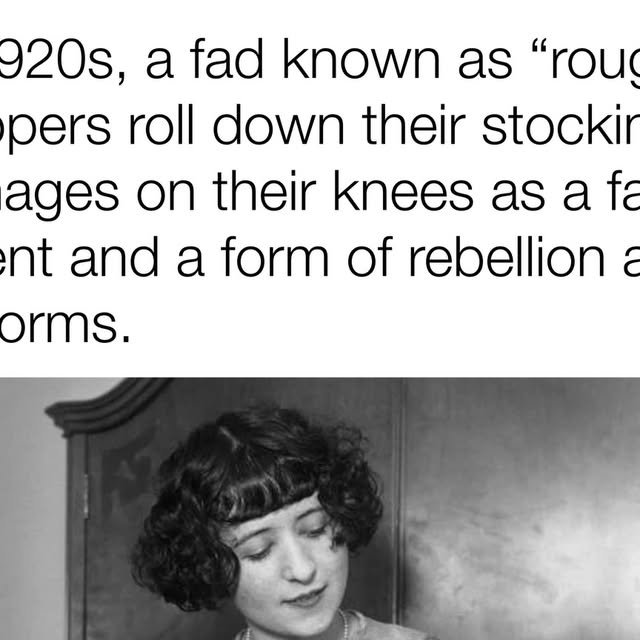
As hemlines rose to just below the knee and stockings were increasingly rolled down, rouging served a deliberate purpose: to draw the eye to the newly exposed leg. It was designed to shock lingering Victorian and Edwardian ideals of fashion, which considered exposing the knees “immoral.” What had once been hidden was now deliberately emphasized.
The trend began with simple rosy blushes applied to the knees, meant to draw the eye during the energetic dances of the time like the Charleston. A “flushed” knee was seen as playful and provocative, as movement caused skirts to flash the reddened skin. Over time, rouging evolved into full-on “knee art,” featuring whimsical designs like faces, hearts, or flowers.
But rouging wasn’t just about style. It was a quiet act of defiance, young women asserting agency, autonomy, and self-expression through their own bodies. At a time when flappers were already criticized for their short skirts, bobbed hair, and public independence, highlighting the knees became another way to challenge social expectations and shock older generations. The look embraced visibility, freedom, and a rejection of Victorian-era modesty. In many ways, rouging symbolized the flapper ethos itself: bold, unapologetic, and determined to be seen.