
GasBuddy expert: 2026 could be one of the most volatile summers for California gas prices | CA Politics 360
Joining us now is Gas buddy analyst Patrick Dehaan. Patrick, thank you so much for making time for us. Thanks for having me. I just want to get your perspective on the situation here in California where we’ve lost two refineries and we’re also dealing with *** lot of uncertainty around the war in Iran, the situation there with the state relying *** lot more on imported fuel. What do you expect with our gas prices this summer? Well, uh, probably amongst the most volatile summers of all, uh, the situation that we find ourselves in is completely unpredictable. Um, you know, we, we’ve gone from the potential for negotiations and *** deal several times to nothing, uh, that has come of it. Um, and this is now the 3rd time we’ve seen oil prices in the last couple of weeks decline as President Trump has, Uh, tease that there is *** deal that could be imminent, uh, only for us to see, uh, see that kind of slip through our fingers, and so, uh, oil prices have now, uh, gone back up slightly after *** disappointment that didn’t translate into *** reopening of the strait, uh, and we may continue to see, uh, oil prices gyrate depending on the headlines, depending on whether or not there are new escalations, but all in all, the longer the Strait of Hormuz continues to be closed, the more impacted oil, gasoline, diesel, and jet fuel prices could become in the weeks ahead. The state right now, Governor Gavin Newsom’s administration told lawmakers this week that there is enough supply to meet demand for the next 7 to 8 weeks in the state at this point, but then beyond that there’s uncertainty around what gas prices could look like. Do you have *** sense of what they could look like? I don’t think anyone would have *** great sense of what they could look like again, just the unpredictability of what’s going on between the US and Iran. Obviously California, to your point, has lost several refineries, making it more reliant on gasoline, diesel, and jet fuel that could come from very far distances to be able to meet demand, so. It’s going to be *** critical couple of weeks, at least for now. More of California’s fuel and refined products have actually been flowing all the way from areas like Texas thanks to the Jones Act waiver issued by the administration. We’ve seen *** lot of crude oil and products flowing from Gulf Coast refineries into California, but The longer this strait continues to be closed, the more problematic it could be and the more impactful to gas prices in California and much of the rest of the country. It’s still potential that we could set new all-time records later this summer if the strait remains closed. The Newsom administration is making the point this week, especially, that the oil industry is profiting heavily off of the situation, especially in California, but noting that the oil industry is profiting off of the war in Iran. What would be your response to that? I think the oil industry is seeing *** profit, um, mostly perhaps due to the political environment of California where refineries have been pushed out of the state with rules and regulations that dictate more of what refineries can and can’t do. That seems to be the entire reason why two refineries have shut down. Uh, and California has created now *** closed loop system where the remaining amount of refiners are more profitable. Uh, the more, uh, California puts pressure on them, uh, the fewer refineries that may be around and the more profitable they become. So California is kind of in an echo chamber, if you will, that has created certainly winners and losers, um, and that will likely continue to get worse. Uh, you look at *** state like Texas where there’s plenty of competition, there are still rules and regulation. And prices are much lower because there’s much more competition. California is suffering from the opposite, *** very closed market system where there’s very little competition. What should or could state leaders here or even federal leaders do right now or in the near term? To try to help with the uncertainty that’s coming with the situation in Iran, if anything, California, California specifically has many of its own rules and regulations that drive prices up well beyond what neighboring regions are paying. California’s cap and invest program. California has the nation’s highest gasoline taxes. The low carbon. Fuel standard. The Air Resources Board mandates specific blends. There are many different rules in California that exist nowhere else that if nothing else, push up the price artificially, and California should potentially look at some of those rules and regulations if it would like prices to come down to create more competition. It may have to simplify its rules and regulations to do so, but even then there’s been tremendous damage done by the governor with the rhetoric about oil companies. California is not *** very welcoming state when it comes to oil refineries, and that will likely keep prices elevated in the future. So even once the situation in Iran ends, could prices sort of stay? Or be near this level that we’re seeing right now. Well, they likely would go eventually back down to their pre-war level, but it may take *** longer amount of time to get there. Not only that, but California’s game has changed and that with the shutdown of these two refineries over the last year, it’s still *** new era for California that it’s going to be beholden to countries as far away as Asia for supply. Supplies to meet demand and so that is going to be *** struggle moving forward. Thankfully, the market’s responding by looking at new pipelines to bring gasoline from the east into the west. The market is very resilient, but certainly California’s politics are not making that any easier. Yeah, the new administration is signaling that they seem to be supportive of that gateway pipeline proposal from Phillips 66 to bring gas between the Gulf and Arizona, maybe connecting to California, but that wouldn’t take place until 2029. I mean just right now with the emergency oil reserves that the nation has, like how does that situation impact the state? Well, uh, you know, it, it impacts the country in *** very small way, um, you know, the oil from the nation’s strategic petroleum reserve, and the release rate is like replacing *** water main with *** paper straw. It’s just *** very little amount of oil. It is helpful, uh, but it makes, uh, it’s certainly going to be more difficult once that reserve becomes more depleted over time. It leaves the US less insulated to future supply disruption, so. It’s very problematic, um, you know, but of the situation there’s *** lot of things going wrong. Certainly it’s very good to see if the state would start embracing pipelines and infrastructure instead of spurring them away. California is under the impression, at least Governor Newsom’s energy officials have told lawmakers, that if we do start to see shortages in this country, the overseas fuel will look at our market and likely prioritize it because we’re willing to pay *** higher price. Does that track for you? It absolutely does. The more the higher the price, the more other countries will likely send gasoline to California. See, but that’s the catch. It’s not oil companies profiting at that point. It’s simply just the fact that California needs supplies so desperately that motorists are likely willing to pay *** higher price, and that will start to act as *** magnet pulling in supplies from overseas, but The fact of the matter is if California maintained its refineries that have closed, the cost would not be nearly as severe as it would now with these refineries shut down. Patrick, is there anything else you think we should know before we let you go? Boy, you know, it could be *** very bumpy ride this summer, um, you know, beyond that, potentially one of the most volatile summers for gasoline prices, so certainly *** very difficult one for motorists to be able to make plans, but certainly hoping the problem resolves itself sooner rather than later. All right, Patrick Dehan with Gas Buddy, we really appreciate your time and insight. Thank you. Thank you.
GasBuddy expert: 2026 could be one of the most volatile summers for California gas prices | CA Politics 360

California drivers and their wallets should prepare to buckle up for a bumpy ride at the gas pump this summer, according to experts. GasBuddy analyst Patrick De Haan said it’s going to be “potentially one of the most volatile summers for gasoline prices” in an interview on California Politics 360. “The situation that we find ourselves in is completely unpredictable,” De Haan said, pointing to the on-again, off-again negotiations with Iran and the closure of the Strait of Hormuz. Gov. Gavin Newsom’s energy officials acknowledged this week to lawmakers that gas prices in the state began spiking before the war in Iran began, following the closure of two in-state oil refiners. California Energy Commission Vice Chair Siva Gunda said earlier this week that the state has enough oil and gas supply to meet demand for at least the next seven to eight weeks. He has said previously that beyond this point, there is uncertainty about the state’s gas prices.Gunda also said if there were nationwide gas shortages, overseas companies would likely prioritize California’s market because consumers here are willing to pay more. De Haan agreed. De Haan noted that once the war ends, it could be a while before California drivers specifically see lower gas prices. “California’s game has changed with the shutdown of these two refineries over the last year. It’s still a new era for California that it’s going to be beholden to countries as far away as Asia for supplies to meet demand. That is going to be a struggle moving forward,” De Haan said. The Newsom administration, earlier this week, made a point to lawmakers that the oil industry is profiting more from California drivers and the war in Iran. In response, De Haan pointed to the state’s strict environmental policies that have forced refineries to shut down. “California has created now a closed loop system where the remaining amount of refiners are more profitable,” he said. KCRA 3 Political Director Ashley Zavala reports in-depth coverage of top California politics and policy issues. She is also the host of “California Politics 360.” Get informed each Sunday at 8:30 a.m. on KCRA 3.See more coverage of top California stories here | Download our app | Subscribe to our morning newsletter | Find us on YouTube here and subscribe to our channel | Make KCRA a preferred news source in GooglePHNjcmlwdCB0eXBlPSJ0ZXh0L2phdmFzY3JpcHQiPiFmdW5jdGlvbigpeyJ1c2Ugc3RyaWN0Ijt3aW5kb3cuYWRkRXZlbnRMaXN0ZW5lcigibWVzc2FnZSIsKGZ1bmN0aW9uKGUpe2lmKHZvaWQgMCE9PWUuZGF0YVsiZGF0YXdyYXBwZXItaGVpZ2h0Il0pe3ZhciB0PWRvY3VtZW50LnF1ZXJ5U2VsZWN0b3JBbGwoImlmcmFtZSIpO2Zvcih2YXIgYSBpbiBlLmRhdGFbImRhdGF3cmFwcGVyLWhlaWdodCJdKWZvcih2YXIgcj0wO3I8dC5sZW5ndGg7cisrKXtpZih0W3JdLmNvbnRlbnRXaW5kb3c9PT1lLnNvdXJjZSl0W3JdLnN0eWxlLmhlaWdodD1lLmRhdGFbImRhdGF3cmFwcGVyLWhlaWdodCJdW2FdKyJweCJ9fX0pKX0oKTs8L3NjcmlwdD4=
California drivers and their wallets should prepare to buckle up for a bumpy ride at the gas pump this summer, according to experts.
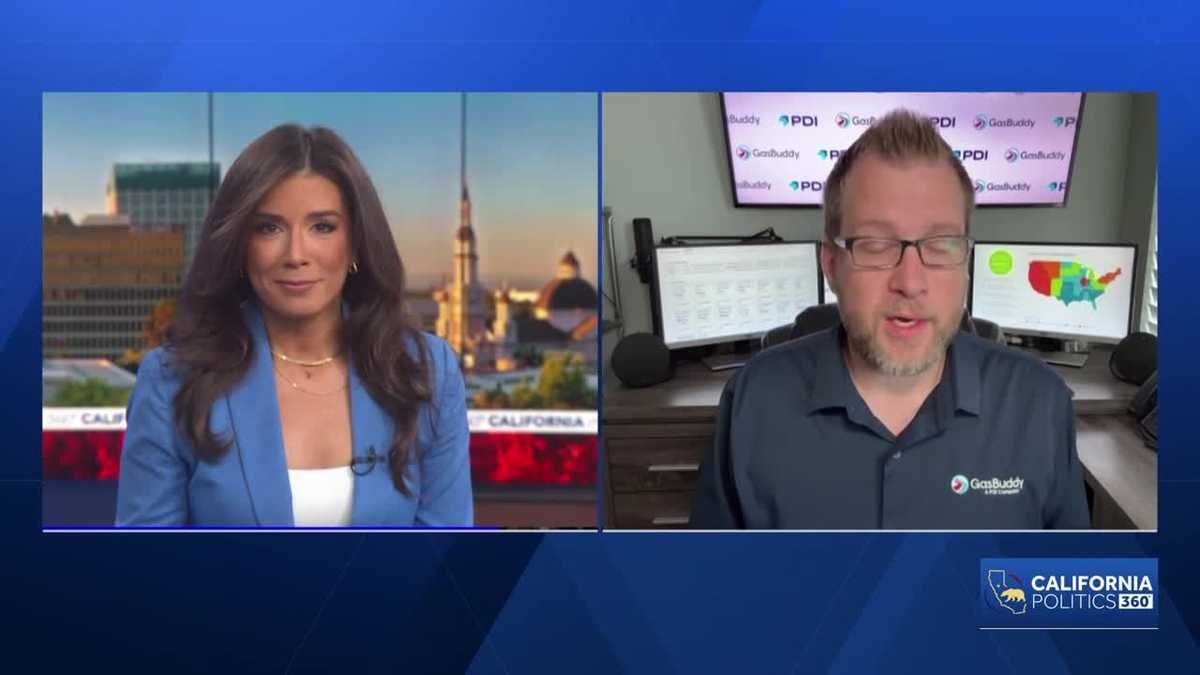
GasBuddy analyst Patrick De Haan said it’s going to be “potentially one of the most volatile summers for gasoline prices” in an interview on California Politics 360.
“The situation that we find ourselves in is completely unpredictable,” De Haan said, pointing to the on-again, off-again negotiations with Iran and the closure of the Strait of Hormuz.
Gov. Gavin Newsom’s energy officials acknowledged this week to lawmakers that gas prices in the state began spiking before the war in Iran began, following the closure of two in-state oil refiners.
California Energy Commission Vice Chair Siva Gunda said earlier this week that the state has enough oil and gas supply to meet demand for at least the next seven to eight weeks. He has said previously that beyond this point, there is uncertainty about the state’s gas prices.
Gunda also said if there were nationwide gas shortages, overseas companies would likely prioritize California’s market because consumers here are willing to pay more. De Haan agreed.
De Haan noted that once the war ends, it could be a while before California drivers specifically see lower gas prices.
“California’s game has changed with the shutdown of these two refineries over the last year. It’s still a new era for California that it’s going to be beholden to countries as far away as Asia for supplies to meet demand. That is going to be a struggle moving forward,” De Haan said.
The Newsom administration, earlier this week, made a point to lawmakers that the oil industry is profiting more from California drivers and the war in Iran. In response, De Haan pointed to the state’s strict environmental policies that have forced refineries to shut down.
“California has created now a closed loop system where the remaining amount of refiners are more profitable,” he said.
KCRA 3 Political Director Ashley Zavala reports in-depth coverage of top California politics and policy issues. She is also the host of “California Politics 360.” Get informed each Sunday at 8:30 a.m. on KCRA 3.
See more coverage of top California stories here | Download our app | Subscribe to our morning newsletter | Find us on YouTube here and subscribe to our channel | Make KCRA a preferred news source in Google
Leave a Reply