

SACRAMENTO, Calif. — California and the White House are once again at odds — this time over who should control safety regulations for artificial intelligence, as federal officials push for a national standard while state leaders move ahead with their own rules.
The debate underscores a growing national fight over state versus federal authority as lawmakers try to rein in rapidly advancing AI systems. especially when protecting children online.
“Nobody’s going to be right,” said Robert Miles, a tech expert with Grapevine MSP. “We gotta do something. But what will be the right answer? Only history will tell.” Miles compared today’s regulatory challenges to the early days of the internet, which he said grew with little government oversight.
There is mounting pressure on Congress and the White House to improve online safety and hold major tech companies — including OpenAI, the creator of ChatGPT, and Meta, which owns Facebook and Instagram — more accountable.
But a key question remains: Who gets to write the rules?
Miles warned that a patchwork of regulations across multiple states could stifle technological progress, especially in competing with competitors such as China. “If we put too many regulations in 50 different states, that might slow our abilities to get to the new AI,” he said.
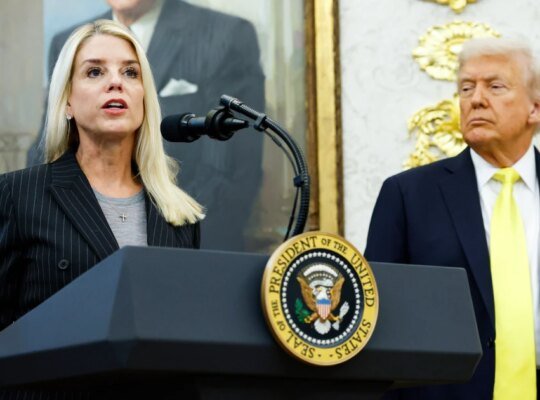
President Donald Trump is pushing for a single federal framework. He is considering an executive order that would create a task force to challenge or invalidate state-level AI laws and could penalize states by withholding federal funds. He also supports a Republican-led effort in Congress to impose a moratorium on state and local AI regulations as part of the annual National Defense Authorization Act (NDAA). That is the annual federal law that sets the budget and policies for national defense efforts.
A similar 10-year moratorium proposed earlier this year under the “One Big Beautiful” Bill ultimately failed in the Senate.
But California lawmakers argue federal efforts aren’t moving fast enough.
“If the federal government isn’t going to be as aggressive as some states like California, then a lot of major states, including ours, are going to fight against that national standard,” said Chris Micheli, a legislative analyst.
This year, California passed a sweeping package of online safety laws, including SB 53, authored by Sen. Scott Wiener. Gov. Gavin Newsom has said the state is filling a void left by Congress and that California’s approach could serve as a model for the nation.
Beginning in January, SB 53 will impose first-in-the-nation transparency requirements on major AI companies.
Still, the fight is far from settled.
“The folks who are inventing it know the product way better than us — and definitely better than the lawmakers — and they won’t agree,” Miles said.
California’s state and federal representatives have already voiced opposition to the proposed moratorium in Congress.