
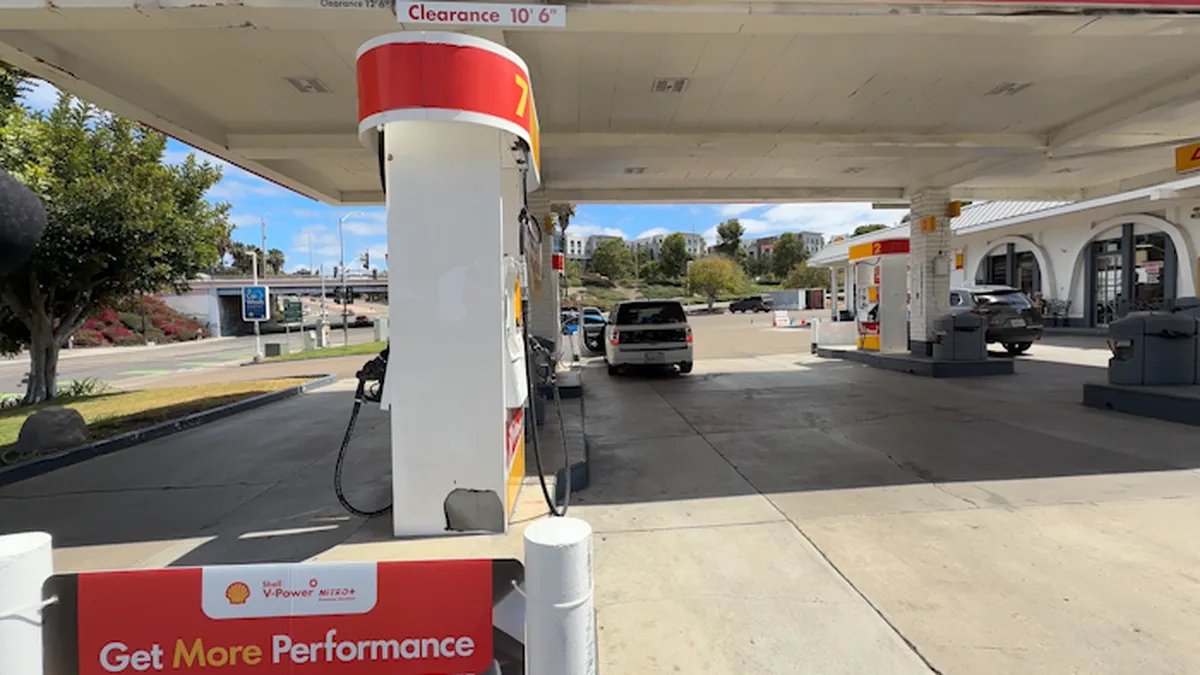
California drivers will soon pay even more to fill up their tanks as the state’s gas tax increases again on July 1.
The excise tax on gasoline will rise by 2.2 cents, bringing California’s gas tax to 63.4 cents per gallon. The increase applies only to the state’s excise tax and is separate from federal taxes and sales taxes already included in the price drivers pay at the pump.
As of Sunday, the average price for a gallon of regular gasoline in San Diego County was about $5.52, while the statewide average stood at $5.46, according to AAA. Although prices have fallen roughly 50 cents over the past month, California continues to have some of the highest gas prices in the country.
For many drivers, another increase comes at a time when everyday expenses continue to strain household budgets.
“I think it’s ridiculous, actually,” said San Diego resident Colette Schenker. “I work full time in the health care/social work industry and I feel like it’s challenging every week when I have to fill up my tank. With inflation and the cost of everything increasing, it’s really difficult when our pay kind of stays the same and everything’s just going up around us,” Schenker added.
Schenker said rising fuel costs have changed how she plans her week.
“I have to be careful about where I’m going and what I’m doing,” she said. “If I’m going to drive a lot more during the week, I have to cut corners and cut costs with other expenses.”
San Diego resident Irma Porter said she was surprised to learn the gas tax is increasing again.
“Gas prices are already high enough,” Porter said. “I remember when gas was 99 cents a gallon.”
She said filling her tank now costs around $60.
“It’s changed my lifestyle because I have less money when I keep putting gas in the car,” Porter said. “That’s a lot.”
Porter said the extra money she spends on fuel could instead go toward spending time with her family.
“I can do other stuff with that. Go take my grandson somewhere, have fun, Legoland or something. That’s how much money I spend on gas.”
The annual adjustment stems from legislation approved by the California Legislature in 2017, which ties the state’s fuel tax to inflation. The revenue is used to fund highway maintenance, road repairs and transportation infrastructure projects across California.
At the same time, state officials face another challenge: gas tax revenue is expected to decline over time as more Californians switch to electric vehicles.
According to the California Energy Commission, zero-emission vehicles accounted for nearly 23% of new vehicle sales in the state, with cities including San Diego, San Jose and San Francisco home to many of California’s EV drivers. Still, state data shows the vast majority of registered vehicles in California continue to run on gasoline.
Porter said she’d consider making the switch someday.
“I think an electric car would be better than paying so much gas,” she said, though she acknowledged concerns about the cost of owning and repairing an electric vehicle.
California’s long-term transportation goals continue to move away from gasoline-powered vehicles. In 2020, Gov. Gavin Newsom signed an executive order directing the state to end sales of new gasoline-powered passenger vehicles by 2035. The state has also adopted policies aimed at phasing out oil extraction by 2045.
Those changes come as California’s oil industry continues to evolve. Two refineries have shut down within the past six months as state leaders implemented stricter clean-air standards and new regulations affecting the oil and gas industry.
Meanwhile, President Donald Trump said last month he intends to temporarily suspend the federal gas tax, which is 18.4 cents per gallon. Any such proposal would require approval from Congress before taking effect.
For drivers like Schenker, however, the immediate concern remains the cost of getting from one place to another.
“It’s getting so expensive to the point where it’s difficult for me and a lot of folks to leave their home and make plans and enjoy life outside of work and our home environment,” she said.
This story was originally reported for broadcast by NBC San Diego. AI tools helped convert the story to a digital article, and an NBC San Diego journalist edited the article for publication.
Leave a Reply