 Internet Connectz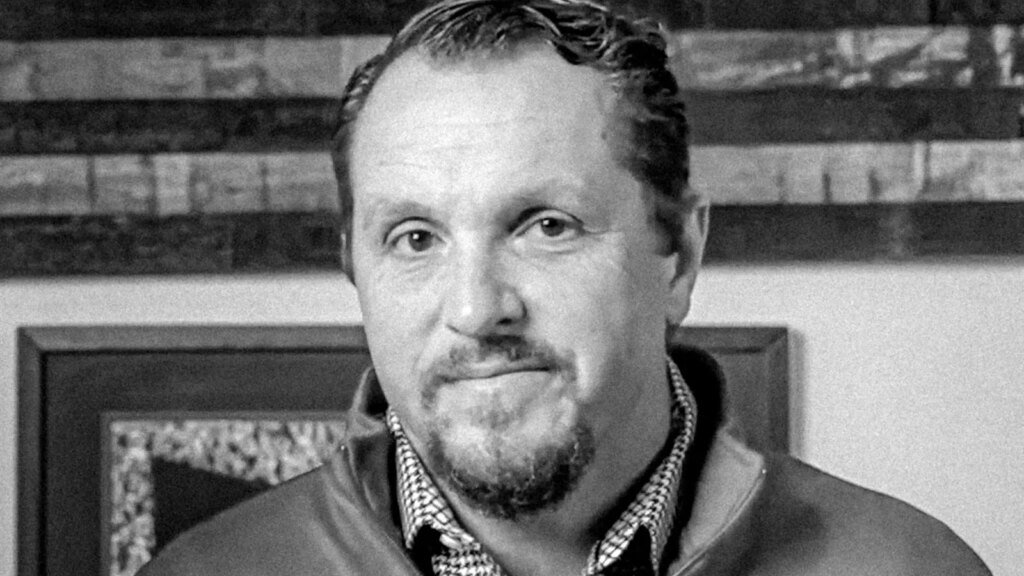
Brandon “Dutch” Mendenhall, a co-founder of RAD Diversified, authored Money Shackles, a book about breaking free from financial hardships. Now his investors are wondering what happened to their money. Courtesy of The Business Roundup with Melissa Bill Fueled by lax regulations afforded by the JOBS Act, Tampa’s RAD Diversified pitched itself as a new path
Brandon “Dutch” Mendenhall, a co-founder of RAD Diversified, authored Money Shackles, a book about breaking free from financial hardships. Now his investors are wondering what happened to their money.
Courtesy of The Business Roundup with Melissa Bill
Fueled by lax regulations afforded by the JOBS Act, Tampa’s RAD Diversified pitched itself as a new path to real-estate riches. Now tens of millions in assets have vanished and the SEC and Florida’s attorney general are investigating what could be Florida’s latest ponzi scheme.
In January 2023, Brad Carr joined RAD Diversified, a Tampa-based real estate investment business just after retiring from 27 years in the U.S. Army, having served at Fort Bragg in Fayetteville, North Carolina and U.S. Special Operations Command in Tampa, Florida. Hired as RAD’s director of strategic initiatives, Carr says he served as the de facto head of strategy. A West Point graduate, Carr, 51, spent much of his service in military police before moving into so-called “PSYOPs”, a unit tasked with using information and propaganda with foreign locals to achieve the military’s goals.
Using live seminars and digital marketing techniques, RAD Diversified was already offering a wide mix of investment programs to its hundreds of investors. Its main offering was a non-traded real estate investment trust (REIT), which touted that it bought single family homes in Los Angeles, Houston, Philadelphia and Tampa. But RAD also claimed to have Opportunity Zone funds, which get tax breaks for investing in real estate in distressed areas, a crypto fund that invested mostly in NFTs and an exclusive investment club called Inner Circle RAD, which cost $50,000 for the chance to participate in real estate joint ventures. Equity wasn’t RAD’s only game, it also gave its investors the opportunity to participate in loans, offering lenders 10% plus yields. All told the company touted that its real estate portfolio amounted to $250 million.
Two weeks into his new job, Carr, who reluctantly responded to Forbes persistent inquiries, received a surprising request from RAD chief executive Brandon “Dutch” Mendenhall. His boss wanted him to research details on how the world’s largest ponzi scheme artist, Bernard Madoff, got caught. The Netflix documentary Madoff: The Monster of Wall Street had just come out, so Carr, without questioning the odd request, rewatched the series and built a presentation for leadership. His takeaway: Madoff stayed undetected because he kept the details out of view and no one wanted to spoil the magical returns by asking questions.
Soon after, Carr had a new assignment from the CEO, to build a growth plan and prepare materials for potential family-office investors. Critical to this task was the data Carr needed to back up the 150% four-year return claims RAD was touting to investors. Over the same time period, beginning in 2019, Vanguard’s $64 billion Real Estate Index Fund had gained a mere 18%. The numbers he received from RAD’s then Chief Financial Officer Andrew Nonis shifted from one version to the next. Different parts of the business didn’t line up. By June 2023, six months after he joined RAD, Carr decided he couldn’t do the job he was hired to do and quit.
In the months after Carr left investors say income distributions from RAD’s funds began to slow, then stop without any explanation. Payments to REIT investors were missed. Interest payments on loans they gave to RAD went unpaid. The company blamed the cash crunch on the broader downturn in home sales, according to investors. In late 2023, mortgage rates were climbing toward 8%, so many investors believed RAD’s story.
Things got worse in February 2024. On the same day the Securities and Exchange Commission halted RAD Diversified REIT’s ability to raise new funds by declaring its offering statement abandoned, the company froze investor redemptions. Joint-venture investors say their monthly payments stopped around the same time. Money owed from loans didn’t arrive either. Communication became scarce. In some joint ventures, properties were sold without notice to the partners who owned them.
Then, in July 2025, with redemptions still frozen, Florida Attorney General James Uthmeier announced subpoenas after receiving complaints that RAD wasn’t using investor money as advertised. In a public statement, Uthmeier said “this appears to be a Ponzi scheme.” RAD disputed the claim in its initial response to the court. The company argued the Florida Attorney General’s Department of Legal Affairs lacked jurisdiction and that the records it was requesting should be obtained from the Securities & Exchange Commission, which, RAD’s owners let investors know, was also investigating. During this revelation, RAD claimed it had already provided the SEC over one million pages of company documents.
According to one investor who spent time on RAD’s board with access to its books during the summer of 2025, there were numerous foreclosures in its real estate portfolio, and assets were missing amounting to an estimated $100 million.
With lawsuits flying and investigators combing through its books and records, RAD Diversified is currently at the center of one of South Florida’s biggest scandals. It is yet another example of opportunistic promoters taking advantage of the 2012 JOBS Act, using provisions known as Regulation D and Regulation A+, which has allowed companies to quietly raise millions without going through the IPO process, with little disclosures and loose marketing rules.
Private REITs have been a fertile area for JOBs Act entrepreneurs. Unlike public REITs, which trade on stock exchanges, file regular reports with the SEC and whose share prices are easily obtained, non-traded REITs limit redemptions, provide far less ongoing disclosure and often have high fees. According to data from Blue Vault, a research firm that tracks alternative investments, non-traded REIT assets grew from $78 billion in the early 2010s to $178 billion in 2025.
RAD Diversified is named for its founders: Randle Bowling, who left in 2020; Brandon “Dutch” Mendenhall and Amy Vaughn. Mendenhall, 46, grew up in Iowa, played baseball and later coached at the University of San Francisco before moving into real estate. According to company filings, he began his business career as an executive recruiter focused on commercial real estate and banking, then launched a real estate education business known as Tax Auction Investors during the foreclosure wave that followed the 2008 crisis.
Amy Vaughn, 46, is a Philadelphia native who moved to Florida in 2001 at age 21, according to her LinkedIn profile, where she says she obtained real estate and insurance licenses (she also claims that she was running a multi-million dollar company that same year). Her online presence is heavy on motivational language and imagery, with inspirational quotes and frequent references to grit, ambition and perseverance as well as highlighting her philanthropic work with Joshua House, a Tampa nonprofit that supports abused and neglected children. Former employees say Vaughn was the sales engine behind Mendenhall’s real estate seminars.
Former employees say the group first worked on distressed properties and short sales before shifting into the real estate seminar business. They handled marketing, sales and back-office operations for well-known industry figures, including Canadian tax-lien coach Dustin Hahn. Mendenhall, in a 2024 podcast interview, says he decided to jump on stage and sell his own wisdom because many of the gurus he was promoting weren’t personally investing in real estate or they were teaching outdated techniques. Mendenhall, per his telling, has said students began asking to invest alongside him rather than simply pay for coaching, prompting the launch of three real estate funds in 2015 that focused on single-family homes.
Those early funds, former employees say, were relatively small (a 2018 filing showed one of the funds owned 46 single-family residences and had $5.8 million in total assets) and constrained by fundraising limits. By 2017, the group formed RAD Diversified REIT, using Regulation A and Regulation D offerings to raise larger sums from a broader pool of investors. RAD, including Vaughn and Mendenhall, did not respond to multiple requests for comment for this story.
Over time the business shifted from hosting high-priced seminars to finding and investing in its own real-estate deals. People who worked there say the founders believed they could do what their clients were doing. More money could be made than by merely running seminars. At first they focused on creating small joint ventures for real estate purchases. These grew into structured investment programs and a single fund led to several. As the company expanded, Mendenhall and Vaughn even launched the Alternative Investment Association, a membership group charging at least $5,000 a year.
Tom Nagy, a 57-year-old retired business owner from the Philadelphia suburbs, says he put money into RAD’s joint ventures after joining the company’s Inner Circle. In two months, he committed about $330,000 across four housing joint ventures (he invested in three homes in Pennsylvania and one in Big Bear, California), a $100,000 loan to RAD and a 1% stake in a golf course, the Wentworth Club outside of Tampa, which was owned by another RAD related business called Omnico Golf that, according to its website, planned to acquire six courses by September 2025.
Nagy says the sales pitch took on a personal tone when he traveled to Idaho for a RAD investor retreat in October 2023. Early in the trip, he sat through a presentation that showed a property he already owned as if it were still for sale. When he asked about it, he was told the system “had not been updated.” Communication became more difficult after that. He expected rent payments from his joint ventures and interest from his loan. None came. Statements listed fees and repair costs he couldn’t verify. When he asked for invoices, he says none arrived. By late 2023, he was told all four joint-venture properties had been sold. One showed a small profit he never received; two were losses; and the fourth, he says, left him owing the company $40,000 for renovations he never saw. So far, he has recovered a mere $1,900 of the $330,000 he invested.
Lonnie Phillips, a 61-year-old former paramedic from Virginia, had a similar experience. He joined RAD’s Inner Circle in October 2021 after being told the joint-venture deals were true 50/50 partnerships, with RAD investing alongside him. That mattered, he says, because he wanted RAD to have real “skin in the game.”
He invested in two properties, including a lakefront home in Tampa that sits on 31 acres along Half Moon Lake, with a pool, guest apartment and roughly 160 feet of waterfront. Zillow currently estimates its value at about $1.6 million. Phillips says he believed he and RAD each owned half of the property. Instead, he later learned that RAD had sold most of its stake to another RAD investor, leaving the company with only about a 10% interest. Phillips says the change happened without his knowledge and undercut the very incentive structure he thought he was buying into. The property was later sold, he says, and neither investor received any proceeds. The other investor ultimately sued RAD in Florida and won a default judgment.
Adding to his frustration, Phillips also says one of his JV properties was presented during a RAD investor Zoom call as a profitable REIT asset, even though the REIT didn’t own it. When he raised the issue, he says he was brushed off. Aside from a small amount of REIT distributions tied to an earlier redemption, Phillips, who invested about $300,000 in total with RAD, says he has not been paid on either of his joint-venture deals.
If Nagy and Phillips wondered where the money went, Jeff Thomas says he came closer to the answer. Thomas, a 66-year-old mobile-home and RV-park investor, owned about 5% of the REIT’s outstanding shares, making him the largest outside shareholder. He also appeared on a company podcast and promoted RAD to new investors. He first invested in 2018 and ultimately put $1.5 million into RAD’s programs. He received REIT distributions, joint-venture proceeds and interest on the loan he made to RAD until early 2024, when payments stopped. He was told it was a short-term cash-flow issue.
By the summer of 2025, Thomas was pressing for transparency. In July, he was added to the REIT’s board. Other new board candidates, he says, stayed off because RAD couldn’t secure directors-and-officers insurance due to ongoing lawsuits. (Among them is a civil RICO suit filed by conservative talk-radio host Buck Sexton, who invested “over $100,000” and says RAD misled him and failed to provide the “direct access to undervalued real estate investments” that he was promised. RAD has moved to dismiss, calling the claims defective and outside federal jurisdiction.) Thomas obtained his own coverage and joined the board.
Once on the board, Thomas gained access to RAD’s bank accounts and began reviewing transfers and balances. What he saw raised immediate concerns about how money moved between RAD entities. In mid-October, he met with Mendenhall and Vaughn at the Wentworth golf course outside of Tampa (through a different company, Mendenhall and Vaughn owned the course and were, as of the summer of 2025 still actively recruiting new investors for that project). Over several days, he says he pushed management to step aside and allow investors to try to salvage the company. Thomas believed they reached an agreement. The next day, he says, Mendenhall and Vaughn reversed course and offered to hand over only the REIT. Days later, he was removed from the board and locked out of the accounts.
In late October, Thomas sent a letter to investors summarizing what he found. He wrote that the REIT was “broke,” that rent collections had fallen from about $300,000 in January to roughly $180,000 in September and that properties were in foreclosure. Taxes and insurance had not been paid. Some tenants were withholding rent. Farms had been sold. The bank account showed a balance of just $2.36 million. He also wrote that many joint-venture properties had been sold or refinanced without notifying investors and that “monies may not have been dispersed to the JV partner.” He estimated that RAD companies held about $90 million in property and at least $90 million in debt. Several RAD entities, he warned, were black boxes that he couldn’t pry open even as a director.
Some investors say that feeling extended outside the company. They point to RAD’s ties to accountant Charles Dombek, who promoted tax strategies at RAD events. On his LinkedIn, the accountant touts that he’s a “film finance expert” who has secured more than $300 million in bridge loans for independent film projects. He also seems to specialize in tax strategies for dentists. Dombek says on LinkedIn he’s worked with over a thousand dentists, cutting their taxes by 30% or more, while advising on more than “100 successful dental practice sales.”
But in October 2024, Dombek agreed to a permanent injunction with the U.S. Department of Justice. The order bars him from promoting certain strategies, including what the government described as sham management entities, improper income shifting and abusive captive-insurance arrangements. The injunction was entered with his consent but does not constitute an admission of wrongdoing. Dombek didn’t respond to requests for comment.
News of Dombek’s troubles only deepened investor fears that their money would never be returned. Public filings show he registered a Florida LLC for Vaughn’s son using RAD’s corporate address and Vaughn’s RAD email. This behind the scenes maneuvering by Vaughn’s clever tax accountant, only added to investor unease.
In the meantime pressure is mounting for RAD and its promoters. Besides Florida’s attorney general’s ongoing investigation, the court in Hillsborough County, where RAD is headquartered, has issued 18 default judgments totaling $9.5 million against RAD entities so far this year. Default judgments are typically issued when the defendants fail to respond to court proceedings. For investors, they carry little weight if there is no money left to collect.
More from Forbes















Leave a Comment
Your email address will not be published. Required fields are marked with *