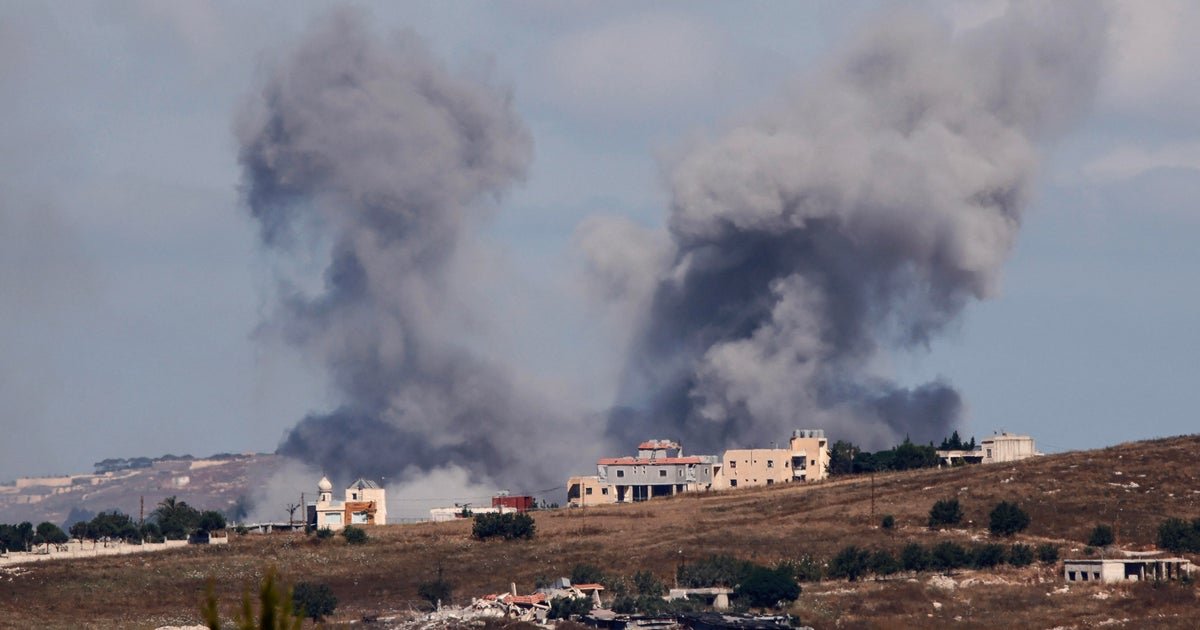
As the price of crude oil falls governments are counting the costs of the war in the Middle East
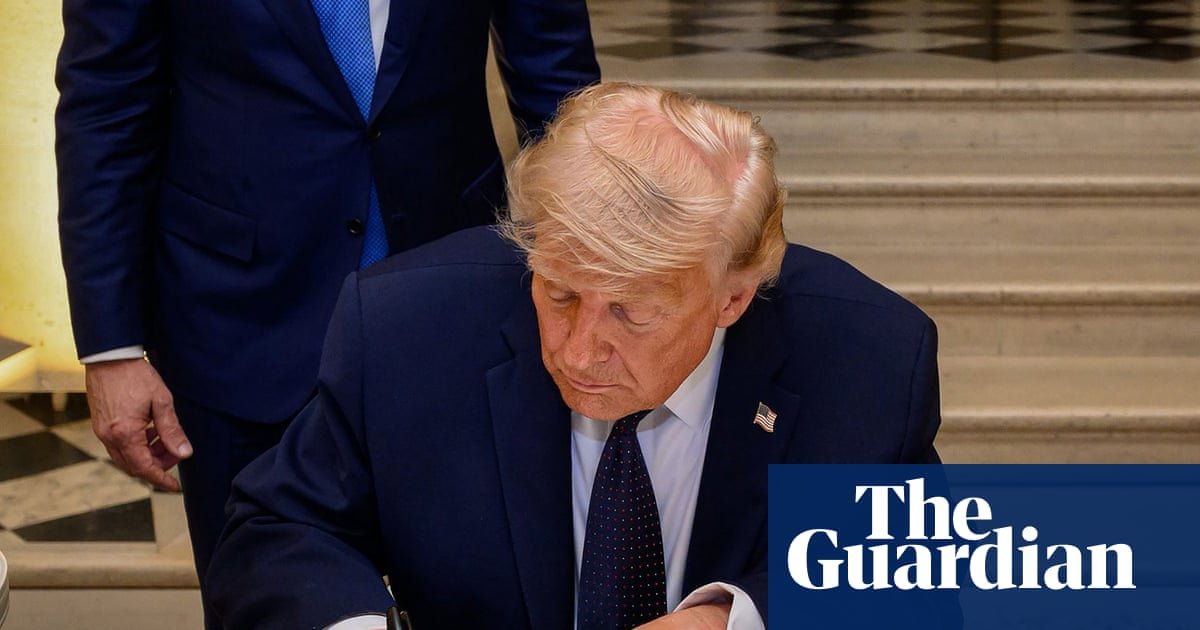
Hailing his Iran deal this week amid the excess of Versailles, Donald Trump urged sceptics to take Wall Street’s word for its success. “There is nothing as smart as the market – and the market loves it,” he said, claiming credit for ending the economic chaos that had kicked off when he started bombing Iran in late February. Without the agreement, he said, “the alternative would be a worldwide depression”.
By the weekend, the outlook was less optimistic after planned US-Iran peace talks in Switzerland were abruptly called off, then reinstated, and Iran said Israeli bombing in Jordan meant it was justified in closing the strait of Hormuz again. Still, hopes persist that the sea passage carrying about 20% of the world’s oil supplies will reopen fully in the coming days and weeks.
If the oil does start to flow more freely again, it should forestall the shortages of key products, such as jet fuel, that some analysts had predicted would occur if the war persisted.
Energy markets are already anticipating the hoped-for resurgence in supply: the cost of a barrel of crude oil dropped below $80 a barrel after the agreement was announced, for the first time since the early days of the war.
Yet governments are still counting the economic costs of a war they did not want any part of.
The severity of the impact varies by region. Gulf economies, which have seen exports of their main revenue-raiser choked off and found themselves the target of Iranian bombs, are expected to plunge into recession. Analysts at Oxford Economics are expecting GDP in the region to decline by 2.6% this year.
Economic growth in the US, now a net energy exporter, has remained strong, with stock markets bolstered by the AI investment boom, and SpaceX just the first of a series of mega market launches expected this year.
But American drivers are paying $1 a gallon more for petrol than a year ago, and economy-wide inflation in the US has surged to 4.2%, its highest rate in three years – news that Trump greeted by claiming: “I love the inflation.”
Trump’s newly appointed pick as Federal Reserve chair, Kevin Warsh, was chosen in the hope he would deliver a string of interest rate cuts.
In fact, Warsh is likely to face pressure to raise borrowing costs in the coming months. Dario Perkins, the head of global research at the consultancy TS Lombard, said that of the leading central banks, “as the economy has remained strong and inflation has increased, the Fed is probably going to increase rates the most, maybe as much as four times (to a range of 4.5% to 5%) by the end of next year”.
He said the US economy had remained strong thanks to consumers running down their savings to continue spending, while shoppers in the UK and continental Europe had been more circumspect. “The euro consumer, while they have savings, are more worried about the war and its outcome,” he said.
In the EU, which is heavily reliant on gas imports, the European Central Bank (ECB) has already raised interest rates for the first time since 2023, in the hope of choking off surging inflation.
The impact on prices in the UK has been somewhat more muted, with inflation hitting 2.8% in April and interest rates on hold for the moment – but confidence has been hit hard and the jobs market remains weak.
Sanjay Raja, the chief UK economist at Deutsche Bank, said inflation would rise further – perhaps by up to another percentage point – in the coming months. “All of the data suggests that there’s something coming – we are going to see some pressure.” However, he expects the downward effect on growth to be relatively modest – knocking up to a quarter of a percentage point off GDP growth.
Many developing countries have been forced to ration fuel in the face of rocketing prices and are braced for the impact of surging fertiliser costs over the coming months.
This “demand destruction” – cutting back on usage when prices become unaffordable – may be part of the reason why oil prices have not surged even higher since February.
Raja argues it is also because countries including China have been able to rely on strategic oil supplies, some of which may not have been known about by analysts.
Despite Trump’s bullishness, his tentative agreement with Iran leaves many questions unanswered and will not immediately draw a line under the economic damage caused by the war.
Ryan Sweet, the chief global economist at the consultancy Oxford Economics, said: “The difficulty of quantifying the economic cost is that the economic timeline doesn’t equal the military timeline, so we’re still going to be feeling the economic impact of this through the rest of this year and potentially early next.”
He pointed out that while Trump had stressed that the strait of Hormuz would reopen, the details remained hazy. “There’s still the risk that tolls are imposed on ships, or the number of ships that go through the strait is a lot less than before the conflict – there’s still a lot of uncertainty around that.”
Fears remain that hostilities could yet be reignited – for example, if Trump comes to doubt that Tehran is serious about winding down its nuclear plans.
Trump is also facing some pushback against the deal at home, even from Republicans. Neil Shearing, the chief global economist at the consultancy Capital Economics, said policymakers should view the agreement as fragile.
“It’s a good start. But there are several ways the deal can fall apart. Israel’s attacks on Hezbollah and Lebanon, Iran exploiting its chokehold over the strait of Hormuz, and a dispute over how to limit Iran’s nuclear ambitions.”
He added that the oil markets may be too sanguine about the next few months. “Our modelling of the oil price shows that prices of Brent crude should be about $90 a barrel in the third quarter and $80 a barrel in the fourth quarter. However, the market has raced ahead and is already pricing oil at $80. That’s a Goldilocks outcome to the war when there is plenty more negotiating to be done.”
Matt Gertken, the chief geopolitical strategist at BCA Research, said in a recent research note that the US-Iran memorandum of understanding “should not be seen as a complete and durable peace deal that uncorks the global commodity bottleneck and concludes the war”.
Instead, he said, “we would still assign a 60% chance of renewed fighting after the midterm [elections in the US] as President Trump gains a window, from 4 November 2026 until the end of 2027, to try to get better terms and better implementation”.
Even if the deal holds, many economists are wary of assuming the energy markets will quickly snap back to normal.
First, that is because it will take time for Gulf oil infrastructure to be restored and for the backlog of ships stuck in the region to transit through the strait and beyond.
Second, and more worrying, there is a risk that by illustrating so starkly Iran’s ability to choke off Gulf oil supplies at will, the conflict may have permanently increased the cost of some commodities by prompting firms to build more slack into their supply chains. As Sweet put it: “I think there’s going to be a long shadow from this.”