
You May Also Like

[DigitalToday reporter Jae-won Choi (최재원)] Risky driving videos showing people sleeping or playing games with Tesla’s Full Self-Driving (FSD) driver-assistance system switched on are spreading on social media as a form of content.
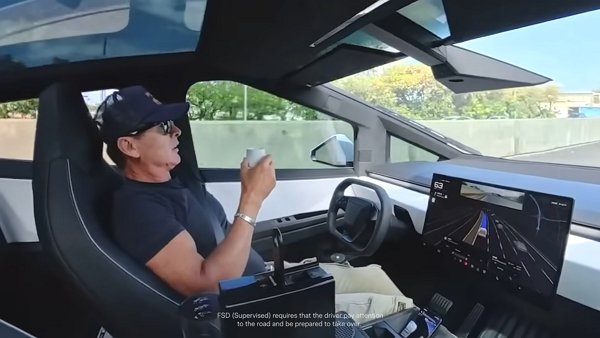
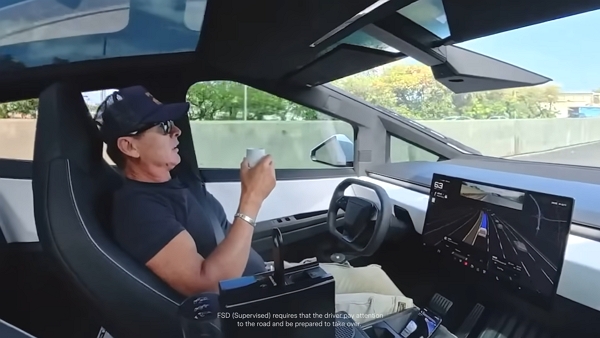
Electrek reported on Aug. 26 that videos filmed by Tesla drivers showing them not paying attention after activating FSD are being posted in succession on Instagram, TikTok and X. In one video, the car drives on the road while the driver is completely asleep in the seat. The post even carries a description reading, “Life of a Tesla owner using FSD.”
Other cases include drivers holding a game controller instead of the steering wheel and playing games to their destination, or watching live TV on the center display while driving. A clip of a Cybertruck driver reclining the driver’s seat while working on a laptop is being shared like a productivity tip. Some owners are even boasting that they disabled Tesla’s driver monitoring system.
The problem is that, despite its name, FSD is not a “full self-driving” function. Tesla defines the feature currently on sale as Supervised, and states that “active driver supervision is required and does not make the vehicle autonomous.” Drivers must keep their eyes on the road even while using FSD and are responsible for safe driving and compliance with traffic laws.
Even so, ways to bypass driver monitoring devices are spreading. Tesla checks driver attentiveness using steering-wheel torque and an in-cabin camera, and restricts FSD use for a period if repeated warnings are ignored. But some owners are covering the camera in various ways, and the outlet noted that apps and dongles that disable the function are being sold.
The controversy is spreading beyond individual misconduct to questions about Tesla’s responsibility. The outlet pointed to Tesla showing a driver taking hands off the wheel and making an espresso in an official promotional video in the past, while stressing the driver’s duty to supervise in lawsuits related to crashes. Tesla faces lawsuits worth up to $14.5 billion related to driver-assistance systems, the outlet reported, and has previously received a $243 million verdict tied to a fatal Autopilot crash.
Pressure from the U.S. National Highway Traffic Safety Administration (NHTSA) is also continuing. NHTSA elevated a probe into whether FSD responded appropriately in reduced-visibility road conditions to the Engineering Analysis stage covering about 3.2 million vehicles. An Engineering Analysis is an in-depth investigation stage conducted before deciding whether to order a recall.
No matter how much FSD performance improves, current rules do not eliminate the responsibility of the person sitting in the driver’s seat. The key is not how stably the car drove on its own, but whether the driver watched the road and was ready to intervene immediately when needed. That is why critics say the hands-off FSD driving trend on social media could go beyond bragging rights and lead to safety and legal liability issues.
